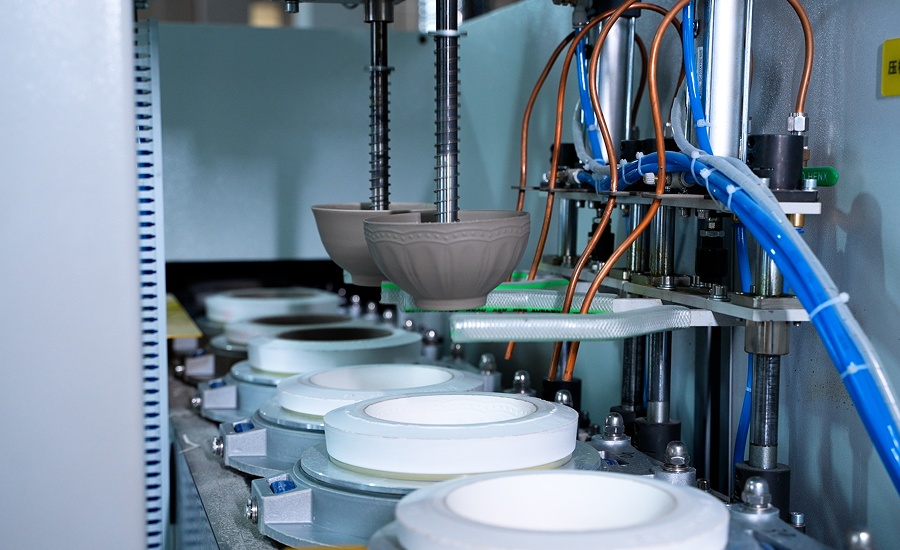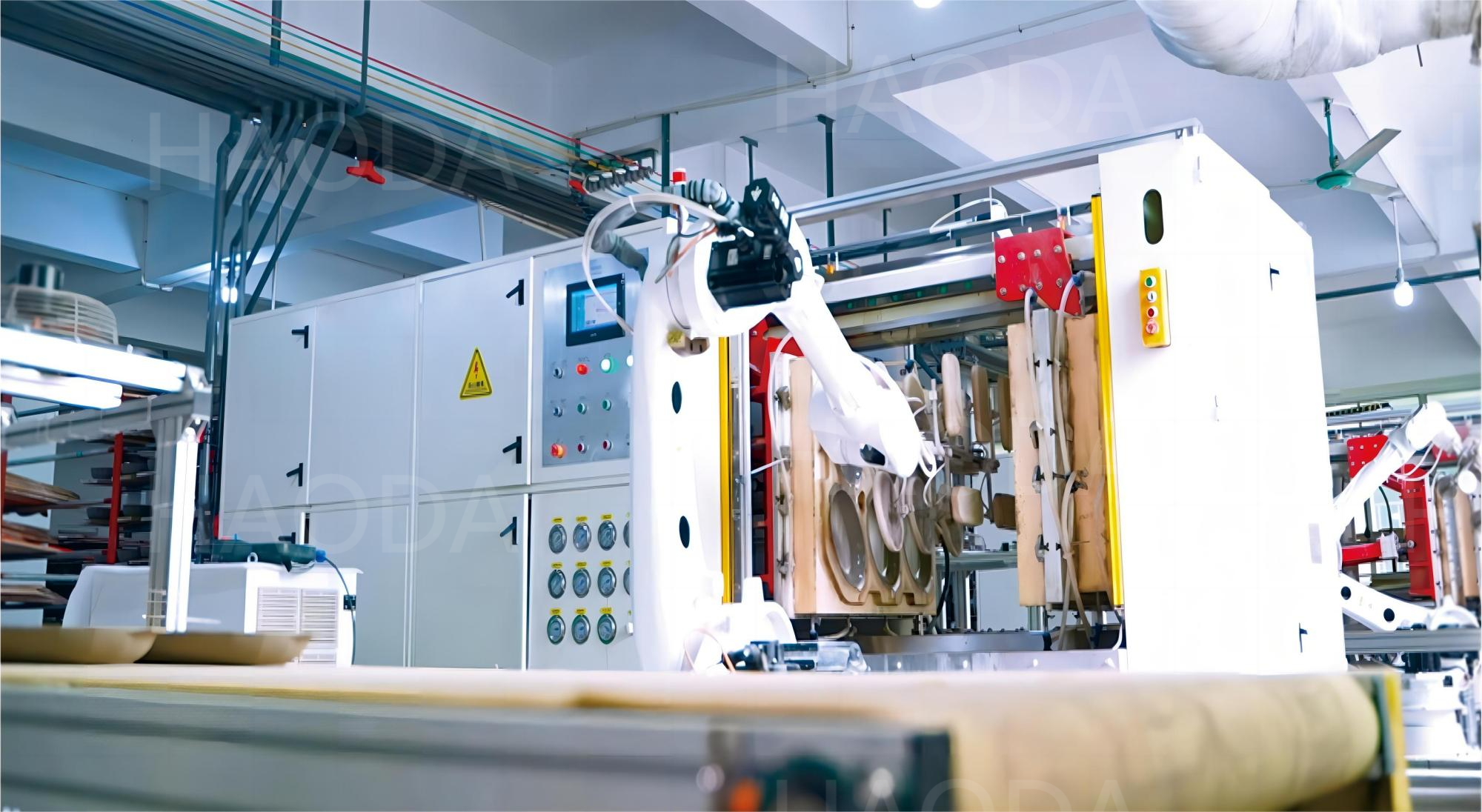

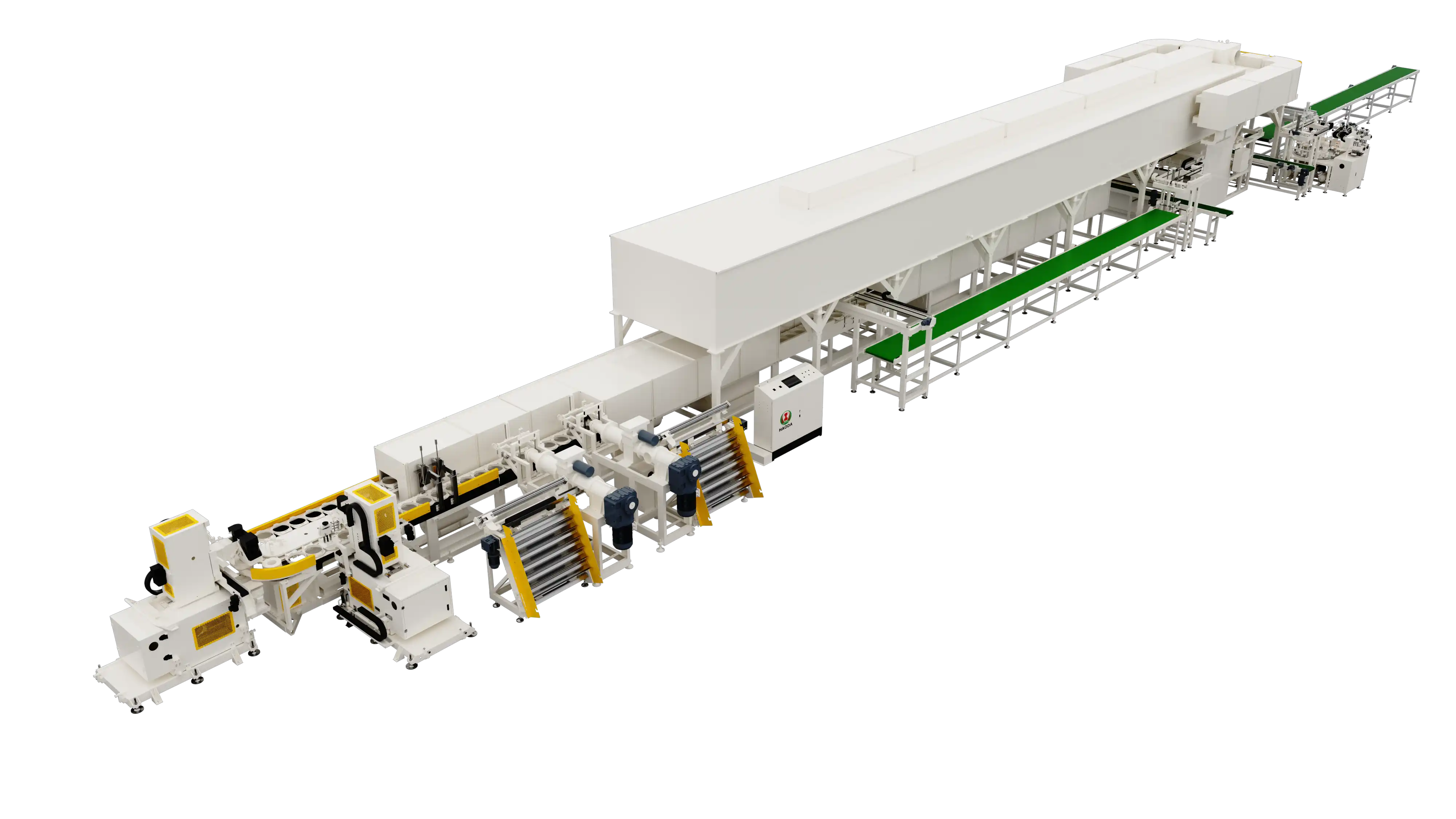
Why Efficient Line Design Defines Production Success
An efficient tableware line design goes far beyond machine placement—it determines the entire factory’s productivity, material flow, and energy use.
Poorly structured layouts lead to unnecessary transport, temperature variance, and downtime.
According to Industrial Engineering World Journal, optimized production layouts in ceramics can:
-
Reduce material handling by up to 40%
-
Improve line utilization by 30%
-
Decrease product breakage during transfer by 18%
For modern ceramic manufacturers, efficiency in layout equals profitability in operations.
Key Elements of Efficient Tableware Line Design
| Stage | Objective | Optimization Approach | Benefit |
|---|---|---|---|
| Raw Material Zone | Uniform clay preparation | Centralized feeding and vacuum pug milling | Stable material consistency |
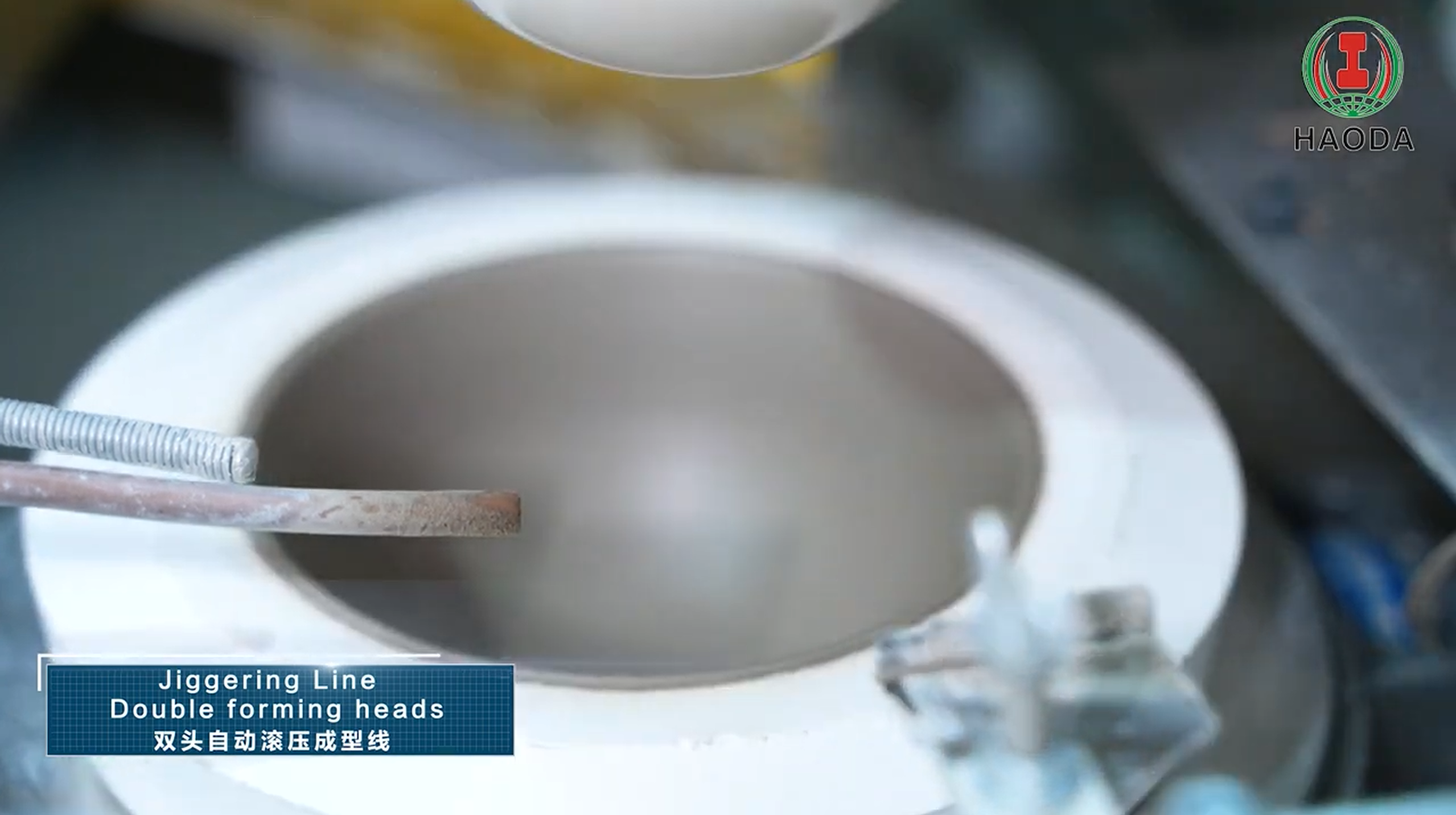
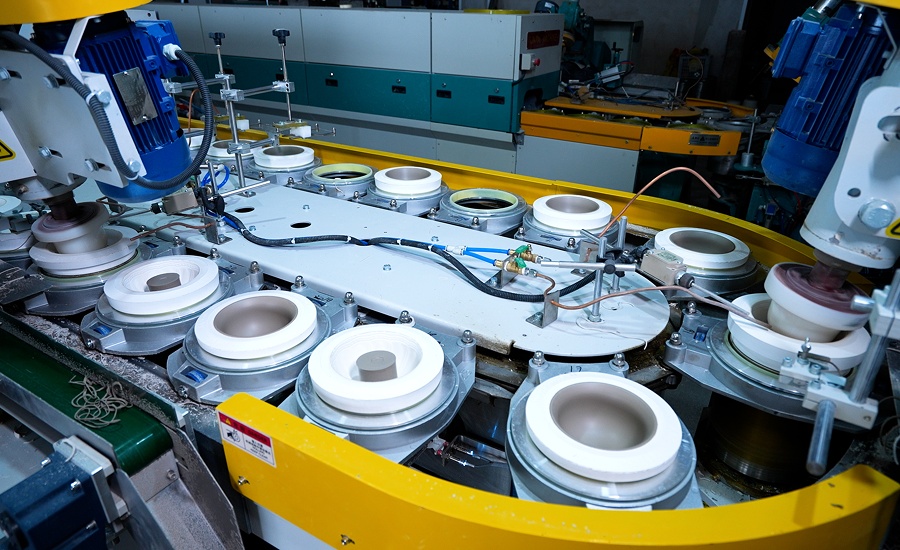
| Forming Area | Shape accuracy & throughput | Dual-head forming + modular molds | Reduced setup time |
| Glazing & Decoration | Surface coating & design | Robotic glazing and pad printing | High precision and color consistency |
| Drying Section | Moisture removal | Hot-air tunnels with humidity balance | Shorter drying time |
| Firing & Inspection | Quality control | Automated kiln loading + vision inspection | Zero-defect assurance |
Each subsystem contributes to a continuous and synchronized ceramic production layout, minimizing manual handling and ensuring smooth ware transfer between zones.
Layout Strategies for Space and Energy Optimization
1. Linear Flow Design
Ideal for large-scale factories targeting 50,000–100,000 pcs/day.
Material moves in a single direction—from clay preparation to inspection—minimizing backflow and transport losses.
2. U-Shaped Design
Compact layout suited for mid-size producers.
The kiln and glazing zones share utilities, enabling shared heat recovery and shorter travel distances.
3. Modular Cell Design
Flexible configuration for small factories or multi-product plants.
Each cell integrates forming, glazing, and drying within a self-contained unit, allowing independent scheduling.
| Design Type | Floor Space Efficiency | Energy Saving | Suitable Factory Type |
|---|---|---|---|
| Linear | 100% baseline | +15% | Large industrial plant |
| U-Shaped | +20% | +25% | Mid-scale production |
| Modular | +30% | +35% | Small flexible factories |
Efficient spatial organization directly translates into cost and sustainability advantages.
Automation and Intelligent Synchronization
In an efficient tableware line design, automation isn’t optional—it’s structural.
Haoda Machine’s integrated systems include:
-
Servo-controlled forming lines for adaptive shaping
-
Robotic glaze spray units with real-time flow correction
-
Smart conveyors with anti-vibration ware carriers
-
MES integration linking forming, drying, and inspection in one control interface
This ensures that every process—pressure, temperature, humidity, and transfer timing—is automatically synchronized for maximum efficiency.
| Function | Automation Tool | Measurable Impact |
|---|---|---|
| Forming | Dual-head servo forming | +40% productivity |
| Glazing | AI robotic sprayer | -20% glaze waste |
| Transfer | PLC-driven conveyor | -30% handling loss |
| Drying | Temperature adaptive tunnel | -18% energy load |
| Inspection | Vision-based sorting | 98% accuracy |
These integrations allow engineers to maintain high precision even under mixed-batch or variable product conditions.
Energy Flow and Sustainability Integration
Efficient production is equally about energy recycling and process synergy.
Modern ceramic factories adopt multi-zone systems to reuse residual heat and balance air pressure between forming and drying sections.
-
Kiln Heat Recovery: Reuses waste heat to preheat incoming ware—saving 22–28% energy.
-
Air Circulation Optimization: Reduces drying time by 15% and ensures uniform firing temperature.
-
Servo Energy Control: Dynamic motor speed control lowers idle consumption.
-
Water Recirculation Loops: Cut water waste by up to 25%.
According to the Clean Manufacturing Alliance, efficient production lines reduce total carbon intensity by 20–35%, aligning with ESG goals for green ceramic manufacturing.
Case Studies: Haoda Machine’s Line Design Excellence
Haoda Machine has delivered efficient tableware line design solutions globally, combining automation and ergonomic layout principles.
-
Vietnam: Full linear line with MES monitoring and automatic ware transfer conveyors.
-
Turkey: U-shaped system integrating glazing and drying for reduced space and energy use.
-
Saudi Arabia: High-output design using multi-zone heat recovery systems for hotelware production.
-
Poland: Modular line setup for small-batch porcelain with easy product switching.
Each project achieved over 30% efficiency improvement within the first operational year.
ROI and Performance Benchmark
| Metric | Standard Layout | Efficient Design | Improvement |
|---|---|---|---|
| Material Handling Cost | 100% baseline | -35% | Reduced logistics cost |
| Production Cycle Time | 100% baseline | -40% | Faster throughput |
| Energy Consumption | 100% baseline | -25% | Lower operating cost |
| Space Utilization | 100% baseline | +30% | More output per m² |
| ROI Cycle | 36 months | 18 months | Faster capital recovery |
These results confirm that well-engineered layouts drive both cost efficiency and sustainability in modern ceramics manufacturing.
Smart Design by Haoda Machine
Haoda Machine combines deep process understanding with engineering precision to deliver efficient tableware line design for clients worldwide.
Core Advantages Include:
-
Custom production line layout and energy simulation
-
Modular forming and glazing integration
-
Full PLC + MES system for synchronization and data logging
-
Energy recovery and sustainability compliance
-
Global engineering and after-sales service network
By aligning space, process, and technology, Haoda Machine helps manufacturers achieve world-class operational efficiency and measurable long-term savings.
Explore Haoda’s automation layout portfolio and project insights at Haoda Machine’s homepage.
For customized production line planning or layout consultation, contact our engineering specialists — we’ll create an optimized design roadmap tailored to your target output and facility scale.