
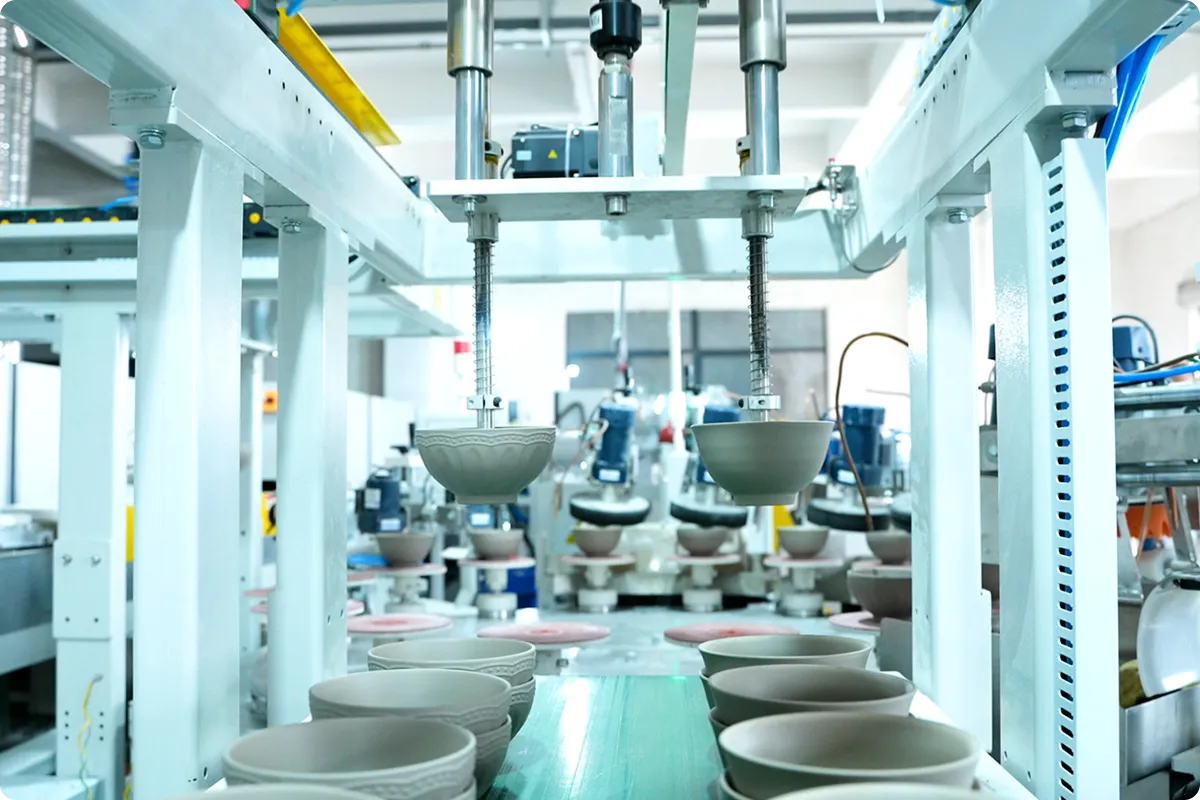
Why Forming Defects Directly Impact Profitability
In large-scale ceramic production, forming is the structural foundation of every product.
Cracks, edge collapse, warping, thickness variation, and surface pinholes typically originate during shaping — not glazing or firing.
Industry statistics show that 40–60% of total scrap in tableware factories can be traced back to forming inconsistencies.
Therefore, reducing defects in ceramic forming is not just a technical improvement — it directly determines yield rate, labor cost, and kiln efficiency.
Main Types of Forming Defects and Their Causes
| Defect Type | Primary Cause | Technical Impact |
|---|---|---|
| Cracking | Uneven pressure distribution | Structural weakness |
| Edge Collapse | Excessive moisture variation | Shape distortion |
| Thickness Variation | Inconsistent roller speed | Firing instability |
| Surface Lines | Mold wear or vibration | Visual rejection |
| Air Bubbles | Improper clay vacuuming | Surface pinholes |
Each defect type requires targeted engineering intervention rather than post-process correction.
Pressure Curve Optimization
One of the most effective approaches to reducing defects in ceramic forming is precise control of forming pressure curves.
Traditional hydraulic systems apply static pressure, which often causes stress concentration at edges.
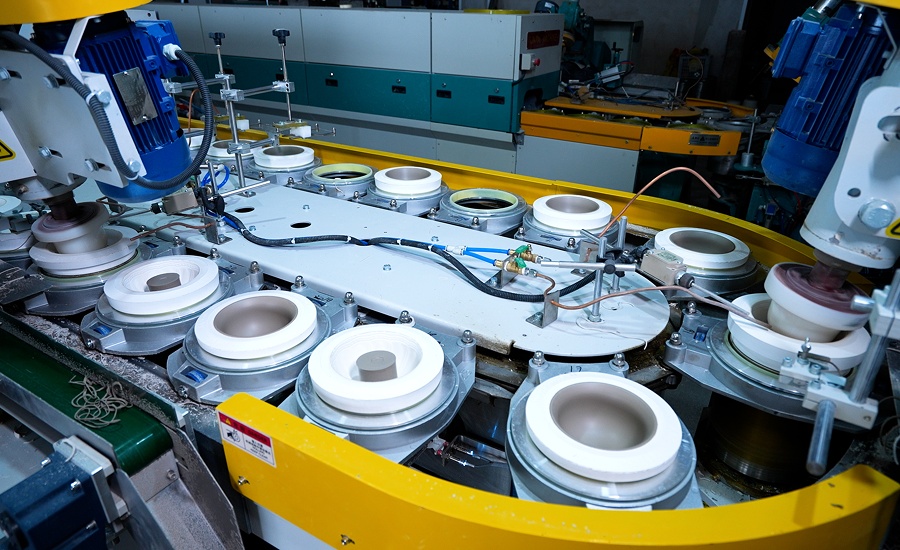
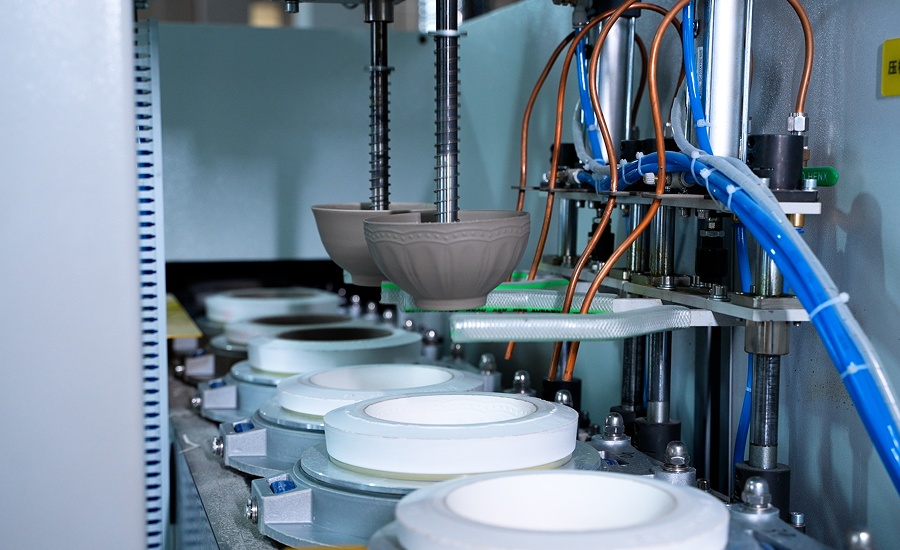
Haoda Machine integrates servo-controlled forming units that adjust pressure dynamically based on clay resistance feedback.
Dynamic Pressure Control Logic
-
Initial shaping: Low pressure to avoid stress cracks
-
Mid-stage forming: Gradual increase for structural strength
-
Final shaping: Stabilized pressure to prevent rebound deformation
| Parameter | Conventional System | Haoda Servo System | Improvement |
|---|---|---|---|
| Pressure Fluctuation | ±10% | ±2% | 80% stability gain |
| Crack Rate | 5% | <1.5% | -70% |
| Dimensional Tolerance | ±0.5 mm | ±0.2 mm | Higher precision |
This adaptive control significantly enhances structural integrity before drying and firing.
Mold Precision and Wear Management
Mold quality plays a decisive role in reducing defects in ceramic forming.
Key Improvements:
-
High-density gypsum molds with uniform porosity.
-
CNC-machined mold surfaces ensuring consistent geometry.
-
Predictive replacement scheduling via usage-cycle tracking.
Haoda Machine’s mold management system records usage data and alerts operators when molds approach wear limits, preventing quality drift caused by gradual degradation.
According to Ceramic Industry Magazine, consistent mold replacement scheduling can reduce surface defect rates by up to 30% in automated forming lines.
Clay Consistency and Vacuum Stabilization
Clay preparation inconsistencies often produce hidden internal stress.
A stable vacuum pug mill ensures homogeneous density and air removal.
| Clay Parameter | Ideal Range | Monitoring Frequency | Impact |
|---|---|---|---|
| Moisture Content | 20–22% | Every 15 min | Shape stability |
| Density | ±1% variation | Continuous | Uniform thickness |
| Air Content | <0.5% | Continuous vacuum control | Crack prevention |
By stabilizing clay input conditions, forming machines operate within predictable resistance levels, supporting long-term defect reduction.
Inline Inspection and Data Feedback
Modern defect reduction depends on real-time monitoring.
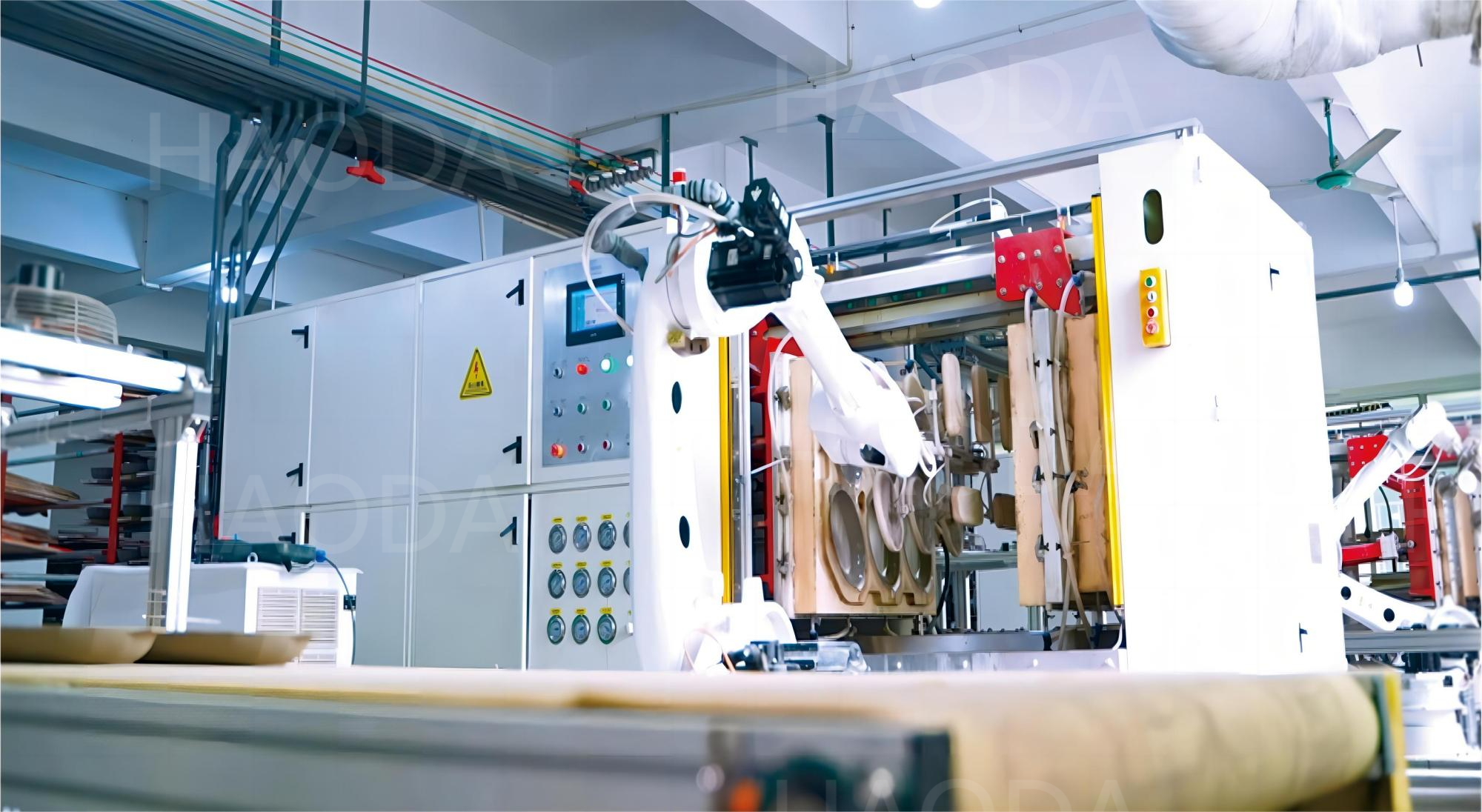
Haoda Machine integrates machine vision systems directly after forming stations.
The system detects:
-
Thickness deviation
-
Edge irregularity
-
Surface cracking
-
Deformation angle
Inspection results feed back into MES, allowing automated adjustment of forming pressure, mold speed, or clay feed rate.
This closed-loop feedback significantly strengthens the strategy of reducing defects in ceramic forming, shifting from reactive correction to proactive prevention.
Comparative Performance Results
| KPI | Traditional Line | Optimized System | Improvement |
|---|---|---|---|
| Scrap Rate | 6–8% | 2–3% | -60% |
| Labor Adjustment | Manual | Automated | -50% intervention |
| Mold Replacement Cycle | Irregular | Scheduled | +30% stability |
| Kiln Reject Rate | 5% | 1.8% | -64% |
| ROI Cycle | 30–36 months | 18 months | Faster return |
The financial impact of defect reduction extends beyond scrap savings — it improves kiln loading efficiency and reduces rework labor.
Integrated Approach by Haoda Machine
Haoda Machine delivers comprehensive forming optimization solutions combining:
-
Servo-controlled forming systems
-
Mold precision engineering and lifecycle tracking
-
Clay consistency monitoring
-
AI-based inline inspection
-
MES-driven parameter adjustment
Through integrated automation and real-time data control, Haoda Machine ensures stable forming performance even at high production volumes.
To explore our forming automation technologies and case studies, visit Haoda Machine’s homepage.
If you are planning to upgrade your forming section or reduce yield loss, contact our engineering team — we’ll provide a tailored strategy focused on reducing defects in ceramic forming and maximizing production efficiency.