
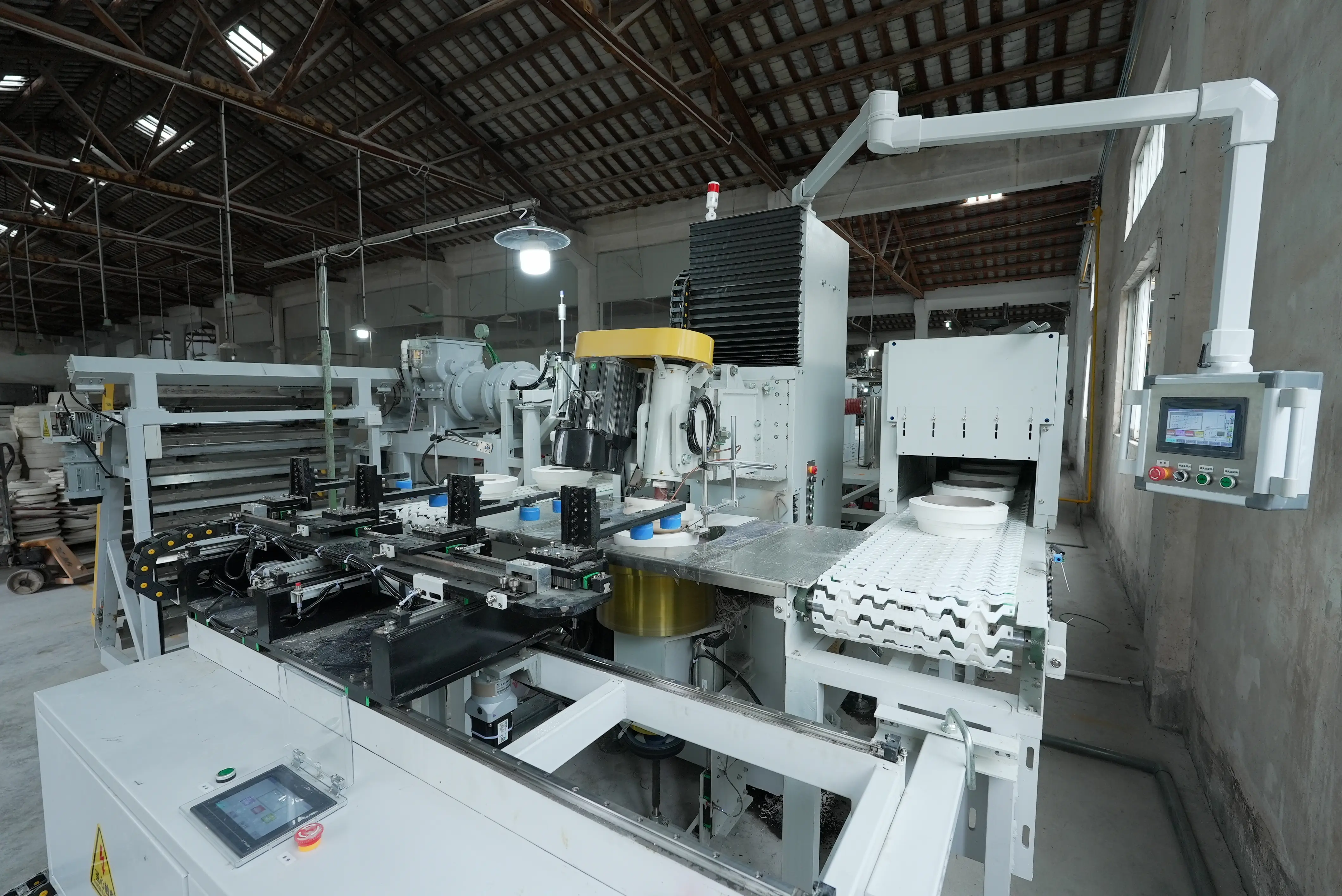
Why Choose a Turnkey Ceramic Production Project
Setting up a ceramic factory is a capital-intensive and technically complex process.
Many manufacturers face challenges in aligning equipment suppliers, process engineers, automation integrators, and quality management systems.
A turnkey ceramic production project solves this problem by providing a single, integrated solution — covering factory layout design, equipment supply, installation, commissioning, and staff training — all managed under one contract.
According to the Ceramic Industry Association, turnkey ceramic projects can reduce total setup time by 35% and ensure 20–25% faster time-to-market compared to conventional multi-supplier setups.
Key Phases of a Turnkey Ceramic Production Project
A professional turnkey project follows a standardized engineering and execution flow to minimize uncertainty and risk.
| Phase | Description | Key Deliverables |
|---|---|---|
| 1. Feasibility Study & Planning | Market research, capacity assessment, and ROI modeling | Business plan, investment scope |
| 2. Factory Layout & Engineering Design | CAD-based facility design and material flow simulation | Layout drawings, equipment specification |
| 3. Equipment Manufacturing & Supply | Production of forming, glazing, and firing equipment | Machines, conveyors, control systems |
| 4. Installation & Integration | On-site setup, wiring, and automation synchronization | PLC + SCADA integration, alignment testing |
| 5. Commissioning & Trial Production | Process calibration and operator training | Certified output samples |
| 6. After-Sales & Maintenance Support | Remote monitoring and spare parts supply | Warranty, service contracts |
Each stage is managed by a dedicated engineering team with clear milestones and documentation.
Engineering Structure of a Complete Ceramic Plant
| Section | Core Systems | Function |
|---|---|---|
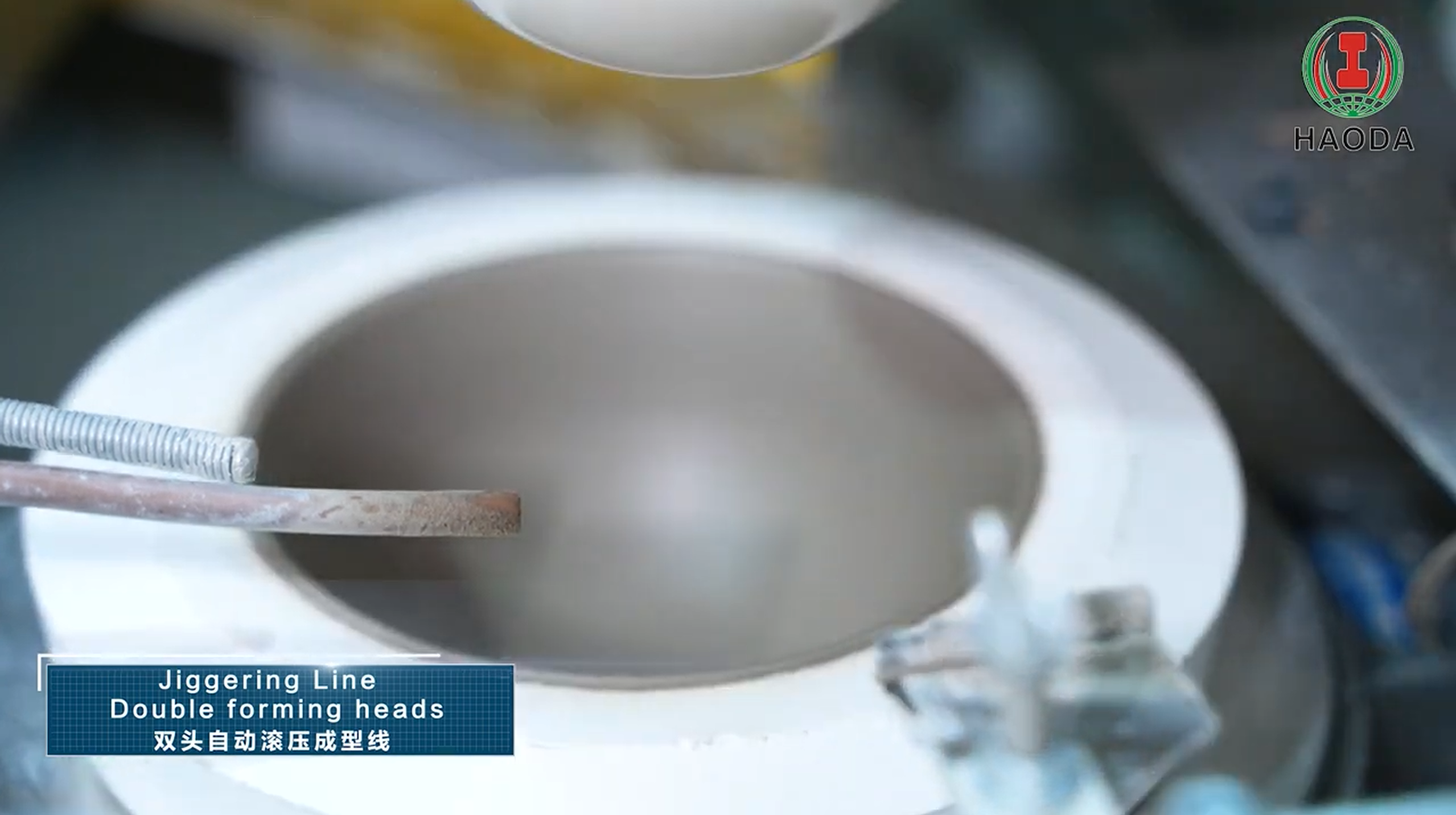
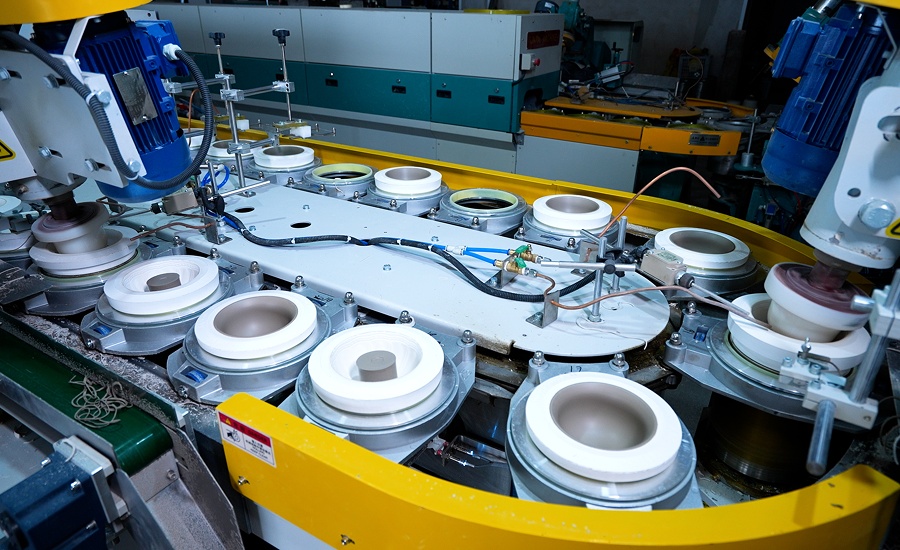
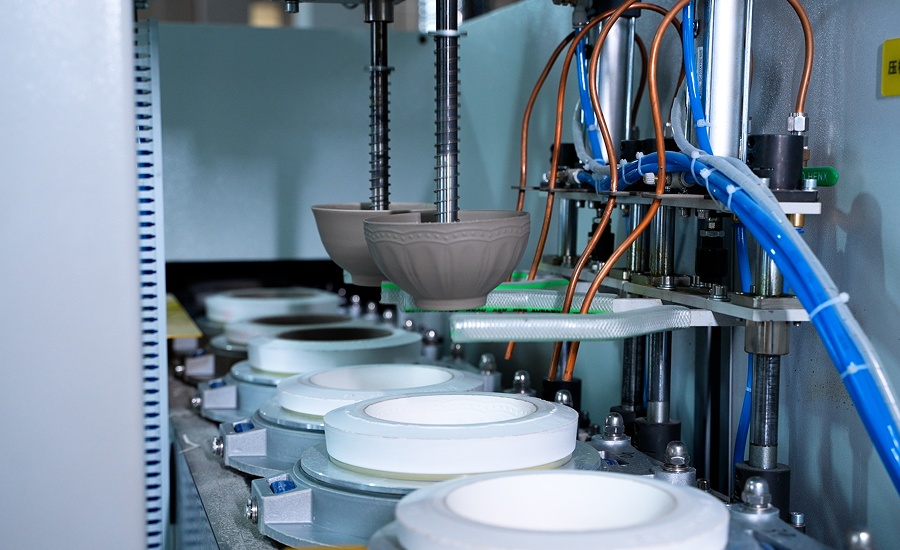
| Forming Area | Automatic Jiggering Lines / High-Pressure Casting | Shape production with precision molds |
| Glazing Section | Spray Booths / Dip Glazing Systems | Apply uniform coatings |
| Decoration Zone | Pad Printing / Digital Ceramic Printers | Add brand and design elements |
| Firing System | Energy-Efficient Tunnel Kilns | Control vitrification and glaze bonding |
| Finishing Line | Automated Polishing Machines | Refine surface texture and edge smoothness |
| Inspection & Packaging | AI Vision Systems + Robotics | Detect defects and automate packing |
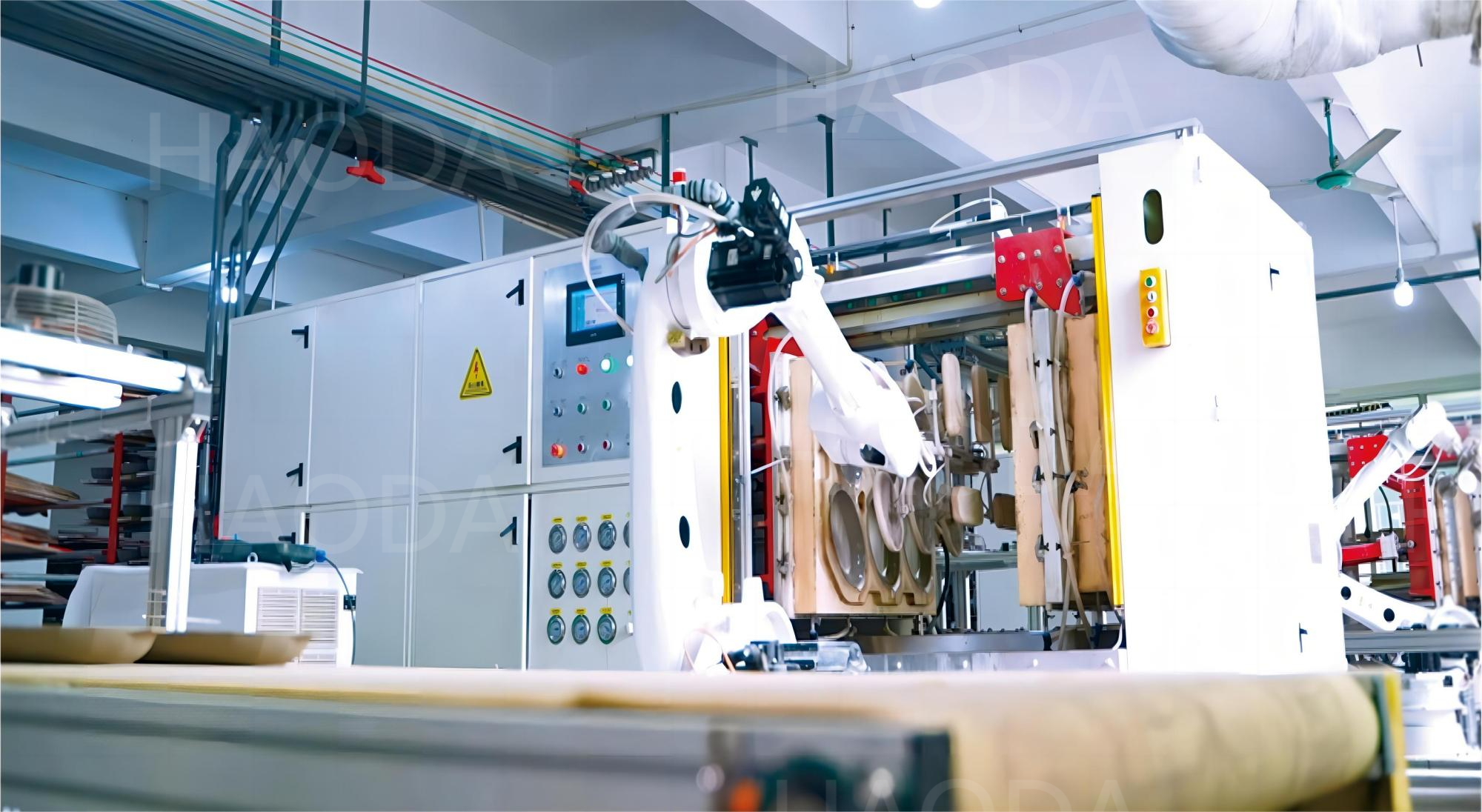
All subsystems are connected under one automation platform — typically Siemens PLC + SCADA, ensuring data-driven control and centralized monitoring.
Quantified Project Benefits
| Metric | Conventional Multi-Vendor Setup | Turnkey Project | Improvement |
|---|---|---|---|
| Setup Duration | 18–24 months | 10–14 months | -40% |
| Coordination Overhead | 4–6 suppliers | 1 system integrator | -80% |
| Line Utilization Rate | 75–80% | 95% | +20% |
| Defect Rate | 8–10% | 3% | -65% |
| ROI Recovery Period | — | 18 months | — |
Data validated by Manufacturing Automation Journal.
These numbers highlight how centralized management and unified engineering drastically improve efficiency and investment return.
Automation and Digital Integration
Modern turnkey plants are equipped with a digital automation backbone, allowing complete transparency and optimization across all processes:
-
Centralized PLC + SCADA Control for equipment coordination
-
MES (Manufacturing Execution System) for real-time production tracking
-
IoT Sensors for predictive maintenance and performance analytics
-
Energy Management System (EMS) to monitor and reduce energy consumption
-
Cloud Dashboards for remote supervision and performance reporting
According to the Energy Efficiency Council, such systems can cut industrial energy usage by up to 25% through smart scheduling and heat recovery optimization.
Environmental and Compliance Advantages
Turnkey ceramic factories are designed in compliance with ISO 14001 and CE standards, ensuring both safety and sustainability.
Environmental Features Include:
-
Heat recovery from kilns for drying and air preheating
-
Closed-loop water recycling systems
-
Low-noise (<75 dB) enclosures for operators
-
VOC and dust filtration systems for glaze operations
These design principles align with ESG manufacturing goals and international environmental directives.
Global Application and Project Examples
Haoda Machine’s turnkey projects have been successfully deployed across Asia, the Middle East, Europe, and Latin America, each tailored to distinct production requirements, cultural design preferences, and environmental regulations.
1. Asia – High-Output Tableware Manufacturing Hubs
In China and Vietnam, Haoda has delivered fully automated porcelain and stoneware lines producing over 20,000 pieces per day, integrating servo-driven jiggering, high-efficiency glaze booths, and low-emission tunnel kilns.
These projects emphasize energy reuse and closed-loop automation for continuous 24-hour operation, helping factories meet export demand for Japan, the EU, and North America.
2. Middle East – Hospitality and Institutional Ware Projects
We engineered large-scale hotel tableware factories in the UAE and Saudi Arabia, focusing on luxury-grade dinnerware with automated decoration and color control systems.
To handle high-gloss finishes required by premium brands, the production lines included dual-glazing booths and fine-polishing units synchronized with digital decoration modules.
3. Europe – Modernization and Sustainability Upgrades
For traditional ceramic producers in Italy and Poland, Haoda implemented automation retrofits and energy recovery systems.
Older shuttle kilns were replaced with digitally controlled tunnel kilns featuring heat recovery, reducing gas consumption by 28%.
These upgrades aligned with EU carbon reduction directives while preserving craftsmanship standards.
4. Latin America & Africa – New Market Entrants and Export Expansion
Haoda supported first-time investors in Brazil, Egypt, and Kenya in establishing complete turnkey factories, from layout design to operator training.
Each project incorporated local material adaptation, ensuring clay formulation, drying curves, and glaze viscosity matched regional raw materials.
This localized engineering approach reduced technical risks and enabled stable output from day one of operation.
5. Project Execution and Global Delivery Model
Haoda employs a “Design–Manufacture–Ship–Install” delivery model under strict ISO project management protocols.
Each project includes:
-
Factory layout optimization and simulation
-
Containerized equipment delivery with on-site assembly
-
International supervision teams ensuring installation precision within ±2 mm tolerance
-
Production ramp-up assistance and remote monitoring after commissioning
Through these projects, Haoda has built a proven track record in executing cross-border turnkey projects that combine technical sophistication, rapid deployment, and localized adaptation — ensuring global investors can achieve commercial readiness in under 14 months.
ROI and Financial Perspective
| Category | Traditional Project | Turnkey Solution | Change |
|---|---|---|---|
| Project Management Cost | USD 500,000 | USD 250,000 | -50% |
| Setup Time | 24 months | 14 months | -42% |
| Operational Readiness | 80% baseline | 100% full operation | +25% |
| Warranty & Service Coverage | 1 year | 3 years | +200% |
| ROI | — | 1.5 years | — |
Turnkey delivery ensures faster payback and predictable performance, reducing technical and financial risk for investors.
Comprehensive Project Support from Haoda Machine
As a specialized ceramic machinery and engineering solution provider, Haoda Machine delivers end-to-end turnkey solutions combining automation, process engineering, and international installation expertise.
Key Advantages Include:
-
Integrated Manufacturing System Expertise – from forming to decoration and packaging, fully automated and synchronized.
-
Global Delivery Experience – proven success in over 30 international projects with multilingual installation and remote diagnostic teams.
-
Customized Engineering – adaptable plant designs for porcelain, stoneware, and bone china production.
-
Sustainability by Design – heat reuse, water recycling, and energy optimization for long-term operational efficiency.
-
Full Lifecycle Support – including equipment calibration, training, spare parts logistics, and predictive maintenance software.
-
High Uptime Guarantee – over 98% equipment reliability backed by continuous monitoring and data-driven support.
Haoda’s turnkey projects are built on engineering precision, financial accountability, and global service assurance, enabling ceramic manufacturers to confidently scale production with measurable ROI and international-standard quality.
For project consultation or collaboration, please visit Haoda Machine or contact our technical department to discuss your factory setup needs.