
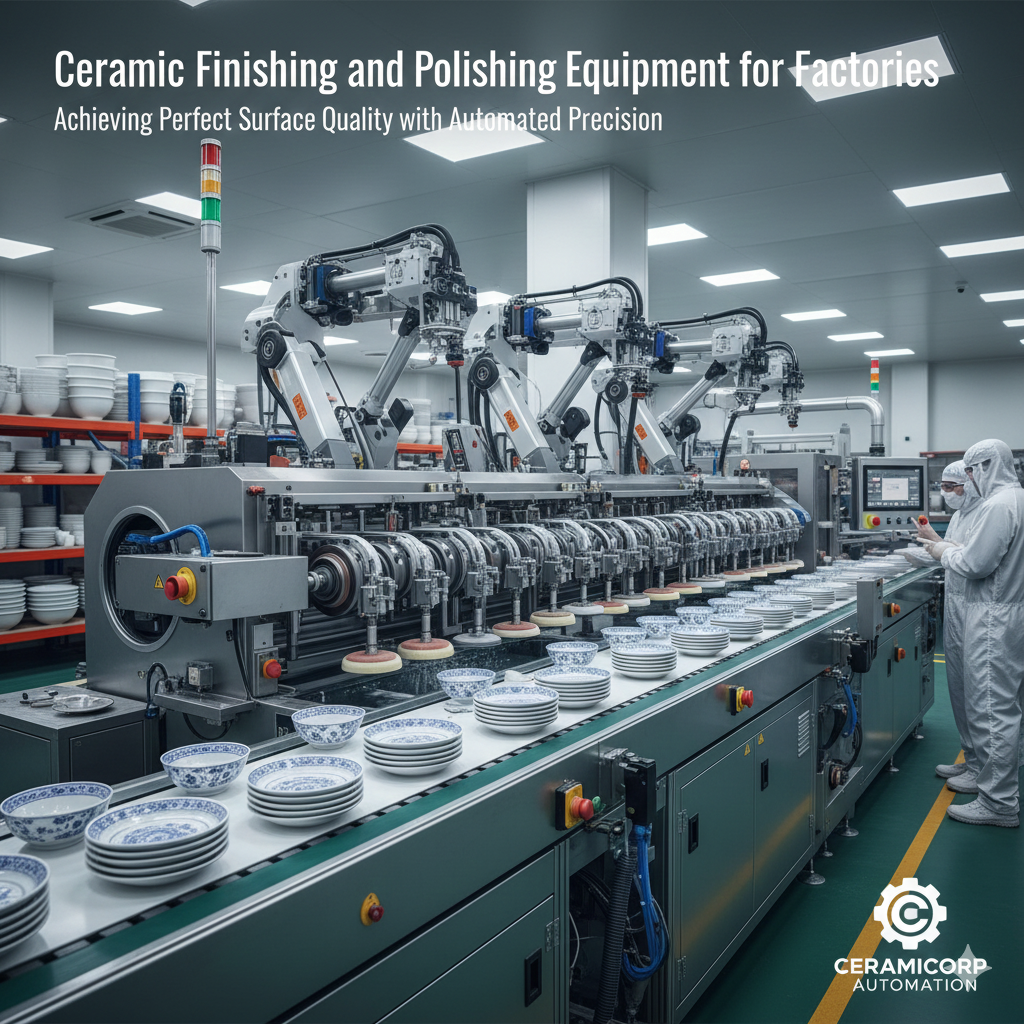
Ceramic Finishing and Polishing Equipment for Factories: Achieving Perfect Surface Quality with Automated Precision
The Importance of Finishing and Polishing in Ceramic Manufacturing
After forming, drying, and glazing, finishing determines the final quality of ceramic products — it removes surface irregularities, smooths edges, and enhances gloss uniformity.
In mass production, manual polishing is no longer viable: it’s inconsistent, time-consuming, and prone to defects.
The shift toward automated finishing and polishing equipment allows manufacturers to control surface roughness (Ra < 0.2 µm) and maintain dimensional precision, critical for premium export-grade ceramics.
According to the Ceramic Industry Association, automated polishing lines can increase finishing consistency by 80% and reduce rework costs by 35%, making them essential in competitive tableware manufacturing.
Structure and Working Principle of Ceramic Polishing Lines
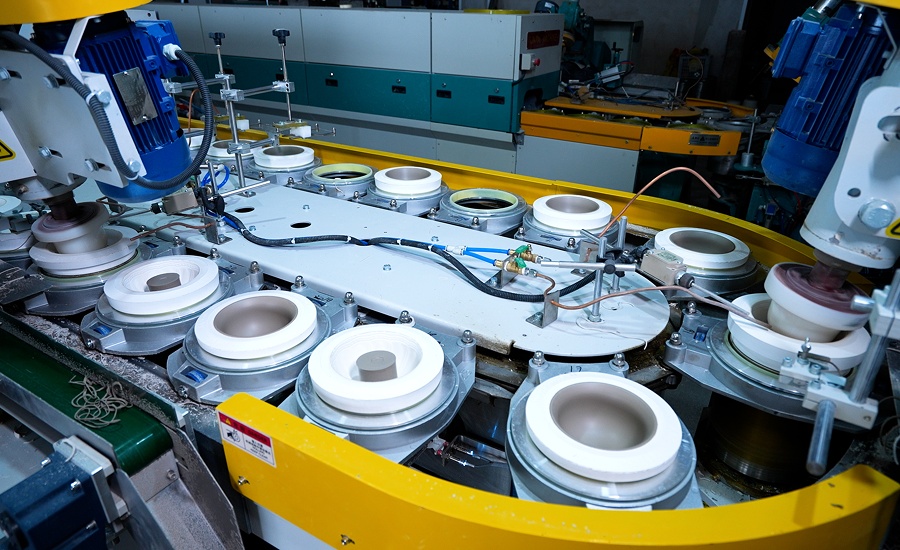
A modern ceramic finishing system typically includes several integrated modules:
-
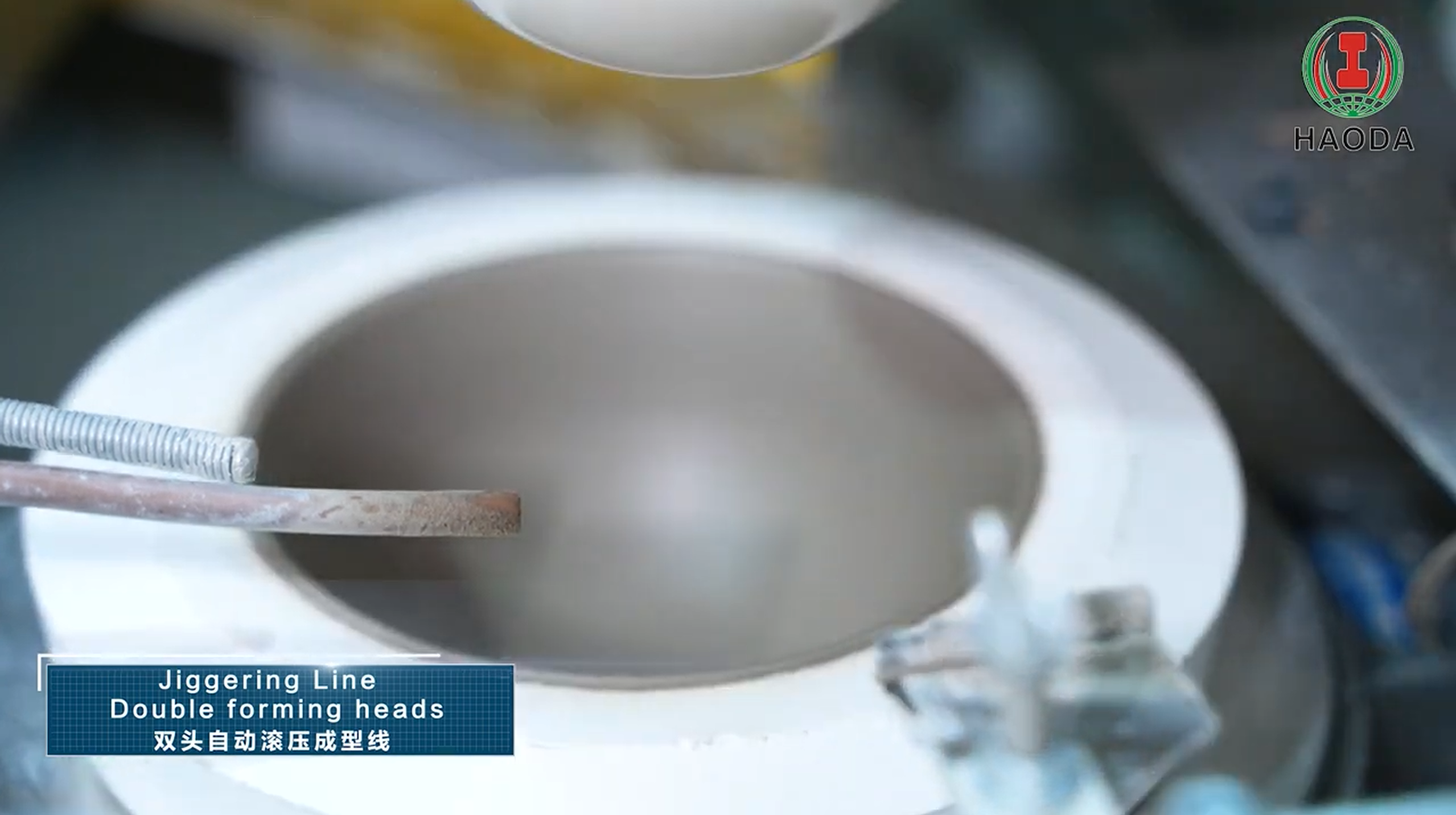
Edge Trimming Unit: Removes burrs and mold lines after forming.
-
Surface Grinding Section: Uses diamond or silicon-carbide abrasive belts to smooth uneven surfaces.
-
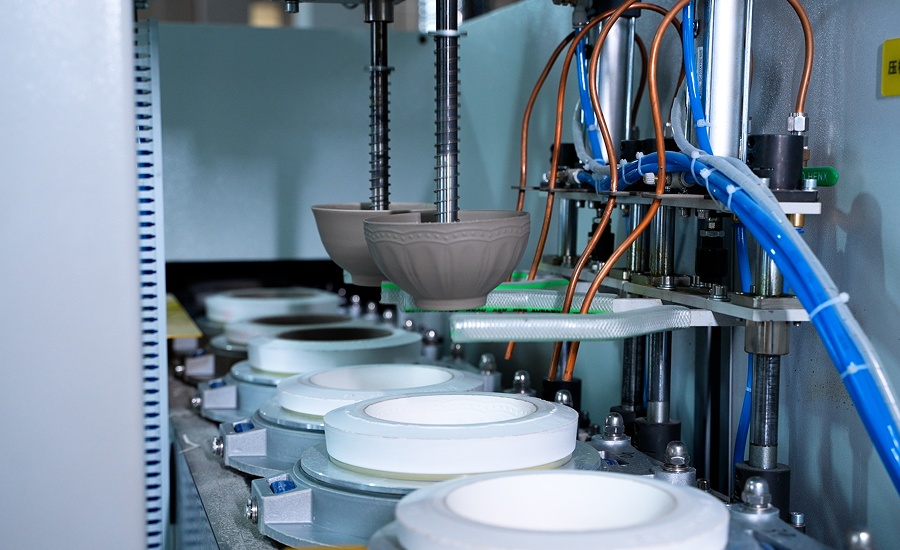
Fine Polishing Unit: Employs variable-speed pads for mirror-grade finishing.
-
Automated Washing and Drying Zone: Ensures residue-free output ready for glazing or packing.
-
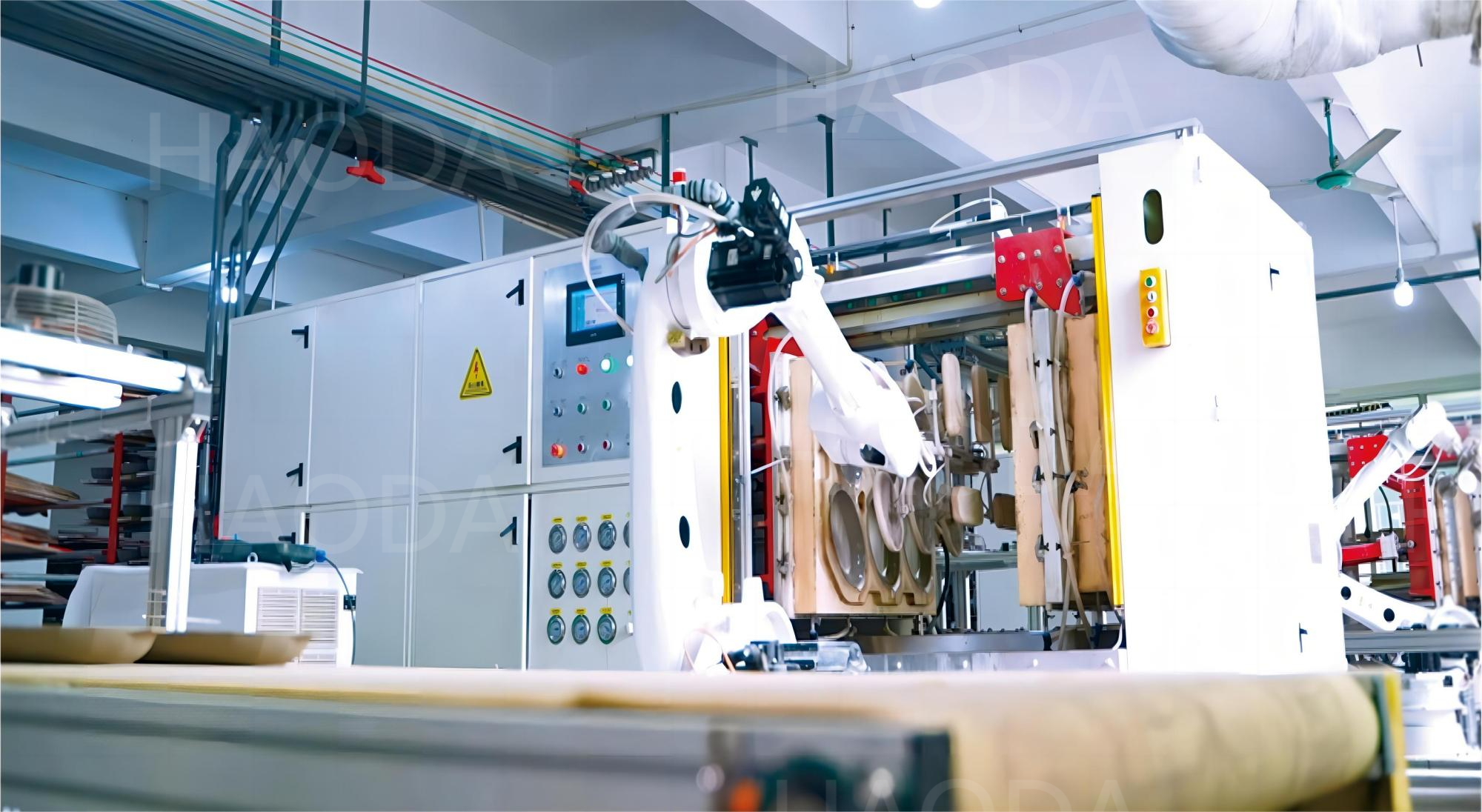
PLC-Controlled Conveyor System: Synchronizes all sections for seamless, unmanned operation.
These systems are optimized for tableware like plates, cups, and bowls — capable of handling 1,200–2,000 pieces per hour, depending on part size and polishing intensity.
Performance and Process Comparison
| Parameter | Manual Finishing | Automated Finishing Line | Improvement |
|---|---|---|---|
| Output (pcs/hour) | 400–600 | 1,200–2,000 | +250% |
| Surface Consistency | ±20% variation | ±5% variation | +75% |
| Defect Rate | 8–10% | 2–3% | -70% |
| Labor Requirement | 6–8 workers | 2 workers | -65% |
| Rework Cost | 100% baseline | 60% baseline | -40% |
The data clearly shows how automation transforms ceramic finishing from a labor-intensive process to a precision-controlled production stage.
Technical Highlights and Innovations
1. Multi-Axis Servo Control
Each polishing arm operates under servo motion control, maintaining uniform contact pressure to achieve consistent finish thickness.
2. Modular Polishing Heads
Multiple interchangeable heads allow rapid adjustment between different tableware geometries — from flat plates to deep bowls.
3. Intelligent Abrasive Management
Automatic abrasive belt tensioning and lifetime tracking reduce material waste and maintain stable cutting force.
4. Integrated Water Filtration and Recycling
A closed-loop filtration system reuses up to 85% of process water, ensuring compliance with ISO 14001 environmental standards.
5. Smart Quality Monitoring
AI vision sensors detect surface defects in real time and automatically flag inconsistent patterns for operator review.
ROI and Energy Efficiency Analysis
| Category | Manual Method | Automated Line | Change |
|---|---|---|---|
| Labor Cost (Annual) | USD 120,000 | USD 55,000 | -54% |
| Abrasive Material Usage | 100% baseline | 70% baseline | -30% |
| Energy Consumption | 100% baseline | 82% baseline | -18% |
| ROI Payback Period | — | 15 months | — |
Data sourced from Manufacturing Automation Journal.
The ROI advantage of automated finishing is driven not only by labor reduction but also by material optimization and higher throughput.
Integration with Factory Workflow
The ceramic finishing and polishing equipment can be integrated before or after glazing, depending on product type and finishing depth.
-
Pre-glaze polishing: Ideal for ensuring even coating thickness and adhesion.
-
Post-glaze polishing: Provides high-gloss, defect-free surfaces for premium tableware lines.
-
Inline setup: Connects directly with forming and drying conveyors for continuous, unmanned operation.
By linking to an automatic jiggering line or pad printing system, manufacturers can establish an end-to-end smart ceramic production line that requires minimal manual intervention.
Environmental and Safety Considerations
Polishing traditionally generates ceramic dust and wastewater — two key environmental concerns.
Haoda’s integrated systems address both through:
-
Enclosed dust collection chambers (99% capture rate).
-
Water recycling modules reducing effluent by up to 85%.
-
Sound-dampening enclosures ensuring <75 dB operation noise.
These features align with standards recommended by the Energy Efficiency Council, improving sustainability while maintaining worker safety.
After-Sales and Technical Services
Haoda provides complete project support, including:
-
Equipment installation and training
-
Process optimization and parameter tuning
-
Remote diagnostics and spare parts delivery
-
Custom system design for OEM projects
For system specifications or pricing, visit Haoda Machine or contact our technical team.