
The Need for a Complete Ceramic Production Line
In today’s global ceramic market, manual and semi-automated production setups struggle with efficiency and consistency.
Factories face challenges such as:
-
Product variation due to manual handling
-
High rejection rates during forming and glazing
-
Discontinuous material flow increasing cycle time
-
Energy waste in non-integrated drying and firing systems
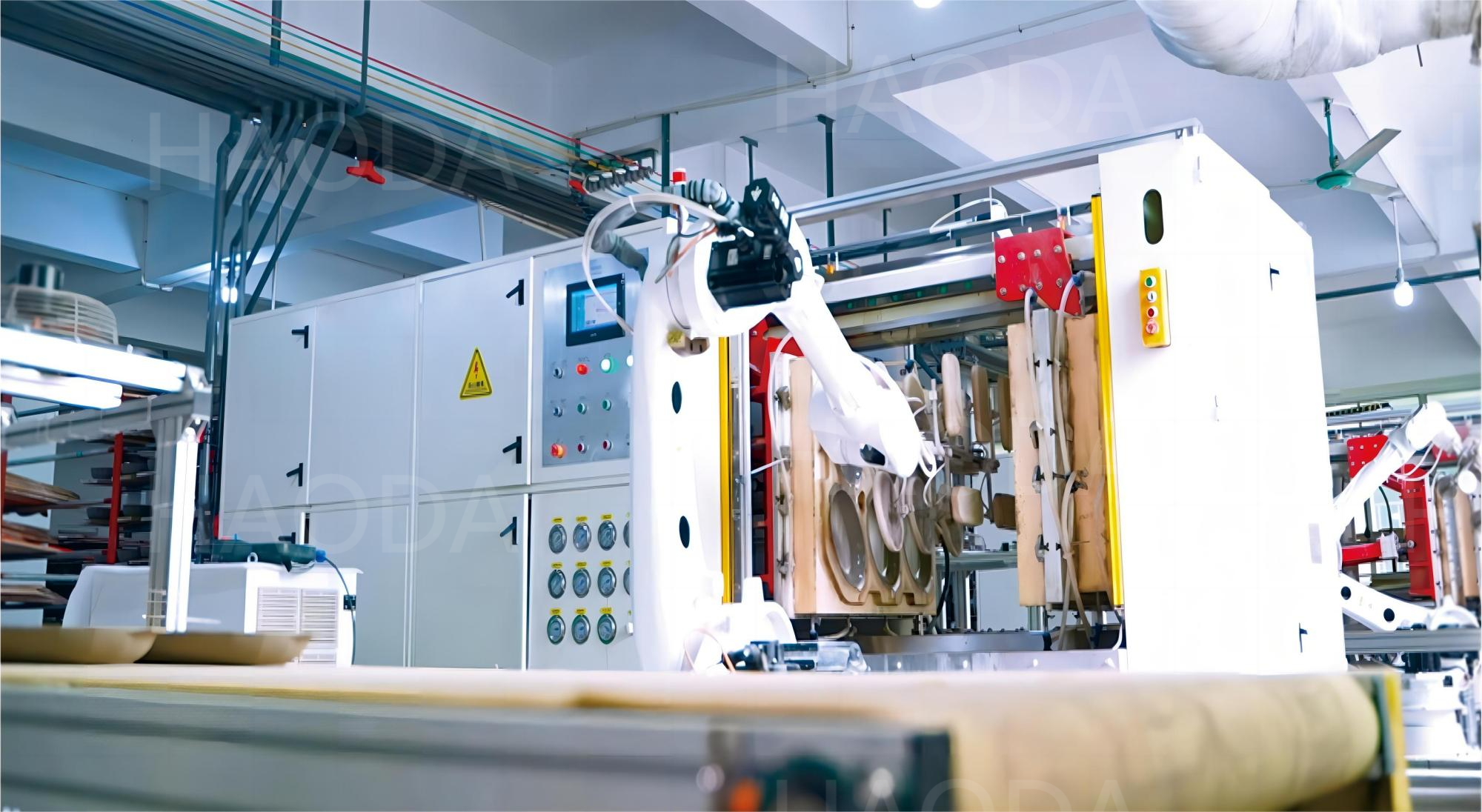
A complete tableware production line resolves these issues through continuous automation — integrating every process from forming to final polishing, minimizing human interference, and standardizing quality for high-volume export production.
According to the Ceramic Industry Association, integrated ceramic production systems can reduce overall production cost per unit by 25–35% and improve on-time delivery by 40% compared to conventional segmented lines.
Structural Composition of a Complete Tableware Production Line
Modern full-line systems are modular and scalable. The standard configuration typically includes:
| Process Stage | Core Equipment | Function |
|---|---|---|
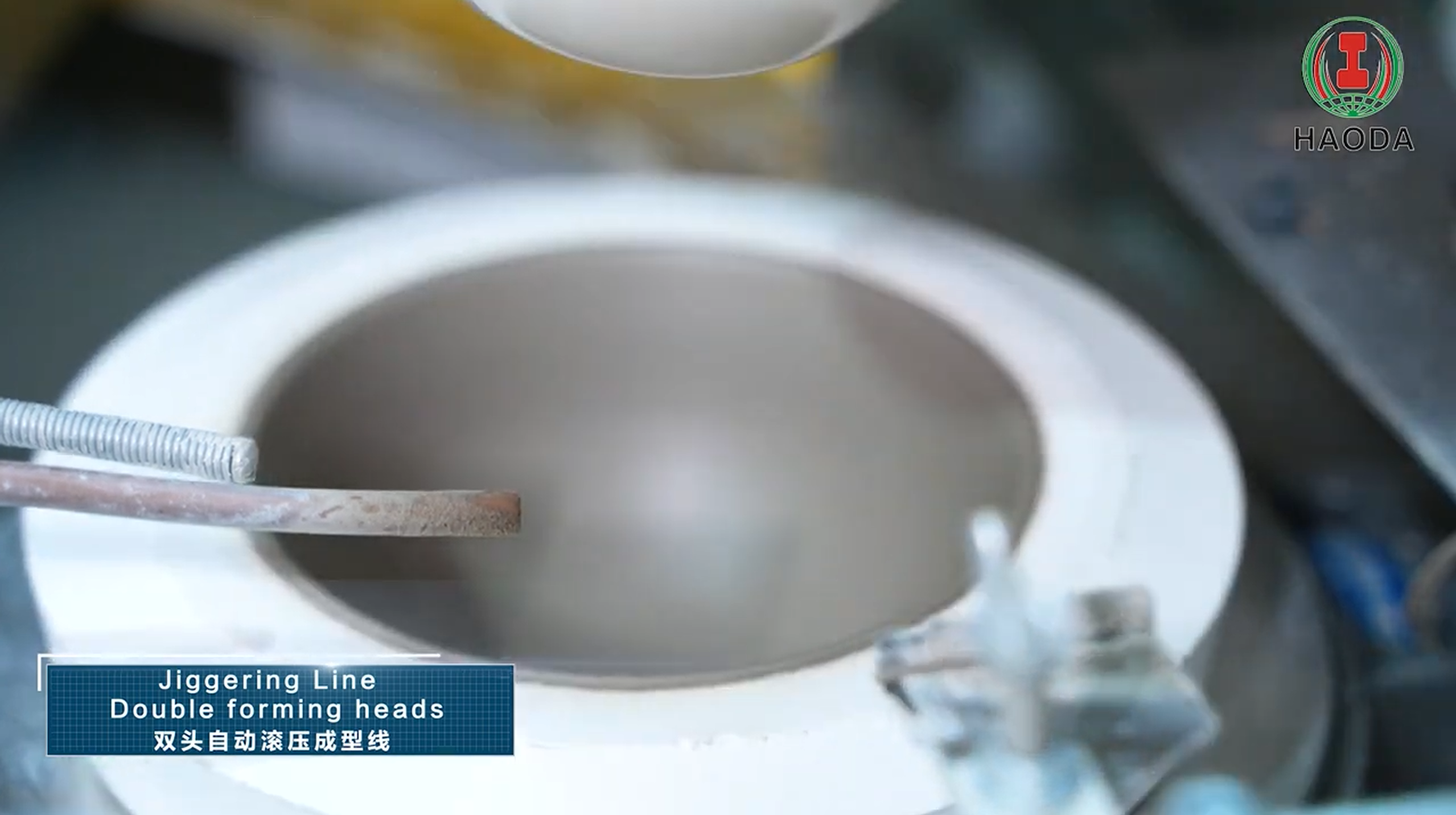
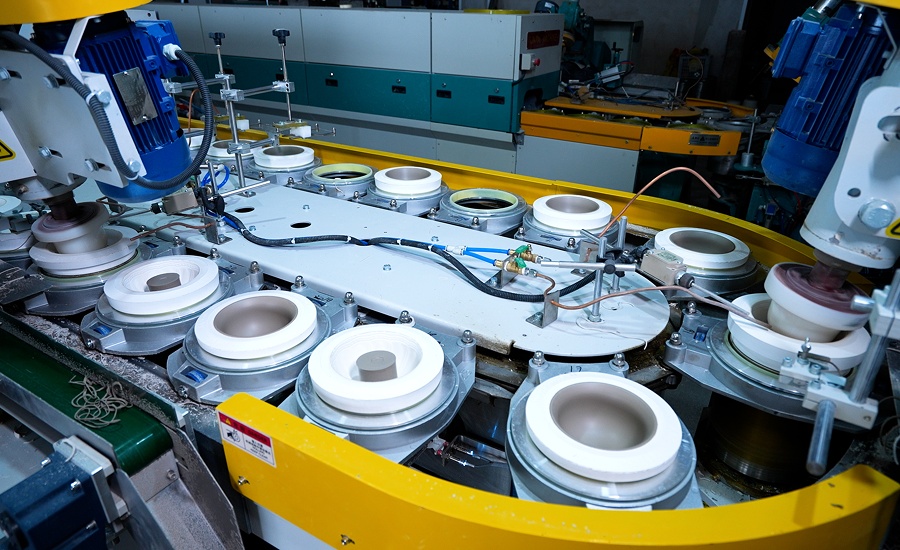
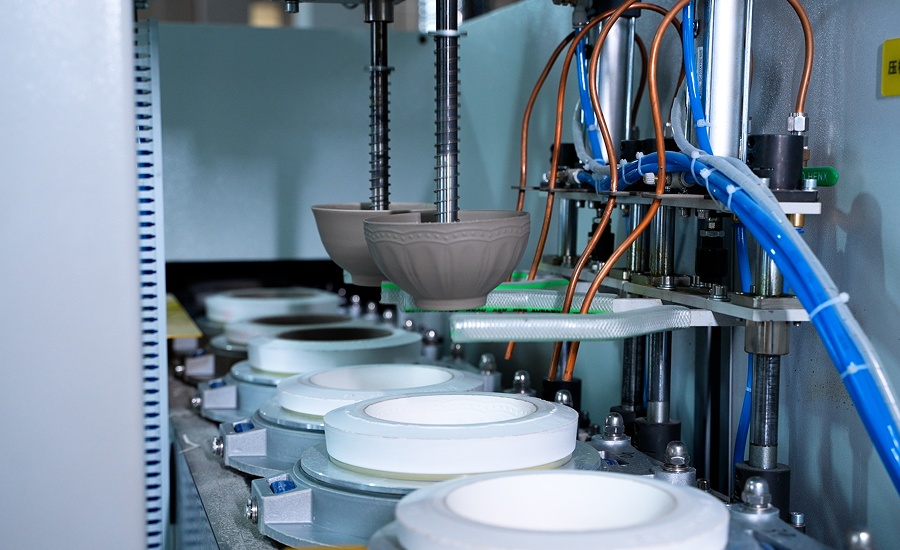
| 1. Forming | Automatic Jiggering Line / High-Pressure Casting System | Shapes clay into consistent blanks with uniform thickness |
| 2. Drying | Controlled Hot-Air Drying Tunnel | Removes moisture without deformation |
| 3. Glazing | Automatic Glaze Spraying / Dip Glazing Unit | Ensures even coating across all surfaces |
| 4. Decoration | Multi-Color Pad Printing / Ceramic Decoration Printer | Applies patterns, branding, or customized designs |
| 5. Firing | Energy-Efficient Tunnel Kiln | Achieves vitrification and glaze bonding |
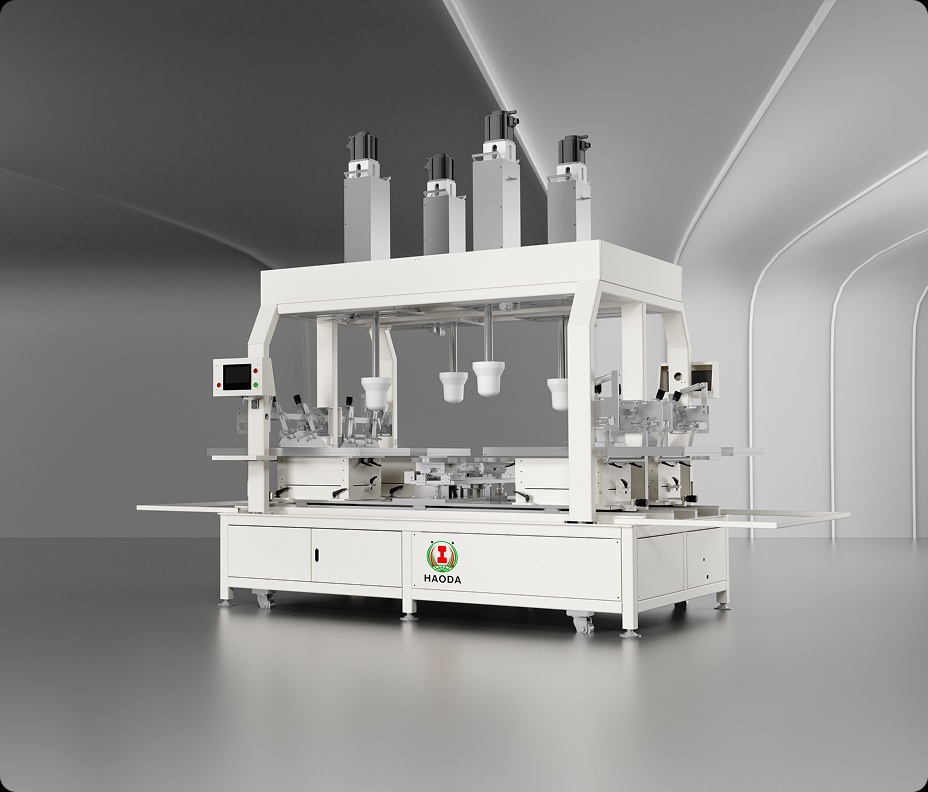
| 6. Finishing | Automated Polishing & Edge Refinement Machine | Creates smooth, uniform, defect-free surfaces |
| 7. Inspection & Packaging | Vision-Based QC + Robotic Packing System | Detects micro-defects and automates final packaging |
Each section communicates through a central PLC control system and synchronized conveyor network, allowing complete digital supervision of temperature, pressure, and timing parameters.
Technical Highlights and System Capabilities
1. Smart Synchronization Between Modules
Servo and PLC integration keeps forming, drying, and glazing cycles aligned within ±1.5 seconds, preventing bottlenecks or idle time.
2. Adaptive Glaze Spraying Technology
AI-based sensors measure product curvature and adjust spray angle automatically, reducing glaze waste by up to 20%.
3. Tunnel Kiln Heat Recovery System
Recovered exhaust heat pre-warms drying air, reducing fuel consumption by 18–22%, compliant with Energy Efficiency Council industrial standards.
4. Quality Traceability System (QTS)
Every product carries a digital ID — logging temperature, forming pressure, and glaze batch for full lifecycle traceability.
5. Modular Scalability
Factories can start with forming + glazing + firing units, then upgrade to include decoration and polishing modules without system redesign.
Measured Performance and Output Comparison
| Metric | Semi-Automatic Line | Complete Production Line | Improvement |
|---|---|---|---|
| Output (pcs/hour) | 1,000–1,200 | 2,200–2,800 | +130% |
| Labor Requirement | 8–10 operators | 3–4 operators | -60% |
| Rejection Rate | 9–10% | 2–3% | -70% |
| Energy Consumption | 100% baseline | 78% baseline | -22% |
| Line Utilization | 70–75% | 95% | +25% |
These figures, validated by Manufacturing Automation Journal, demonstrate how continuous automation increases efficiency and consistency while lowering operational costs.
ROI and Economic Benefits
| Category | Traditional Line | Complete Automated Line | Change |
|---|---|---|---|
| Initial Investment | — | +30% | — |
| Labor Cost (Annual) | USD 160,000 | USD 80,000 | -50% |
| Scrap/Rework Loss | 8–10% | 3% | -65% |
| Maintenance Cost | USD 25,000 | USD 15,000 | -40% |
| ROI Period | — | 16–18 months | — |
The automation upgrade not only enhances productivity but also ensures predictable output, improving both cash flow and factory utilization.
Environmental and Quality Advantages
Haoda’s production lines are engineered to meet ISO 9001 and CE safety standards.
Key Environmental Features:
-
Enclosed glaze chambers reduce VOC emissions.
-
Heat reuse system cuts gas consumption by up to 20%.
-
Water recycling modules recover 80–85% of process water.
-
Noise isolation panels ensure <75 dB operation levels.
These systems ensure compliance with global ESG and sustainability frameworks, making the line suitable for factories exporting to Europe, the Middle East, and North America.
System Integration and Remote Management
The production line integrates into ERP and MES systems, enabling:
-
Live data monitoring of line performance and equipment health
-
Predictive maintenance via IoT sensors
-
Remote control through secure cloud dashboards
-
Production analytics for continuous improvement
This digital layer converts the line from a traditional machine setup into a smart ceramic factory capable of self-optimization and traceable reporting.
Installation, Training, and After-Sales Support
Each project includes:
-
Customized line layout planning
-
On-site installation and commissioning
-
Operator and maintenance training
-
Global technical support with spare parts logistics
For project consultation or equipment quotation, visit Haoda Machine or contact our engineering team.