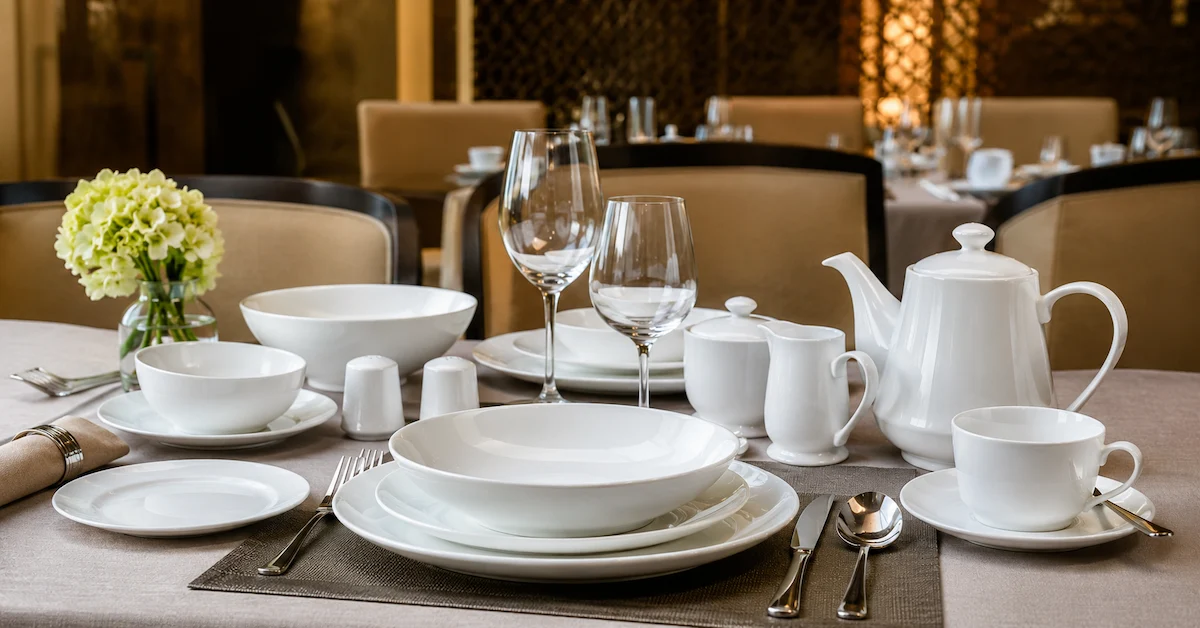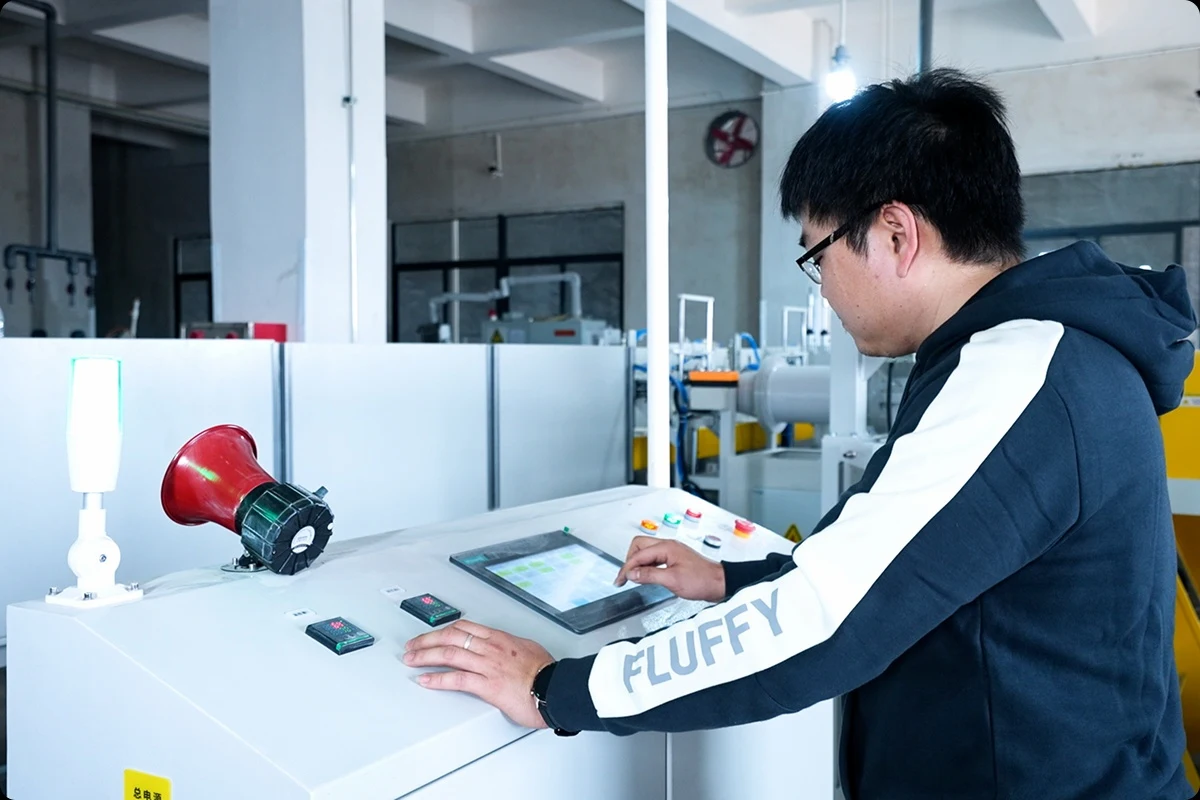

Are you running a small to medium sized ceramics factory and dealing with these challenges?
- Fully automatic molding line has high investment cost
- Large automation equipment factory space is limited
- Manual molding results in unstable product quality
- Difficulty finding skilled workers using traditional methods
- Need flexibility to handle multiple product types
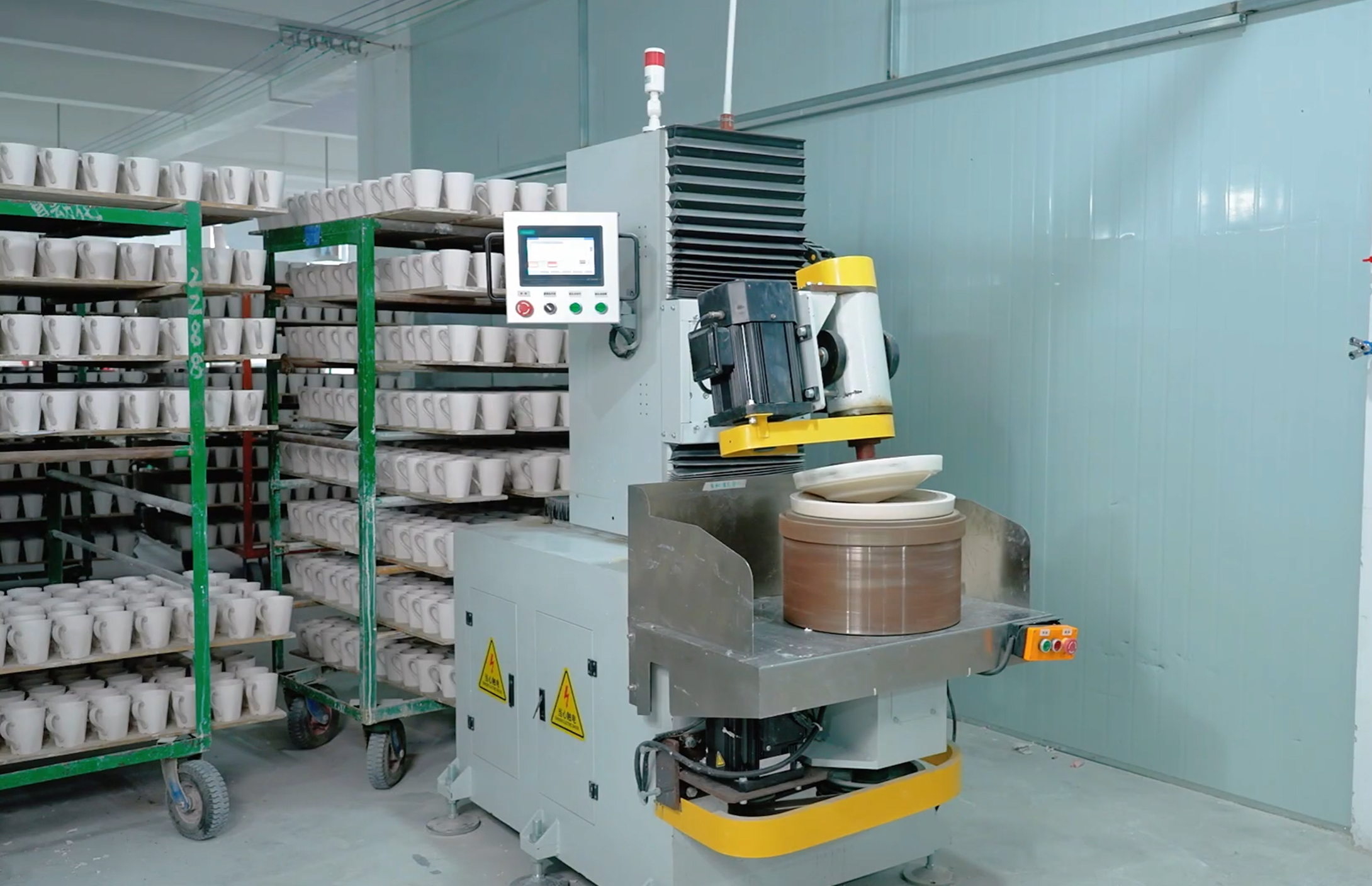
Many factory owners face a dilemma: fully automated production lines are too expensive and complex, and hand molding cannot meet modern production needs. This is where the Gouda CNC roll forming machine comes in – a semi-automatic solution that bridges the gap between manual and fully automatic production.
What is a CNC roll forming machine?
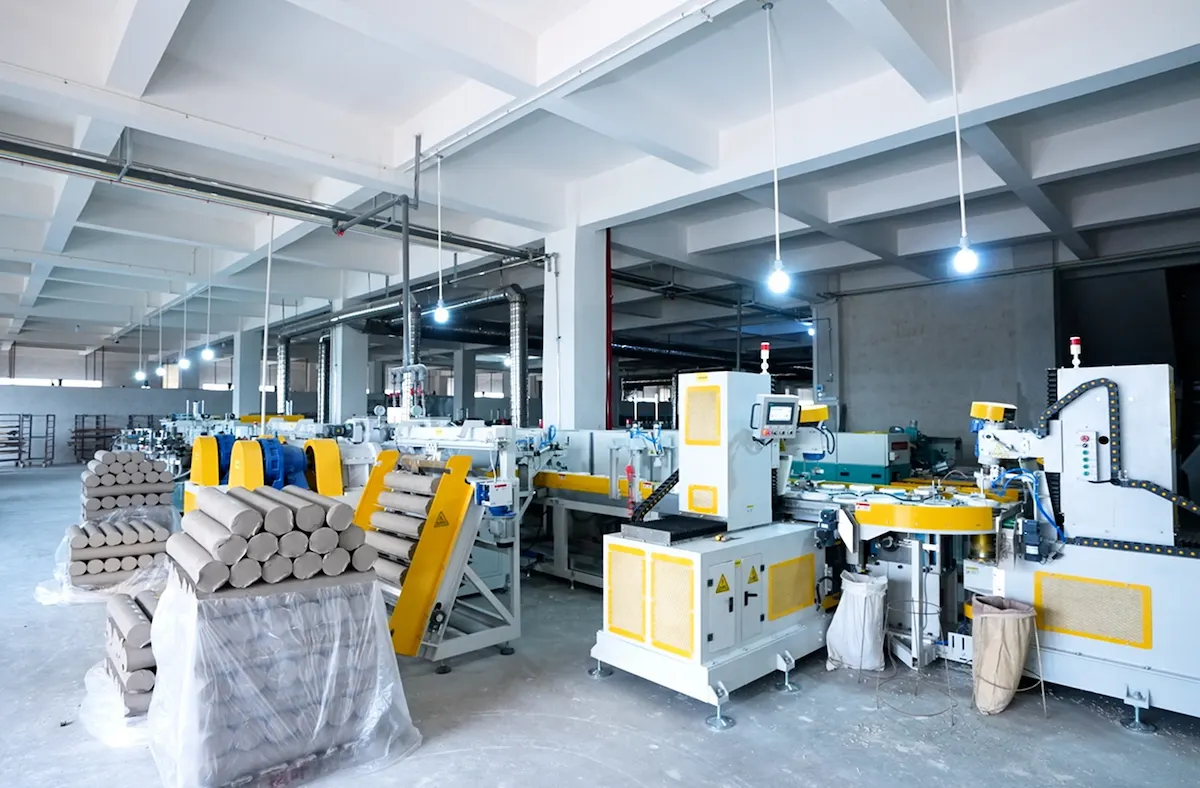
CNC roll forming machine is a semi-automatic ceramic forming equipment specially designed for daily ceramic tableware. It uses CNC technology to precisely form clay into various shapes, providing:
- Consistent molding quality through CNC precision control
- Easy to operate , requires minimal training
- Flexible production of multiple product types
- Compared with fully automated production lines, the investment is economical and affordable
Watch our machines in action:
The main advantages of Gouda CNC roll forming machines
Efficient and stable semi-automatic molding
CNC roll forming systems transform your forming process from unpredictable manual work to reliable machine production. Each molding cycle is controlled by precise CNC parameters, ensuring consistent results regardless of the operator's skill level.
Productivity benefits include faster cycle times, consistent rhythm across shifts, fatigue-free continuous operation and predictable output for planning downstream processes.
For a factory that produces 10-inch dinner plates, hand-forming might produce 300-400 plates per worker per day. Using CNC roll forming machines, the same production goals can be achieved with fewer workers and the quality is more stable.
Easy to learn and operate
Unlike complex fully automated production lines that require specialized technical personnel, CNC roll forming machines are designed to be easy to operate. Your workers can become skilled operators in 2-3 days of training instead of weeks or months.
The training quickly covers basic tasks: basic machine startup and shutdown takes about 1 hour, loading clay and unloading green bodies takes about 2 hours, selecting and loading different molds takes 1-2 hours, adjusting CNC parameters for new products takes 2-3 hours, and basic daily maintenance can be learned in just 1 hour.
This simplicity means less reliance on skilled labor, lower training costs, flexibility in staffing, and minimal impact on employee turnover.
Improve product consistency
Traditional hand molding relies heavily on the skill and experience of the worker. Even for experienced craftsmen, variations occur throughout the day due to fatigue, inconsistent clay preparation, environmental factors, and natural variations in human technique.
The mechanical forming process eliminates these variables. Wall thickness remains within ±0.3mm compared to manual variation of ±1-2mm. Diameter accuracy is improved to ±1 mm, while manual error is ±3-5 mm. Shape symmetry becomes perfectly symmetrical regardless of operator skill. Weight consistency remains within 3-5%, rather than the typical 10-15% variation of hand molding.
Consistent green bodies improve every subsequent stage of production: uniform moisture results in even drying and fewer cracks, predictable dimensions allow for precise trim settings, consistent surfaces accept glaze evenly, and uniform pieces fire more predictably with less scrap.
Investment costs are controllable
When choosing a molding solution, consider the trade-offs between cost, space, and flexibility. Manual molding requires a low initial investment and minimal space, but requires highly skilled workers and provides unpredictable results. CNC roll forming is a modest investment, with compact space requirements and easy operator training, it maintains flexibility for different products. Fully automatic production lines require the highest investment and the largest floor space, as well as specialized technical personnel for operation and maintenance.
The investment of CNC roll forming machines is 30-50% lower than similar fully automatic production lines, it occupies a smaller area, fits the existing factory layout, and has modular expansion capabilities, allowing you to start with one machine and add more machines as demand grows.
Most factories realize return on investment within 12-18 months through lower labor costs, lower scrap rates, increased production capacity, and better pricing capabilities due to stable quality.
Easy maintenance and reliable operation
The CNC roll forming machine features a highly rigid frame structure designed for continuous daily operation under ceramic factory conditions and includes a dust-proof control cabinet, corrosion-resistant components where required, and easy access to all maintenance points.
The machine is very simple to maintain and can be easily integrated into your production schedule. After each shift, it only takes 5-10 minutes to clean the clay residue from the drum. Weekly inspections and relubrication take approximately 10 minutes, while checking mold condition only takes 5 minutes. Each month, it takes approximately 10 minutes to verify CNC parameter settings. A comprehensive service inspection takes 1-2 hours every quarter and keeps everything running smoothly.
Equipment detailed features
CNC roll forming system—ensuring consistent dimensions of the blank
At the heart of the machine is a CNC roll forming system , which is a significant improvement over traditional manual jigging or CNC mechanical roll forming.
Working principle of CNC system:
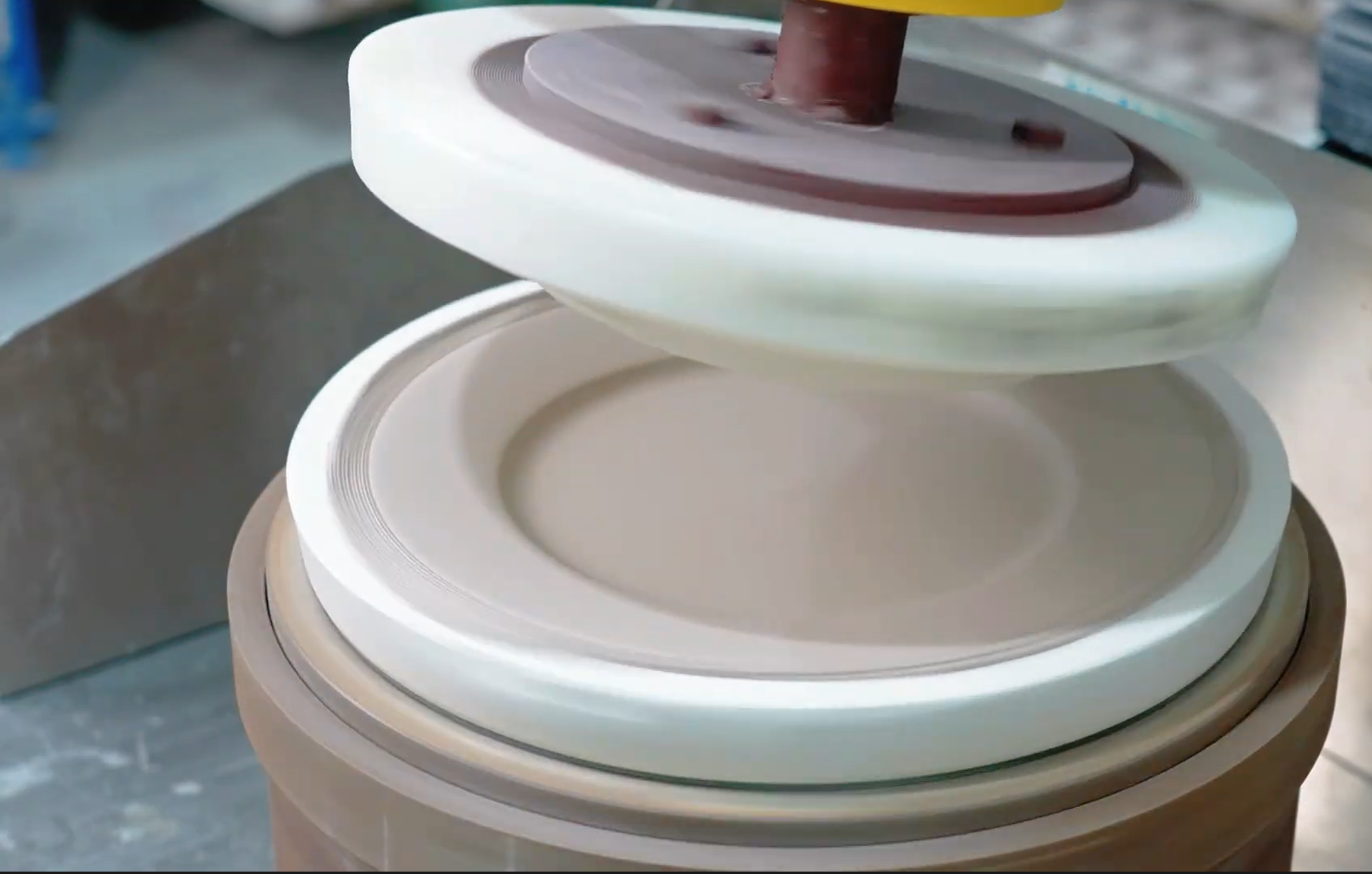
The forming rollers are controlled by a computer numerical control system that precisely manages their position, speed and pressure during each forming cycle. Unlike traditional roller forming where the rollers follow a fixed path, the CNC system can adjust these parameters in real time based on the contours of the product being formed.
What this means for your production:
The system applies consistent forming pressure and follows exactly the same tool path for each workpiece. This precision ensures that each green body has the same wall thickness, diameter and profile shape, which are key factors in downstream processes such as drying, trimming and glazing.
Actual production benefits:
- Dimensional accuracy: diameter ±1mm, wall thickness ±0.3mm
- Contour consistency ensures every product meets design specifications
- Reduced trimming time as the green body requires fewer corrections
- Reduce scrap rates from molding-related defects
Suitable products:
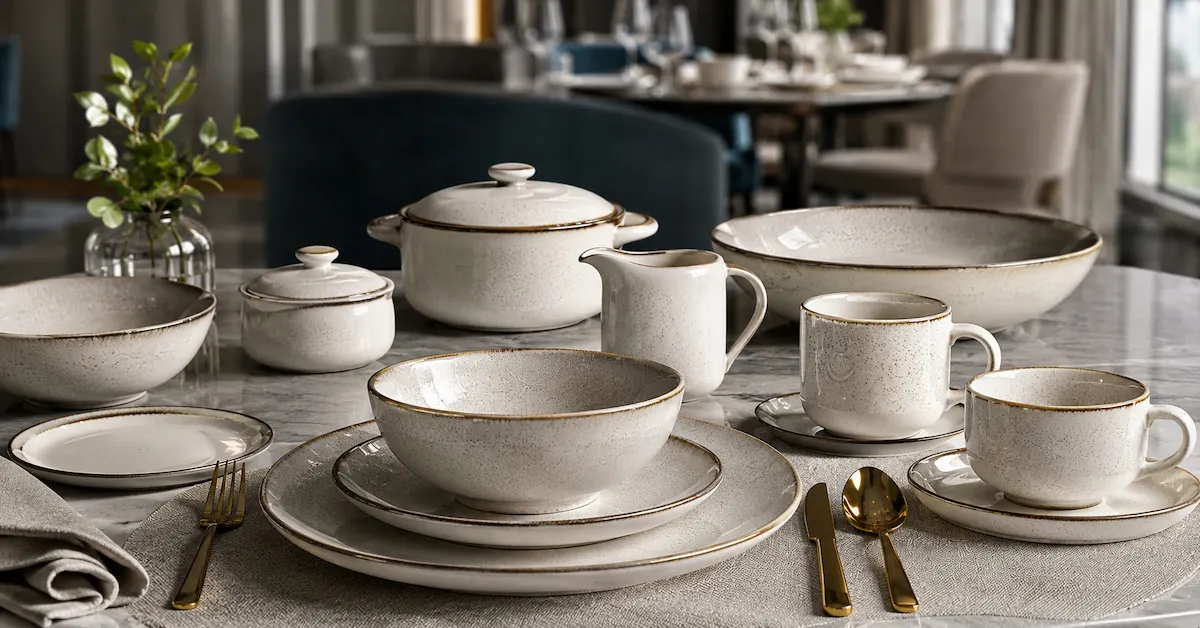
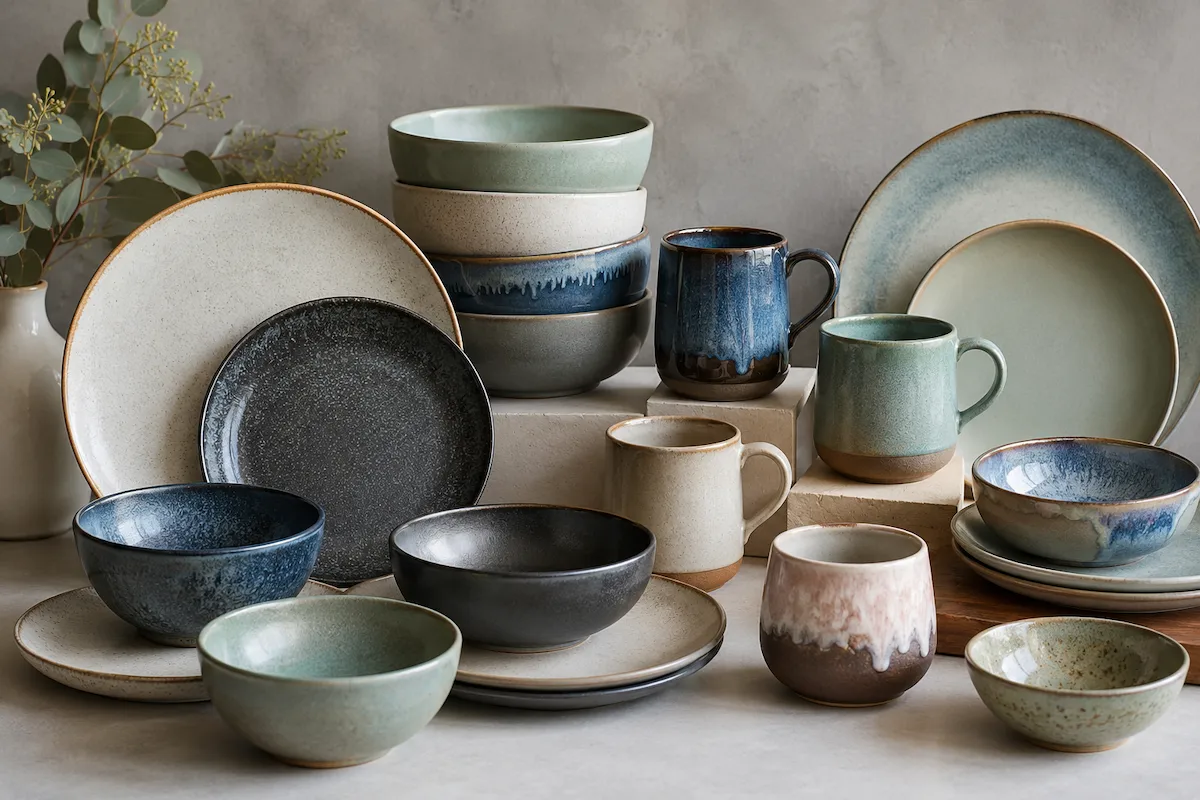
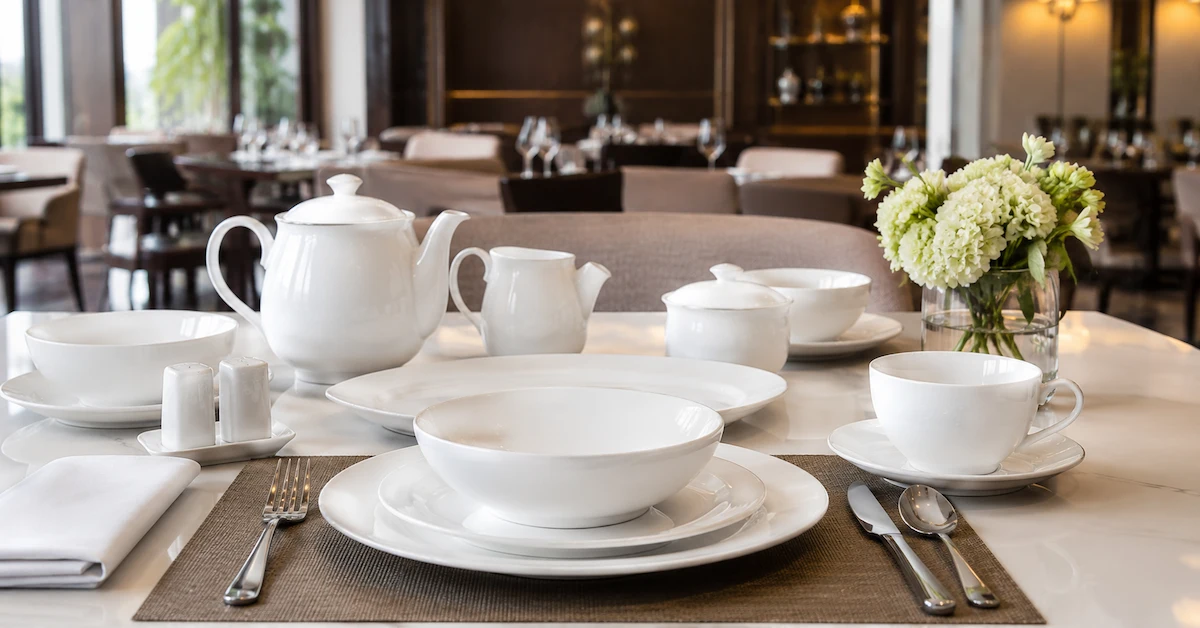
CNC roll forming systems specialize in forming regular-shaped products with consistent contours, including dinner plates, salad plates, soup plates, shallow and deep bowls, plates and cups.
PLC+CNC control - adjustable parameters for different products
The machine combines PLC (programmable logic controller) and CNC (computer numerical control) systems to provide operational flexibility and precise molding control.
PLC control advantages:
The PLC manages the entire machine operating sequence, including safety interlocks, cycle timing, and basic operating logic. This ensures reliable, repeatable machine behavior regardless of operator.
CNC parameter flexibility:
CNC systems allow you to store and recall multiple molding programs, each optimized for a different product. When switching from a 10-inch dinner plate to a 6-inch soup bowl, the operator simply selects the appropriate program - the system automatically adjusts roller, speed and pressure parameters.
Parameter adjustments you can make:
- Scroll wheel speed - faster for simple shapes, slower for detailed outlines
- Molding pressure - adjust based on clay consistency and product depth
- Toolpath contours - different curves for a plate, bowl or cup
- Cycle Timing - Optimized for every product type
Why this is important:
For plants that produce multiple product types, fast parameter switching can eliminate lengthy setup times. The operator simply selects a stored program, eliminating the need for mechanical adjustments for each product change. This capability makes short-run production economical and enables factories to respond quickly to changing customer needs.
Memory capacity:
The system typically stores 50-100 different product programs, enough to meet most plant product mixes. Our technicians can create new programs during installation, or trained operators can develop their own programs.
Quick mold change - adaptable to multi-product production
One of the most valuable features for a shop with a diverse product portfolio is a quick mold change system .
Traditional mold change challenges:
On a traditional roll forming machine, changing a mold can take 1-2 hours, including loosening bolts, aligning the new mold, adjusting roll gaps, and trial molding multiple pieces to verify the setup. This downtime makes short-term production runs inefficient.
Haoda quick change solution:
Our mold change system shortens this process to 15-30 minutes through several design features:
- Quick release clamp secures mold without tools
- Self-aligning mold base ensures automatic correct positioning
- Preset wheel gap settings can be recalled from stored programs
- Visual alignment indicator helps operator verify correct installation
Production Impact:
For factories that produce 5-10 different products, quick mold changes can save 1-2 hours of production time every day. This efficiency allows it to:
- Economically produce smaller batches of products
- Quick response to urgent orders
- Maintain low finished goods inventory
- Provide customers with more product types
Mold Compatibility:
The machine accepts a variety of mold sizes, typically from 4 inches in diameter (small bowls, sauce pans) to 12 inches in diameter (large dinner plates, dinner plates). Custom mold sizes can be accommodated with minor adjustments.
Highly rigid frame structure - ensuring long-term stable operation
The frame structure is the basis for the reliability and accuracy of any molding machine. Haoda CNC roll forming machine adopts a specially designed high-rigidity frame.
Design concept:
The ceramic factory environment presents unique challenges: dust, humidity, vibration from adjacent equipment, and continuous operation. Frames must maintain accuracy for years under these conditions.
Frame structure features:
- Heavy-duty steel construction with welded joints for maximum rigidity
- Vibration-absorbing design isolates the molding mechanism from external disturbances
- Corrosion-resistant coating protects against the effects of moisture and clay dust
- Reinforced mounting points ensure machine stability during operation
Why rigidity is important:
During the shaping process, the rollers exert a lot of pressure on the clay. Any bending or movement in the frame is transferred directly to the green blank, causing dimensional changes. The rigid frame ensures that CNC-controlled movements are precisely executed and do not bend away from the frame.
Long term benefits:
- Maintain accuracy over many years of operation
- Structural stability reduces maintenance
- Product quality remains consistent regardless of machine age
- Higher resale value due to durable construction
quality assurance:
Each frame is precision measured after manufacturing to verify dimensional accuracy. Complete machines are tested under load conditions before shipment to ensure the frame operates as designed.
Single machine investment - flexible production scale
The stand-alone investment model makes CNC roll forming accessible to factories of all sizes.
Start small and grow smart:
Unlike fully automated production lines, which require large upfront investments and high volumes of production to justify, CNC roll forming machines allow factories to start with a single piece of equipment and gradually scale up.
Flexible investment scenarios:
Scenario 1 - New factory or new product line:
Start with a machine and test market demand. If orders increase, increase production capacity by purchasing additional machines. This approach minimizes risk while preserving expansion options.
Start with a machine and test market demand. If orders increase, increase production capacity by purchasing additional machines. This approach minimizes risk while preserving expansion options.
Scenario 2 - Step-by-step automation:
Replace manual forming stations one by one. Train workers on new equipment while maintaining production. Spread the cost of investing over time rather than one huge expense.
Replace manual forming stations one by one. Train workers on new equipment while maintaining production. Spread the cost of investing over time rather than one huge expense.
Scenario 3 - Multi-product factory:
Deploy different machines for different product types. One machine is for plates, another for bowls and a third for cups. Each machine is optimized for its product range.
Deploy different machines for different product types. One machine is for plates, another for bowls and a third for cups. Each machine is optimized for its product range.
Production capacity of each machine:
Typical output range per 8 hour shift is 800-1500 units, depending on product size and complexity. With skilled operators and efficient material handling, output can reach the high end of the range.
Financial planning:
- The initial investment is significantly lower than that of a fully automatic line
- Minimal installation costs – machine arrives ready to run
- Minimal training costs – operators learn quickly
- Maintenance costs are predictable and low
- Payback timeline is typically 12-18 months
Auxiliary Equipment Compatibility—Towards Full Automation
CNC roll forming machines are designed for seamless integration with auxiliary equipment , making them the ideal starting point for progressive automation.
Compatible devices:
The machine can be connected directly to:
- Clay Preparation Systems - Automatic Mixers and Clay Cutters
- Drying system - primary drying chamber and secondary dryer
- Trimming equipment – automatic trimming machines and finishing stations
- Glazing Line – Dip or Spray Glazing Machine
- Conveyor system – for transferring green bodies between stations
Integration method:
Level 1—Independent operation:
The machine operates independently and can handle materials manually. This is the simplest setup and is how most plants start.
The machine operates independently and can handle materials manually. This is the simplest setup and is how most plants start.
Level 2—Semi-Integrated Line:
Connect the molding machine to the clay supply system and drying chamber. Operators load clay and unload green bodies, but the flow of material between stations is mechanized.
Connect the molding machine to the clay supply system and drying chamber. Operators load clay and unload green bodies, but the flow of material between stations is mechanized.
Level 3—Partial Automation:
Add automatic trimmers and conveyor belts. The molding machine becomes part of a coordinated production process that requires minimal human intervention.
Add automatic trimmers and conveyor belts. The molding machine becomes part of a coordinated production process that requires minimal human intervention.
Level 4—Full Automation:
Integrates with robotic handling and complete production line control systems. The CNC roll forming machine serves as the forming station of the fully automatic production line.
Integrates with robotic handling and complete production line control systems. The CNC roll forming machine serves as the forming station of the fully automatic production line.
Why this is important:
Many factories want to automate but cannot afford the upfront investment of an entire production line. This machine allows you to start with molding automation and add other elements as your budget allows. Each integration step increases efficiency and reduces labor requirements to achieve your long-term automation goals.
Integrated technical support:
Haoda's engineering team can help you plan your automation roadmap, recommend compatible equipment, and design a production process that meets your current needs and future goals.
What products can this machine form?
CNC roll forming machines are ideal for a variety of regular-shaped ceramic tableware . Let’s explore each product type and its application scenarios:
Ceramic dinner plate
Application scenarios:
- Household tableware production - production of standard sizes (6 inches, 8 inches, 10 inches, 12 inches) for daily household use
- Restaurant Supply Chain – Consistent quality of bulk orders for restaurants and catering companies
- Hotel tableware - meeting the strict quality requirements of the hotel industry
- Production for Export Markets – Dimensional accuracy is critical to international buyers
Ceramic bowls (various sizes)
Application scenarios:
- Rice bowl – small to medium size (4.5 inches – 6 inches) suitable for Asian markets
- Soup bowl - a deep bowl used for liquid food
- Salad bowl - a shallow wide bowl suitable for Western food
- Noodle Bowl – medium depth, wide opening
- Decorative bowls – a premium product line for the gift market
Whether your customer is a local restaurant or an international retailer, consistent molding quality ensures every bowl meets specifications.
Ceramic cups and mugs
Application scenarios:
- Coffee cup - standard size for chain cafes and retail stores
- Tea Cups – Traditional and Modern Design in the Tea Market
- Mug with handle - often used for promotional items and custom branding
- Espresso Cups – Small Precision Molding for the Specialty Coffee Market
Cup forming requires precise wall thickness control – and that's exactly what CNC systems provide.
Shallow and deep boards
Application scenarios:
- Appetizer Plate – Small decorative plate for appetizers
- Dessert Plates - Elegant confectionery trays
- Pizza Pan – Large Diameter Shallow Forming
- Serving Platters —extended size for family-style dining
The machine can handle shallow and medium depth moldings and allows for quick mold changes.
Small specialty
Application scenarios:
- Dessert Dishes - Individual Portions in Restaurants
- Sauce dishes - small accessories for the venue
- Butter dish – a specialty of the premium tableware range
- Ashtrays – traditional items still in demand
For factories serving different markets, the ability to quickly switch product types is critical.
commercial tableware
Application scenarios:
- Restaurant Supply – Bulk Orders, Consistent Specifications
- Aviation tableware - meets aviation industry quality standards
- Catering Company – Durable Parts for Repeated Commercial Use
- Institutional dining - schools, hospitals, corporate canteens
Commercial cutlery requires durability and consistency—both achieved with CNC roll molding.
The ideal factory scenario for CNC roll forming machines
Small and medium-sized ceramic factories
Ideal for factories that want to transition from manual molding to mechanized production. The investment is controllable and the learning curve is gentle. Compared to manual methods, you can achieve 2-3x increased throughput, consistent quality for customer retention, and a foundation for future automated expansion.
Customized small batch production
This machine is ideal when your orders are smaller but require consistent quality. Many factories accept custom designs for boutique brands, seasonal or promotional items, and trial runs of new product development. Rapid tool changes and CNC program switching make short runs economical.
Automated upgrade path
Start with CNC roll forming and gradually add drying systems, trimming equipment, glazing lines and automated handling. The machine is compatible with auxiliary equipment, making it a smart first step towards full automation.
Export order production
The export market requires stable quality. CNC systems ensure uniform dimensions for all workpieces, predictable forming results, and archivable production records. This consistency helps you meet the requirements of international buyers and maintain long-term export relationships.
Multi-product flexible production
For factories serving different markets with changing needs, the machine can switch product types in minutes without requiring long setup times for new production runs. This flexibility is becoming increasingly important in today's dynamic ceramics market.
About Hauda Machinery and our automation solutions
Haoda Machinery is committed to helping ceramic tableware factories transform from labor-intensive production to automated and standardized manufacturing systems. Our combination of CNC roll forming technology, high-pressure casting systems, conveyor solutions and smart drying equipment provides a practical way to reduce labor dependence and improve overall production stability.
If you are evaluating equipment options or planning a factory upgrade, learn more about CNC roll forming machines and integrated production systems on our product pages:
How this solution supports your factory upgrades
This CNC roll forming machine is designed to directly address three of the most critical challenges in ceramic tableware molding: high reliance on skilled labor, inconsistent production efficiency, and inconsistent product quality. Through semi-automatic operation, CNC precision control and flexible product switching capabilities, factories can achieve consistent molding quality, reduce labor requirements and significantly reduce operating costs.
If you are planning a factory upgrade or require a custom semi-automated molding solution, our engineering team can assess your production requirements and provide tailored system recommendations: