
Why Ceramic Tableware Factories Are Struggling to Stay Stable
In many ceramic tableware plants, production instability is not caused by machines—but by people. Skilled workers are increasingly difficult to retain, training cycles are long, and even experienced operators introduce subtle variations in forming and handling. Over time, this leads to fluctuating output, inconsistent product quality, and rising rejection rates.
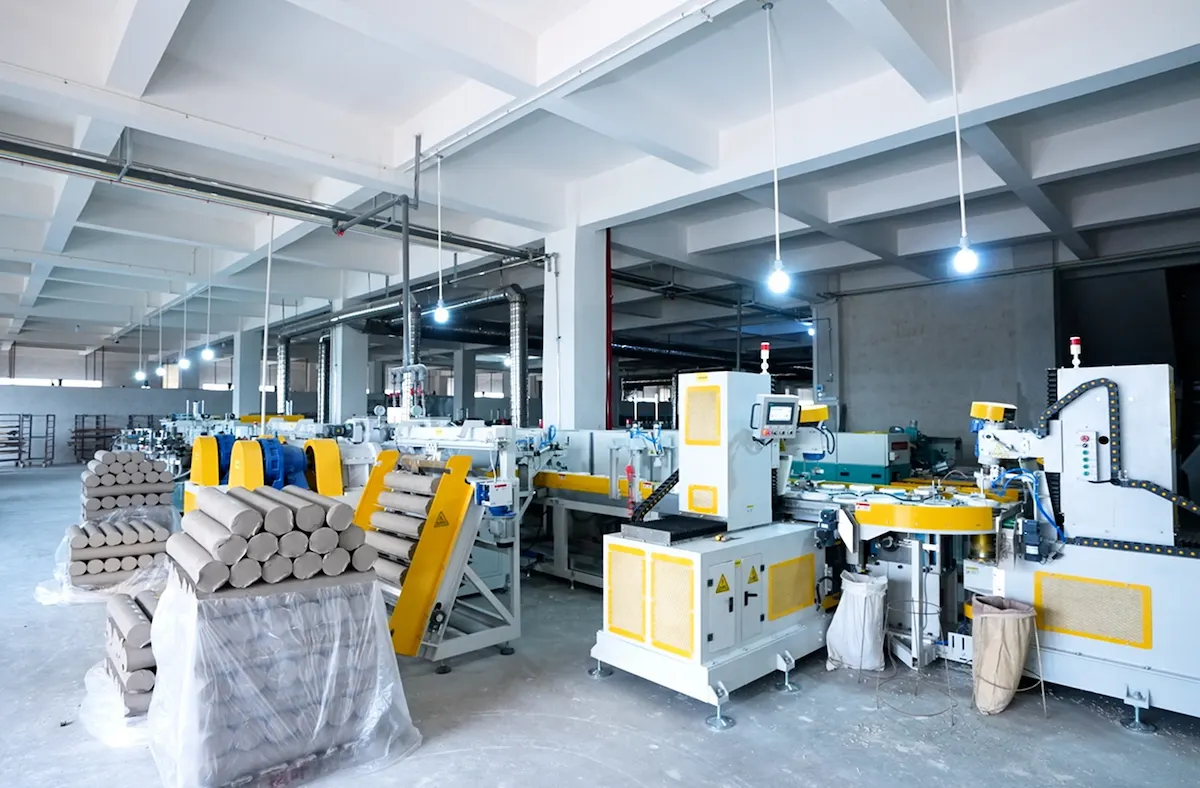
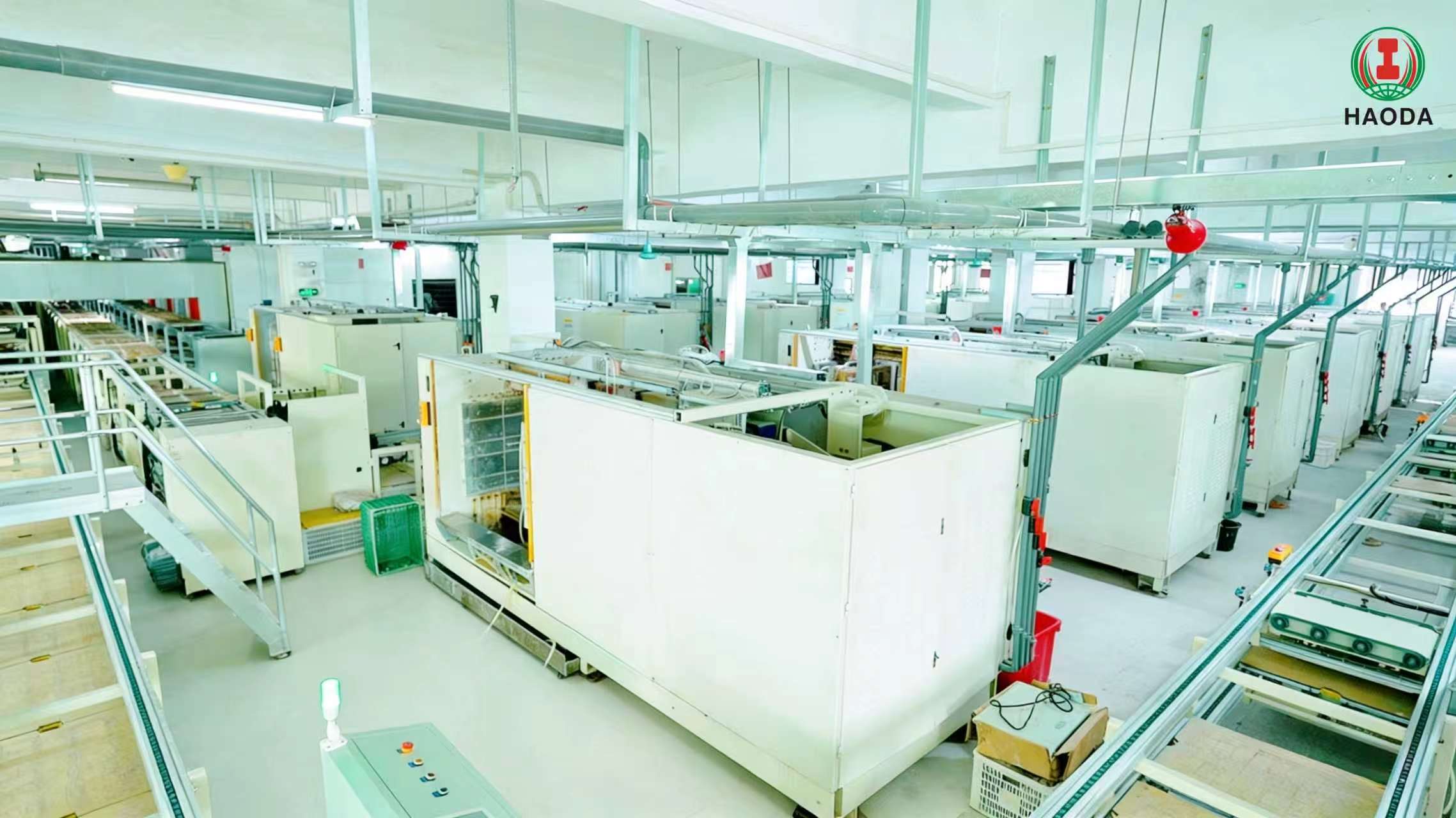
To address these challenges, Haoda Machine has developed a fully automated high-pressure casting production line, combining precision-controlled forming systems with robotic automation and synchronized drying processes. Instead of relying on manual coordination, the entire workflow becomes structured, repeatable, and scalable.
According to insights shared by International Ceramic Federation, modern ceramic production is increasingly shifting toward automation-driven consistency, where process control replaces operator dependency as the primary quality driver.
Material Engineering and Structural Design Behind High-Pressure Casting Systems
Before discussing automation, it is essential to understand what makes high-pressure casting systems technically reliable. The performance of such systems depends heavily on both material selection and mechanical design.
High-pressure casting machines typically incorporate:
- High-strength steel frames to withstand sustained pressure cycles
- Precision hydraulic systems for stable slurry injection
- Wear-resistant mold interfaces to maintain dimensional accuracy
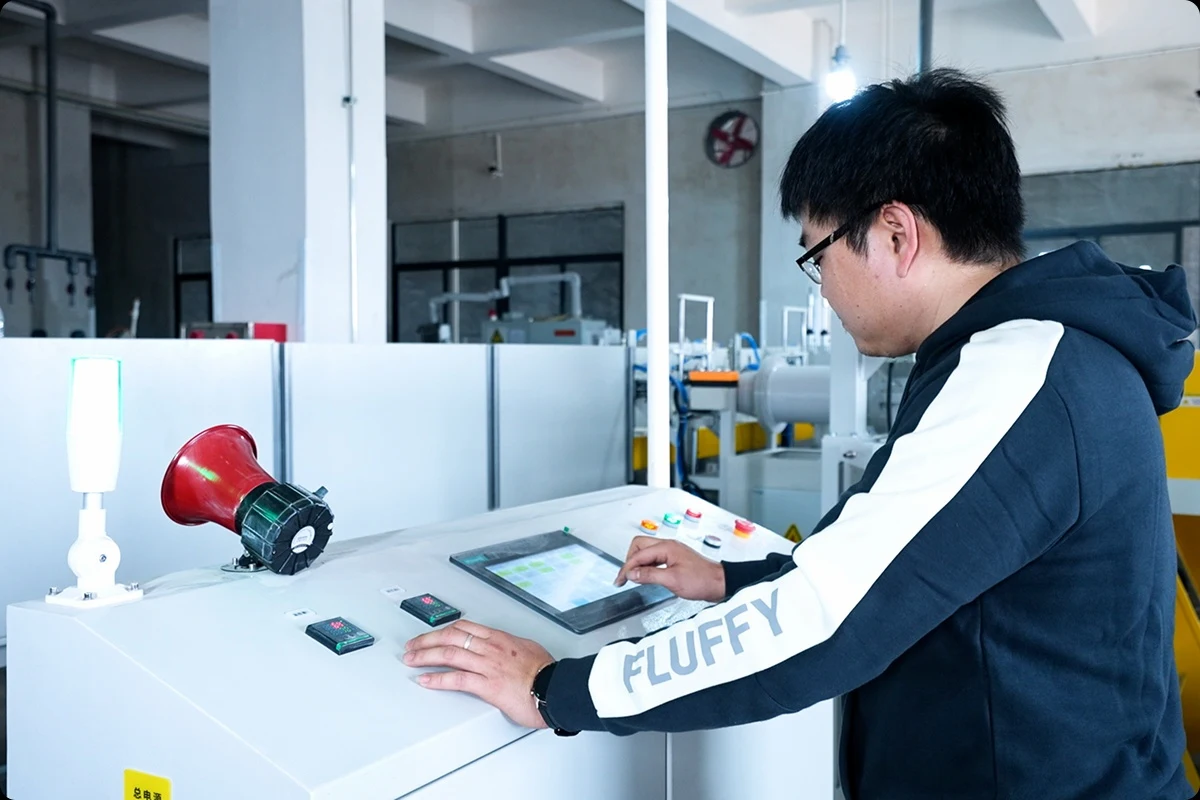
- PLC-based control systems for repeatable operation
From an engineering standpoint, the goal is not just pressure—but controlled pressure stability over time. Even minor fluctuations in pressure curves can affect product density and surface quality.
This level of engineering precision allows the system to operate continuously under industrial conditions without compromising forming accuracy.
Why Manufacturers Choose Haoda Machine for Automation Upgrades
When factories move toward automation, the decision is rarely about a single machine. It is about whether the supplier understands the full production ecosystem.
Haoda Machine focuses on:
- Integrating forming, handling, drying, and conveying into one system
- Designing solutions based on real factory workflows, not theoretical layouts
- Ensuring compatibility with existing production lines for phased upgrades
With extensive experience in ceramic tableware applications, the team approaches each project with a practical objective:
👉 reduce uncertainty while increasing output stability
Connecting Every Step: From Manual Gaps to Continuous Production
One of the most common limitations in traditional ceramic production is fragmentation. Even if individual machines perform well, the lack of connection between processes leads to delays, handling damage, and inefficiencies.
A fully automated production line eliminates these gaps by synchronizing every stage.
Instead of isolated operations, the system functions as a continuous flow environment, where timing, movement, and processing are all coordinated through centralized control.
This approach aligns with manufacturing principles promoted by International Organization for Standardization, where process standardization is key to achieving consistent industrial output.
Measurable Gains: Efficiency, Consistency, and Labor Reduction
When automation is implemented correctly, improvements are not theoretical—they are measurable.
| Key Metric | Manual Production | Automated Line |
|---|---|---|
| Labor Requirement | High (multi-stage operators) | Reduced by 50%–80% |
| Production Stability | Variable | Highly stable |
| Output Efficiency | Intermittent | Continuous |
| Defect Rate | 8%–15% | 3%–5% |
| Daily Output Fluctuation | High | Minimal |
These improvements come from eliminating human variability and ensuring that every cycle follows the same parameters.
A Fully Integrated Workflow Designed for Real Factory Conditions
To understand the real value of automation, it is necessary to look at the complete process—not just individual machines.
The automated production line follows a structured sequence:
- High-pressure casting forming
- Robot automatic tool changing
- Robot automatic pick & place
- Automatic product conveying
- Enter automatic drying chamber
- Double-layer simultaneous drying
- Exit drying chamber
- Downstream conveyor line
- Vision system sorting
- Manual unloading at independent station
- Automatic board return after unloading
Each step is designed to connect seamlessly with the next, forming a closed-loop system that minimizes downtime and manual intervention.
Application Insight: A Factory Transition Toward Controlled Production
A ceramic tableware factory producing plates and bowls for export markets. Before automation, the factory relied on over 40 workers across forming and drying stages. Production delays were common, and product consistency varied between shifts.
After implementing a fully automated high-pressure casting line and high pressure casting machine:
- Workforce reduced to 12 operators
- Output increased by approximately 45%
- Defect rate dropped from 10% to below 4%
- Production scheduling became predictable
This transition did not just improve efficiency—it fundamentally changed how the factory managed production planning.
Where This Solution Delivers the Most Value
Automation is not equally beneficial for all production types, but in ceramic tableware manufacturing, it offers clear advantages.
Factories producing standardized, high-volume items such as:
- Plates
- Bowls
- Cups
benefit the most because their processes are inherently repeatable. Automation and high pressure casting machine enhances this repeatability, ensuring that every unit meets the same quality standard.
Building a Production System That Scales Without Labor Dependency
As labor costs continue to rise and workforce availability becomes less predictable, ceramic manufacturers are facing a structural shift. The focus is no longer on increasing headcount—but on improving system efficiency.
A fully automated high-pressure casting production line enables factories to:
- Maintain consistent output regardless of labor conditions
- Expand production capacity without proportional labor increases
- Improve product quality through controlled processes
At Haoda Machine, the emphasis is on delivering complete solutions rather than standalone equipment. By integrating forming technology with automation systems, factories gain a production model that is both stable and scalable.
Moving Forward with a More Predictable Manufacturing Model
If your current production still depends heavily on manual coordination, the risks—variability, inefficiency, and rising costs—will only increase over time. A structured automation solution offers a different path: one where production becomes predictable, quality becomes consistent, and growth becomes manageable.
About Haoda Machine & Our Automation Direction
Haoda Machine focuses on helping ceramic tableware factories move from labor-intensive production toward automated and standardized manufacturing systems. By combining high-pressure casting technology with robotics, conveying systems, and intelligent drying solutions, we provide a practical path to reduce labor dependency while improving overall production stability.
If you are evaluating equipment or planning an upgrade, you can explore more details about our high pressure casting machines and integrated production systems on our product page:
👉 https://www.haoda-machine.com/products
How This Solution Supports Your Factory Upgrade
The fully automated high-pressure casting production line is designed to directly address the three most critical challenges in ceramic tableware manufacturing: heavy reliance on manual labor, unstable production efficiency, and inconsistent product quality. Through unmanned or low-labor operation, synchronized workflows, and system-controlled processes, factories can achieve continuous production, higher consistency, and significantly lower operating costs.
If you are planning a factory upgrade or need a customized automation solution, our engineering team can assess your production requirements and provide a tailored system proposal:
👉 https://www.haoda-machine.com/contact-us