
Why Restaurant Tableware Production Requires Higher Standards
Unlike household ceramics, restaurant tableware faces:
-
Frequent washing cycles
-
High mechanical impact
-
Continuous stacking and transport
-
Strict hygiene compliance
A reliable restaurant tableware production system must therefore guarantee structural strength, glaze durability, and dimensional consistency at scale.
Commercial-grade tableware typically undergoes:
-
Impact resistance testing (0.5–1m drop simulation)
-
Dishwasher cycle durability testing (1,000+ cycles)
-
Thermal shock resistance (150–200°C variation)
Only integrated and well-controlled production systems can consistently meet these benchmarks.
Core System Design for Restaurant Tableware Production
| Production Module | Engineering Focus | Technology Applied | Performance Impact |
|---|---|---|---|
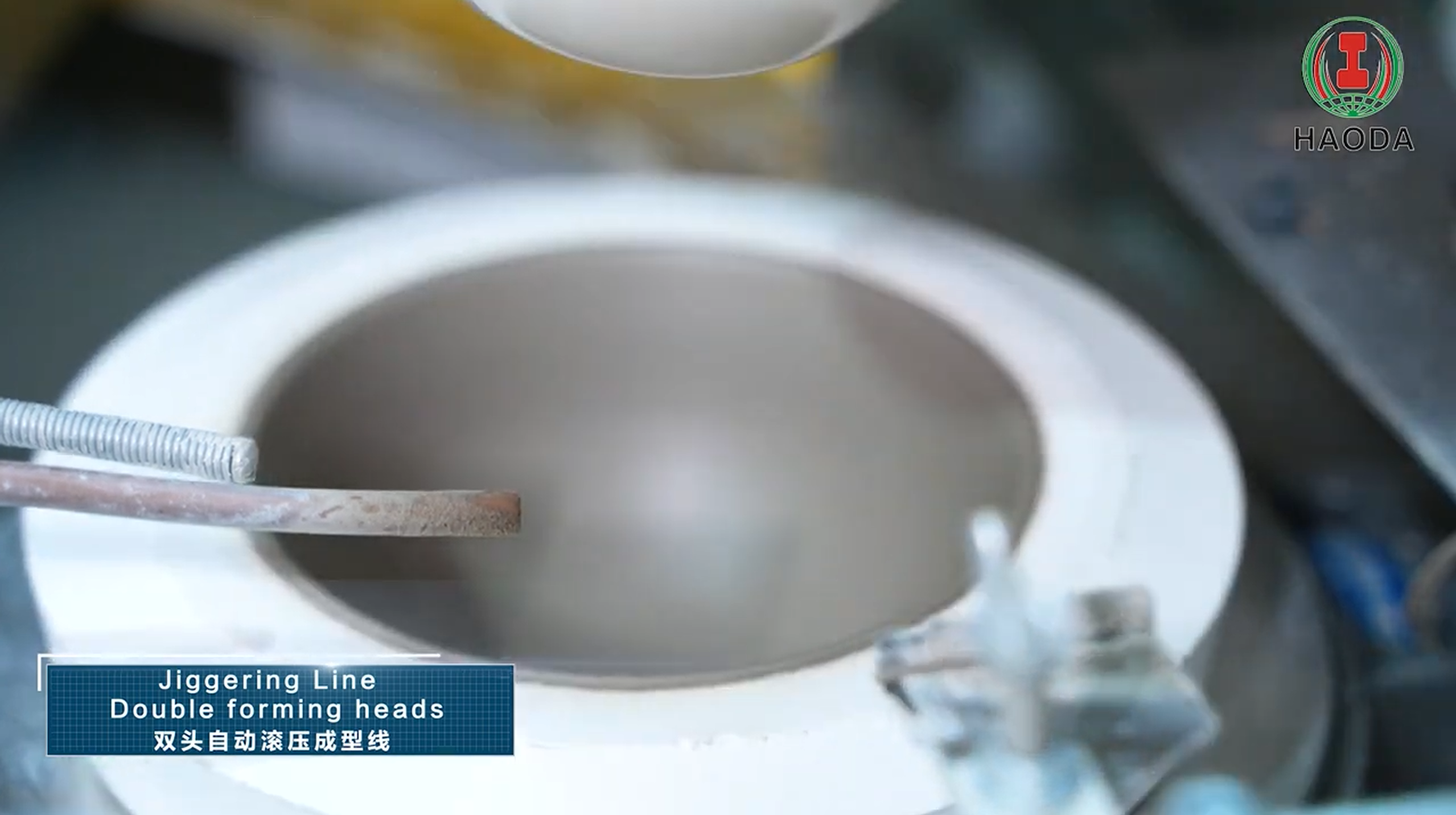
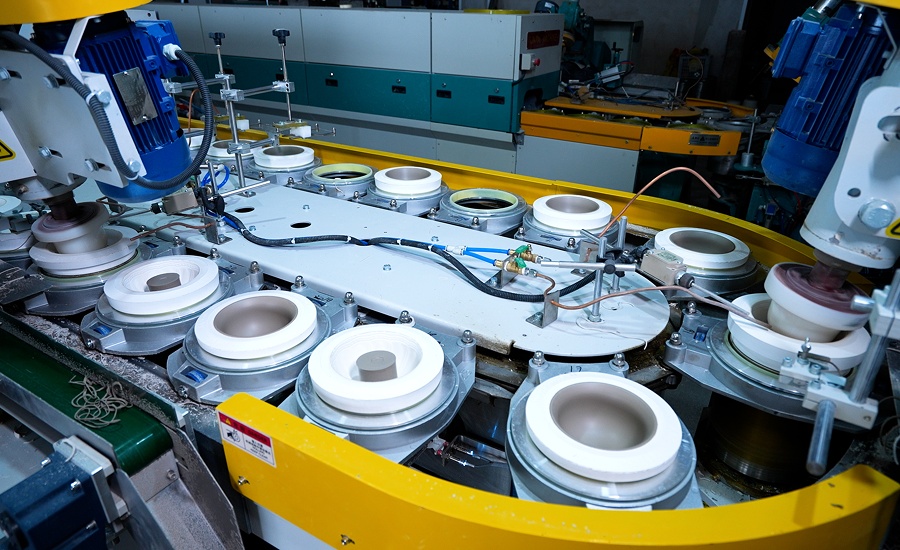
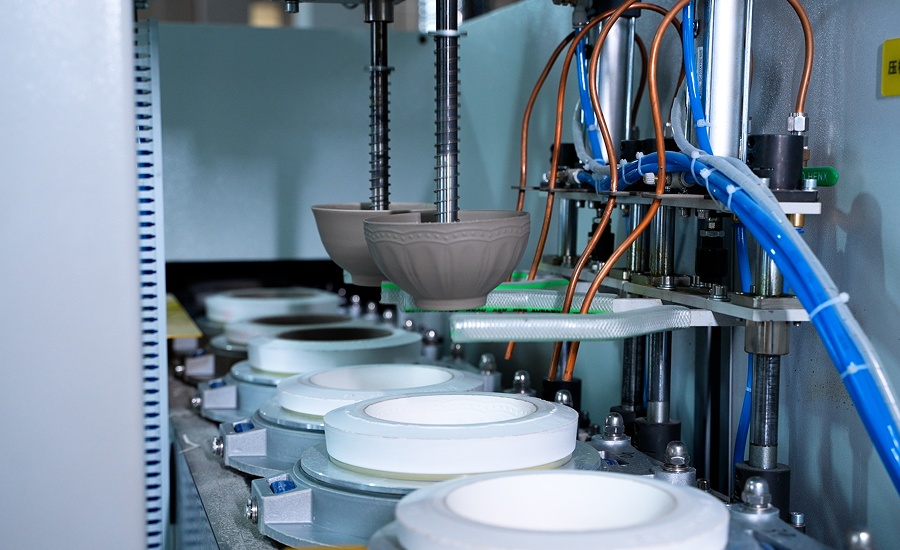
| High-Precision Forming | Uniform thickness and rim strength | Servo-driven jiggering & roller forming | ±0.2 mm tolerance |
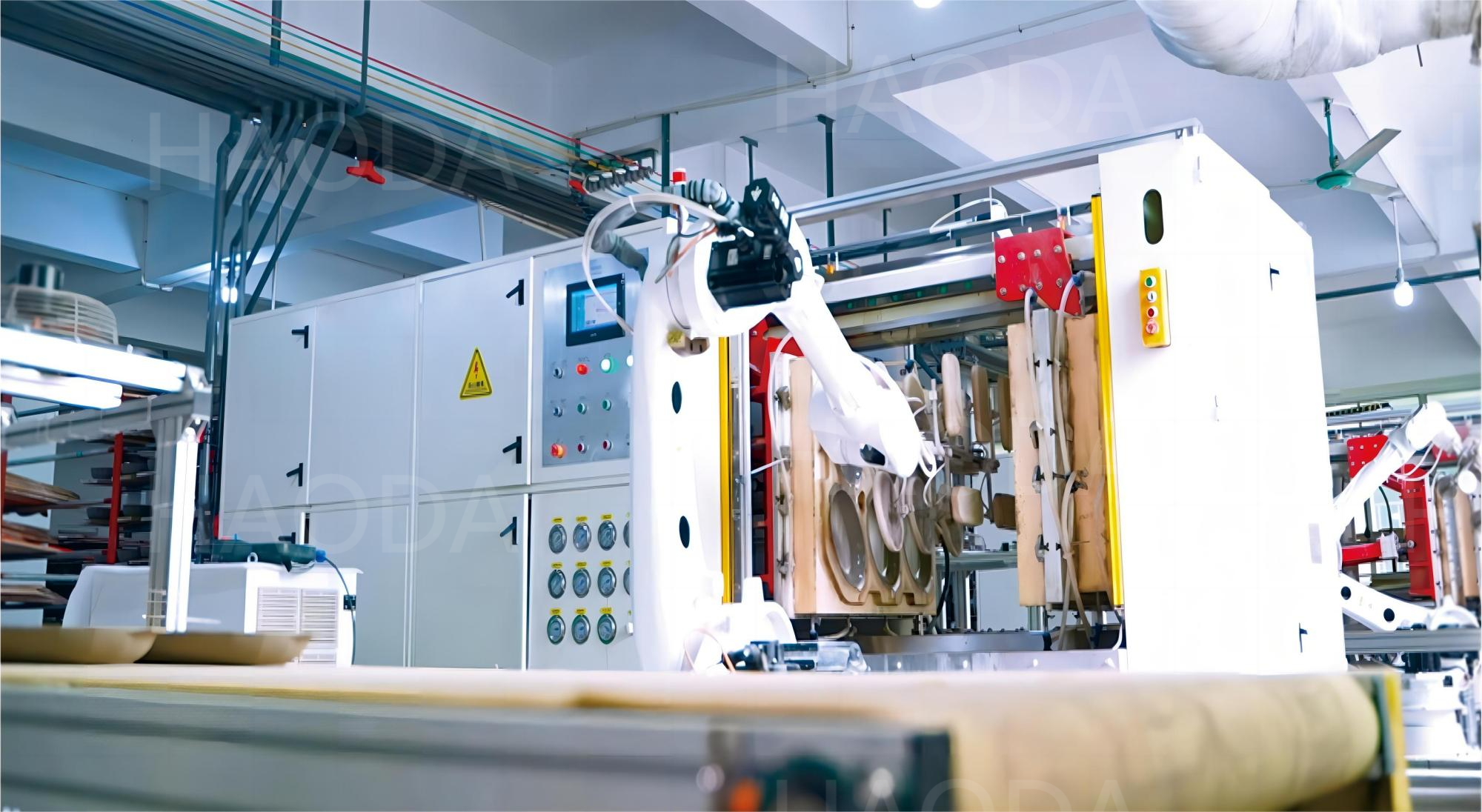
| Glaze Application | Smooth and durable surface finish | Robotic spray + viscosity control | ±2% thickness control |
| Drying Section | Controlled moisture reduction | Smart airflow management | Crack prevention |
| Roller Kiln Firing | Structural densification | Multi-zone temperature control | Stable hardness |
| Inline Inspection | Surface and geometry verification | AI vision system | 98–99% defect detection |
This structured integration supports consistent restaurant tableware production at daily volumes exceeding 80,000–120,000 pieces.
Strength, Density, and Firing Control
Commercial tableware must achieve higher mechanical strength compared to decorative ceramics.
Key Parameters:
| Parameter | Commercial Standard | Optimized Line Result |
|---|---|---|
| Water Absorption | <0.5% | 0.2–0.3% |
| Flexural Strength | >40 MPa | 45–50 MPa |
| Glaze Adhesion | No peeling after 1,000 washes | Fully stable |
| Thermal Shock | 180°C tolerance | Verified stable |
Precise kiln zoning ensures stable sintering curves.
Digital PID temperature control maintains firing fluctuation within ±3°C, reducing warping and uneven density.
According to Ceramic Industry Magazine, controlled kiln temperature uniformity can reduce structural defects by 30–40% in high-volume ceramic operations.
Automation for Consistent Batch Output
Consistency is essential in restaurant tableware production, especially for hotel chains and large restaurant suppliers requiring identical batches over long periods.
Automation provides:
-
Repeatable pressure curves in forming
-
Stable glaze atomization patterns
-
Digital recipe storage for different designs
-
MES-based traceability per production batch
| KPI | Semi-Automatic Line | Fully Automated Line |
|---|---|---|
| Scrap Rate | 6% | 2% |
| Labor Requirement | 50 workers | 25 workers |
| Cycle Time | Baseline | -35% |
| Batch Consistency | Variable | Highly stable |
Automation not only improves yield but ensures reproducibility across large export orders.
Cost Control and Profitability
Restaurant-grade ceramics must balance durability and production cost.
An optimized restaurant tableware production line achieves this through:
-
Reduced rework
-
Lower glaze waste
-
Efficient kiln energy use
-
Decreased manual handling
| Financial Indicator | Traditional Line | Optimized System |
|---|---|---|
| Energy Cost | 100% baseline | -25% |
| Rework Cost | High | -60% |
| ROI Cycle | 30–36 months | 18–20 months |
| Daily Output | 40,000 pcs | 100,000+ pcs |
By integrating forming precision and digital control, production cost per unit decreases while maintaining premium durability standards.
Global Applications and Market Requirements
Large restaurant and hotel markets in Southeast Asia, Europe, and the Middle East require compliance with food safety and quality standards such as:
-
ISO quality management systems
-
EU food contact compliance
-
FDA safety standards
Haoda Machine supports global manufacturers by designing scalable, regulation-ready production systems that meet export market expectations.
Haoda Machine: Integrated Solutions for Commercial Tableware
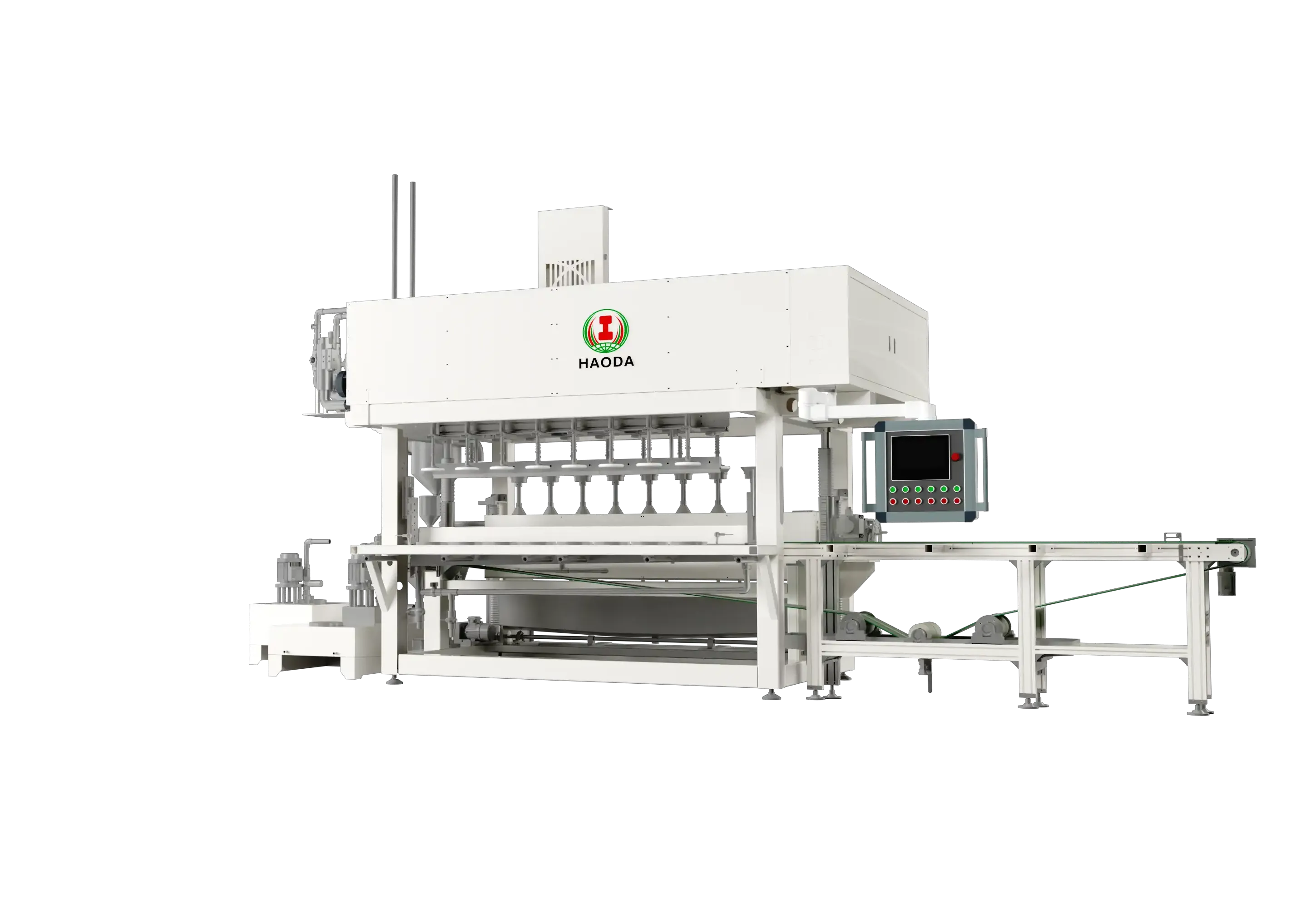
Haoda Machine provides complete plant design and automation systems tailored for restaurant and hotel ceramic manufacturers.
Key strengths include:
-
Precision forming systems for high-strength ware
-
Robotic glaze control ensuring surface durability
-
Energy-efficient kiln integration
-
MES-based production tracking and traceability
-
Global engineering support and commissioning
Through optimized restaurant tableware production systems, Haoda Machine enables manufacturers to achieve stable large-scale output with consistent quality and improved profitability.
To explore detailed production line configurations, visit Haoda Machine’s homepage.
For customized system planning or capacity evaluation, contact our engineering team — we will design a production solution aligned with your commercial market requirements.