
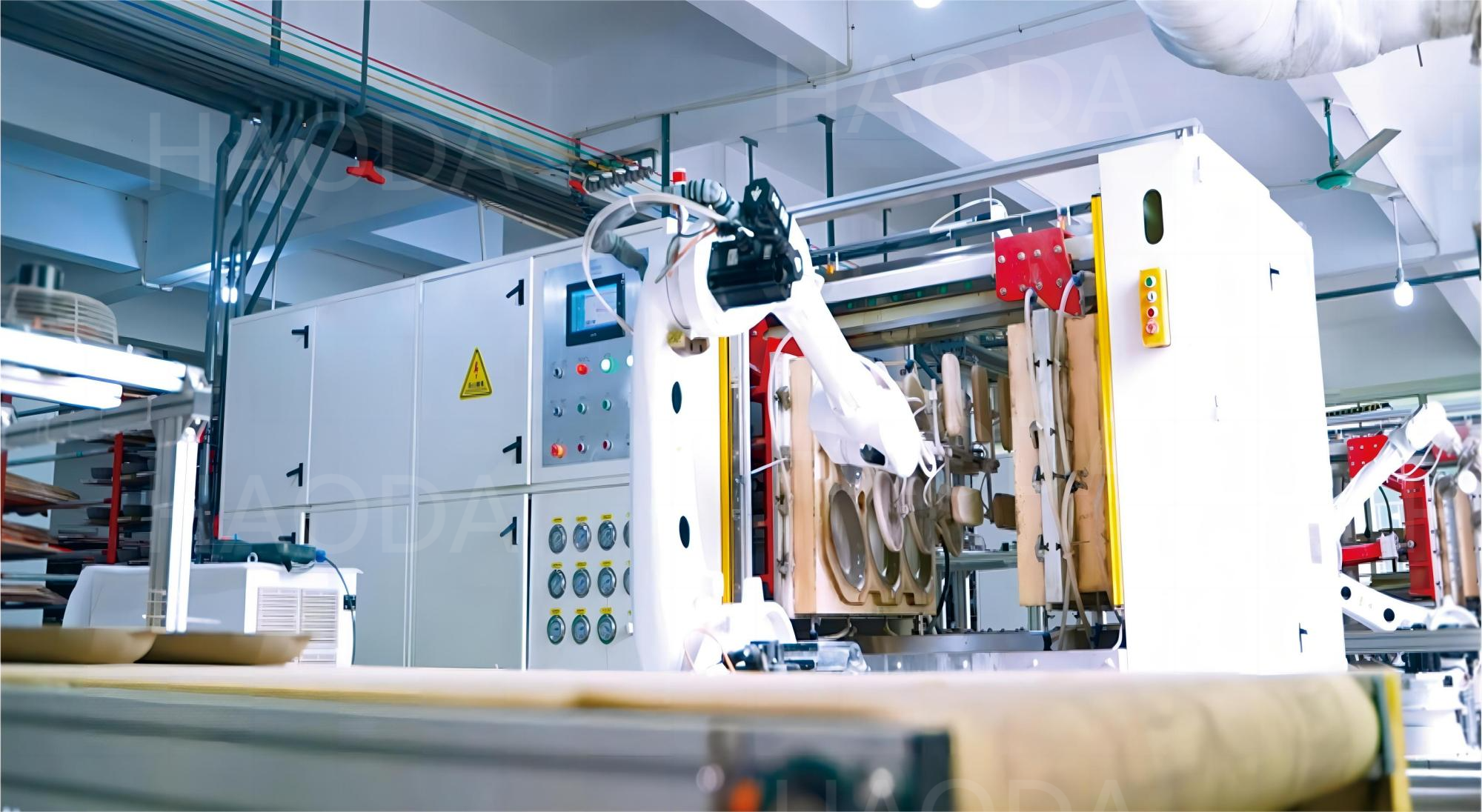
Precision and Speed: Why Roller Forming Systems Are Changing Ceramic Manufacturing
In large-scale ceramic tableware production, every millimeter matters. The balance between high throughput and dimensional accuracy defines profitability.
Manual or semi-automatic forming systems often limit productivity to 500–700 pieces per hour, with uneven wall thickness and frequent operator intervention.
Modern roller forming systems solve this by combining servo-driven pressure control, adaptive rotation speed, and hydraulic energy recovery—a configuration proven to maintain ±0.15 mm wall uniformity even in 24-hour continuous production.
According to data from the Ceramic Industry Council, automated roller forming systems improve forming efficiency by 35–50% while cutting scrap by nearly 60%, positioning them as the preferred equipment upgrade for industrial tableware manufacturers.
How the Roller Forming System Works
The roller forming process reshapes ceramic production into a continuous, stable, and highly repeatable system.
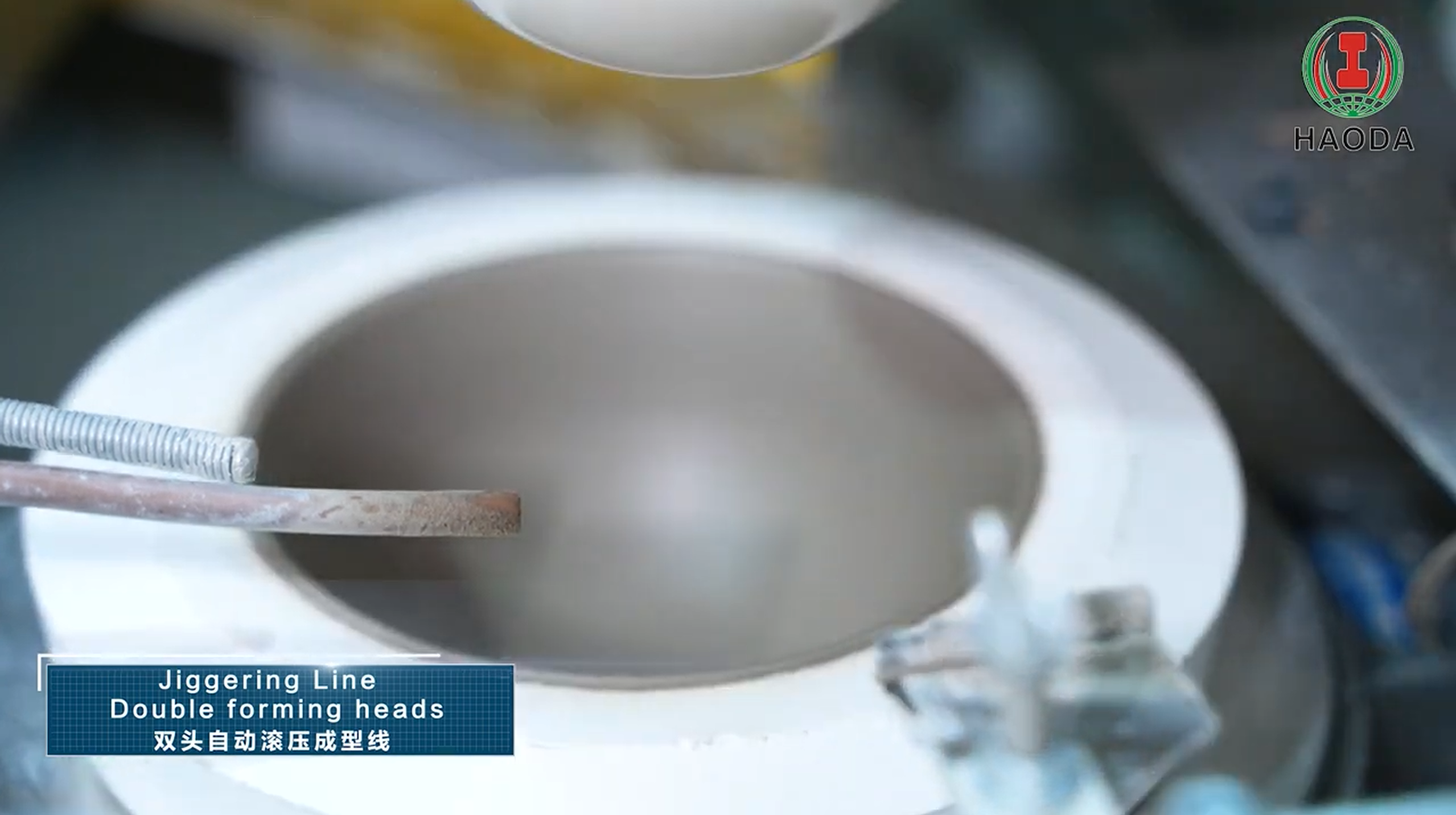
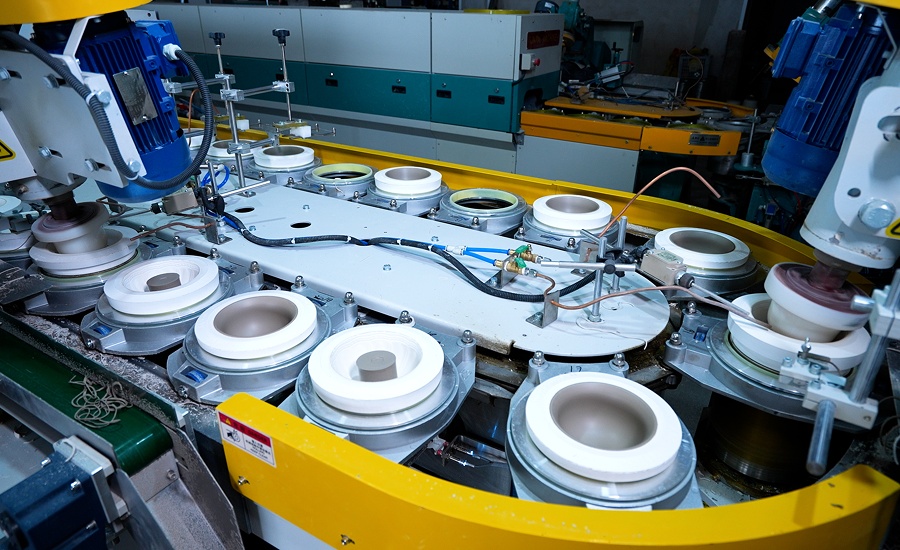
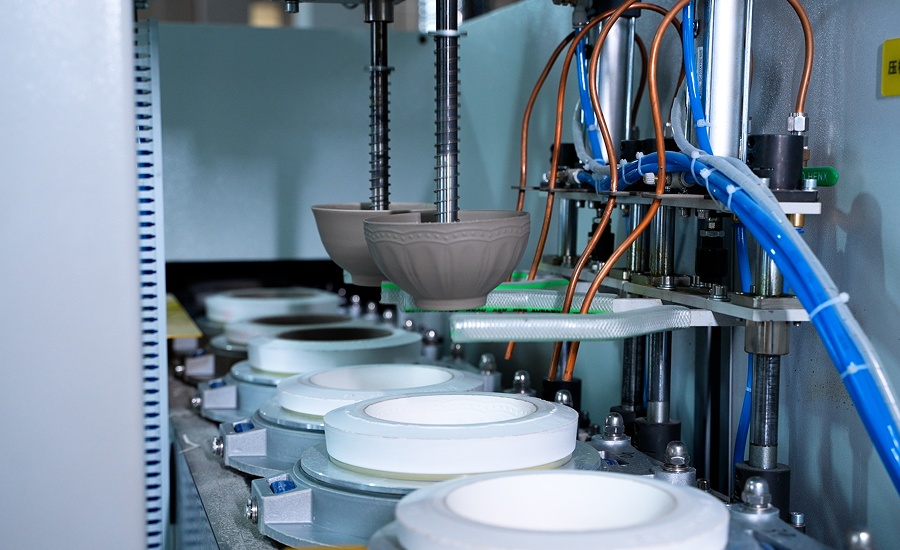
Each machine uses a rotating mold combined with a contour roller to spread and compress the clay into uniform thickness and precise curvature.
Core Process Overview
-
Clay Feeding and Centering: Automated feeders deliver consistent clay blanks to each mold.
-
Roller Shaping: Servo-controlled rollers adjust torque and pressure according to real-time load data.
-
Edge Finishing: Integrated trimming units smooth rims automatically, eliminating post-forming correction.
-
Demolding: Formed products are automatically lifted onto conveyors for drying or glazing.
-
In-line Inspection: Thickness and shape sensors check accuracy before transfer.
Each roller forming module completes one cycle in 25–28 seconds, capable of 1,400–1,600 pieces per hour under standard operation.
Measurable Gains from Automation
| Parameter | Manual Forming | Roller Forming System | Improvement |
|---|---|---|---|
| Output (pcs/hour) | 600 | 1,400–1,600 | +130% |
| Labor Requirement | 4 operators | 1 operator | -75% |
| Defect Rate | 9–10% | 3–4% | -60% |
| Wall Thickness Accuracy | ±0.4 mm | ±0.15 mm | +62% |
| Material Waste | 7–8% | 2–3% | -65% |
| ROI Payback Period | — | 12–14 months | — |
Data verified through production testing across Asian and European factories (2024).
The consistent accuracy and high forming speed directly increase usable output and help reduce production cost per unit by over 30%.
Engineering Highlights That Drive Performance
Unlike conventional forming equipment, the roller forming system combines structural rigidity with digital precision:
-
Servo-Assisted Roller Mechanism: Controls shaping force dynamically to prevent cracking or warping.
-
Hydraulic Synchronization: Balances torque across molds for perfect curvature.
-
Quick Mold Replacement: One technician can switch molds in under 8 minutes.
-
Programmable Thickness Control: Adjusts forming profiles for various bowl and plate types.
-
Energy Recovery Circuit: Converts hydraulic backflow to reusable power, reducing electricity by 15–18%.
-
Integrated Cooling and Dust Extraction: Extends roller and bearing lifespan by up to 40%.
Each detail in the system design ensures stable forming over millions of cycles—without drift or vibration even in high-speed operation.
Solving Real Production Challenges
Manufacturers often approach automation with two main priorities: reducing labor dependency and ensuring quality stability.
Roller forming addresses both:
1. Workforce Efficiency
Labor shortages and training time are ongoing issues in ceramic factories. With automated feeding and shaping, a single operator now supervises up to four forming units—cutting labor cost by 70% or more while maintaining consistent output.
2. Surface Uniformity and Shape Accuracy
Restaurant-grade plates require uniform edges compatible with glazing and printing lines. The roller forming system ensures even compaction and surface smoothness critical for later decoration and glazing.
3. Waste Reduction and Clay Reuse
Conventional trimming wastes significant clay. Automated trimming integrated into roller stations reduces waste to below 2.5%, and clay scrap is immediately recycled to the feeder system.
Financial Outcomes and ROI Analysis
Factory studies show the following average impact for mid-sized production lines replacing semi-manual systems:
| Category | Before Upgrade | After Roller Forming System | Change |
|---|---|---|---|
| Daily Output | 15,000 pcs | 31,000 pcs | +106% |
| Annual Labor Cost | USD 190,000 | USD 105,000 | -45% |
| Defect Waste | 8.5% | 3.2% | -62% |
| Energy Consumption | 100% baseline | 80% baseline | -20% |
| ROI Period | — | 13 months | — |
Data aligns with reports from the Manufacturing Automation Journal, confirming that roller forming lines have one of the fastest capital recovery periods among ceramic forming technologies.
Integration and Expansion Potential
The roller forming system connects seamlessly with:
-
Clay Mixing & Feeding Units
-
Automatic Glazing and Drying Lines
-
Digital Printing and Finishing Equipment
-
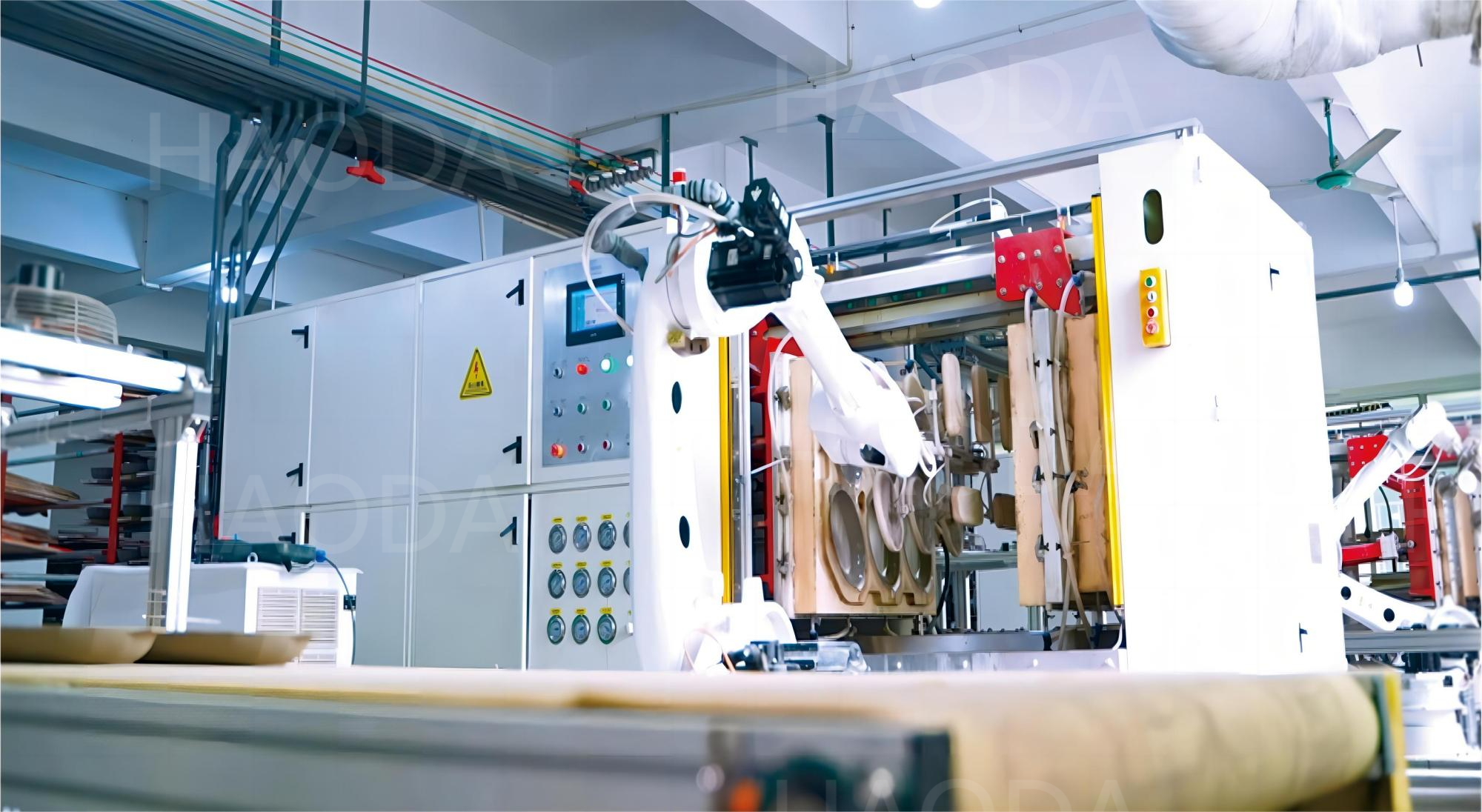
Robotic Stacking and Sorting Systems
This modular approach allows gradual upgrades—factories can start with one line and expand to multi-line configurations without layout rework.
Additionally, IoT monitoring options enable real-time data capture for forming cycles, torque feedback, and predictive maintenance alerts.
Energy Efficiency and Environmental Benefits
Energy consumption remains a critical operational cost. The servo-hydraulic roller system operates at optimized load curves, reducing idle power drain and mechanical friction.
The Energy Efficiency Council reports that similar servo-assisted forming systems achieve up to 25% energy reduction compared with conventional hydraulic setups.
Lower vibration not only conserves energy but also reduces component wear—resulting in less maintenance downtime and fewer spare part replacements per production year.
Implementation and Customer Support
The installation and onboarding process is designed for speed and reliability:
-
Customized Layout Planning – Adapts line configuration to factory dimensions.
-
Mechanical Setup and Calibration – Ensures torque synchronization across rollers.
-
Trial Production and Quality Verification – Validates consistency with target plate sizes.
-
Operator Training and Remote Assistance – Delivers skill transfer and performance optimization.
Most factories achieve full-scale operation within five to six weeks of commissioning.
For detailed technical consultation or capacity evaluation, visit Haoda Machine or contact the engineering team.