
When Automation Becomes a Real Topic on the Factory Floor
In recent years, ceramic tableware manufacturers have been facing the same set of challenges across different regions: rising labor costs, difficulty in recruiting skilled workers, unstable production efficiency, and increasing pressure on product consistency. These are no longer theoretical issues—they directly impact delivery schedules, cost control, and long-term competitiveness.
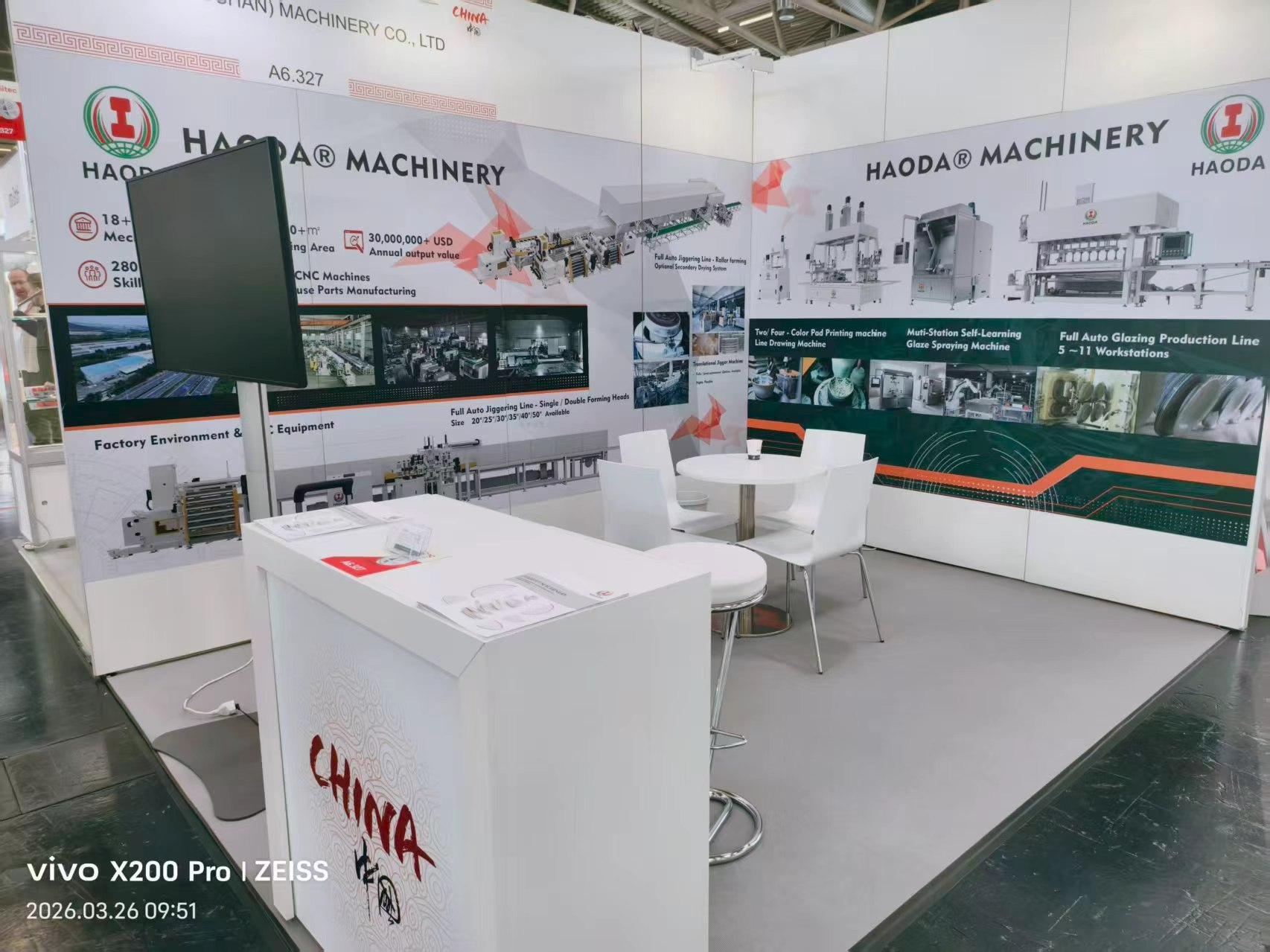
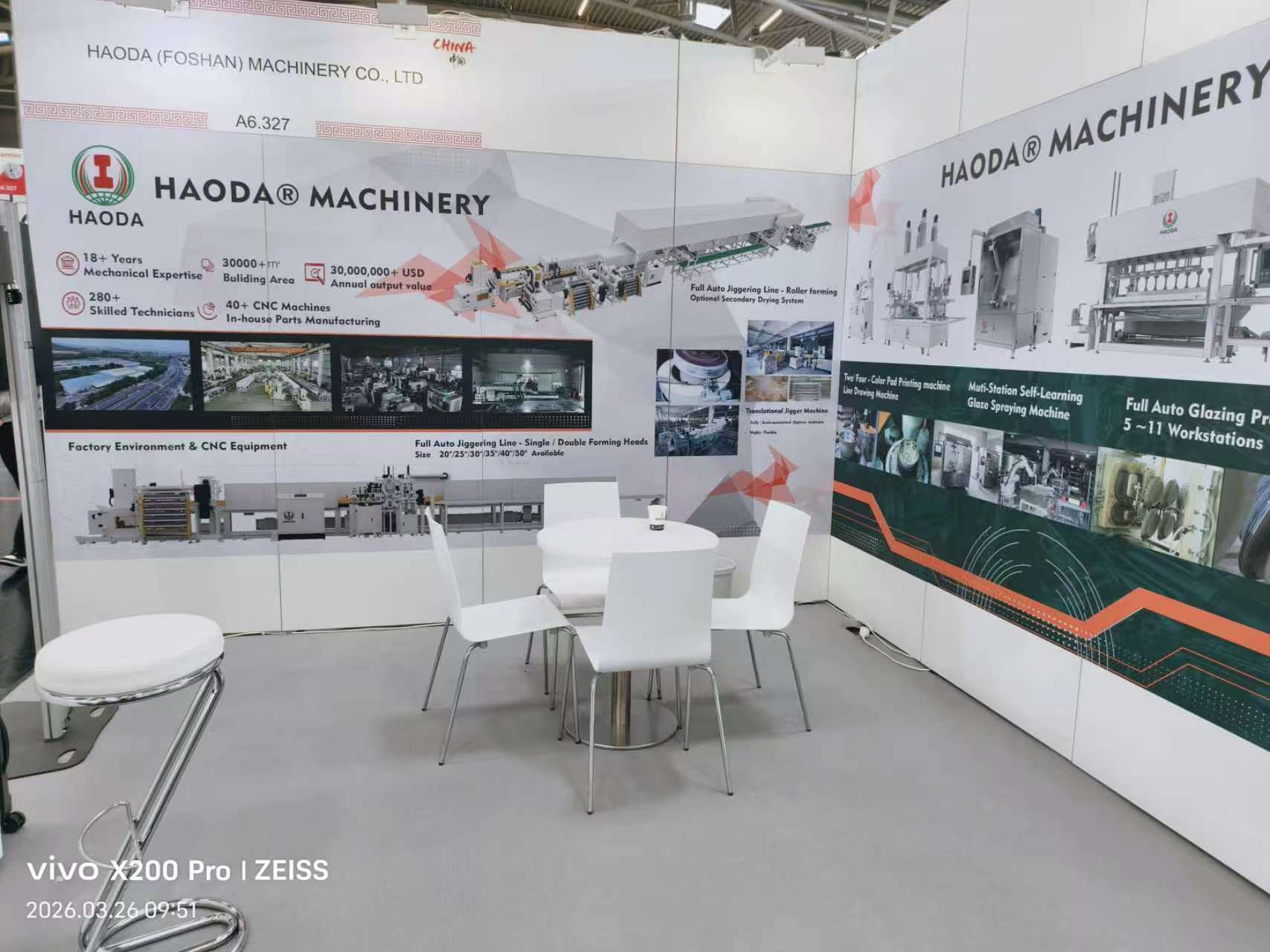
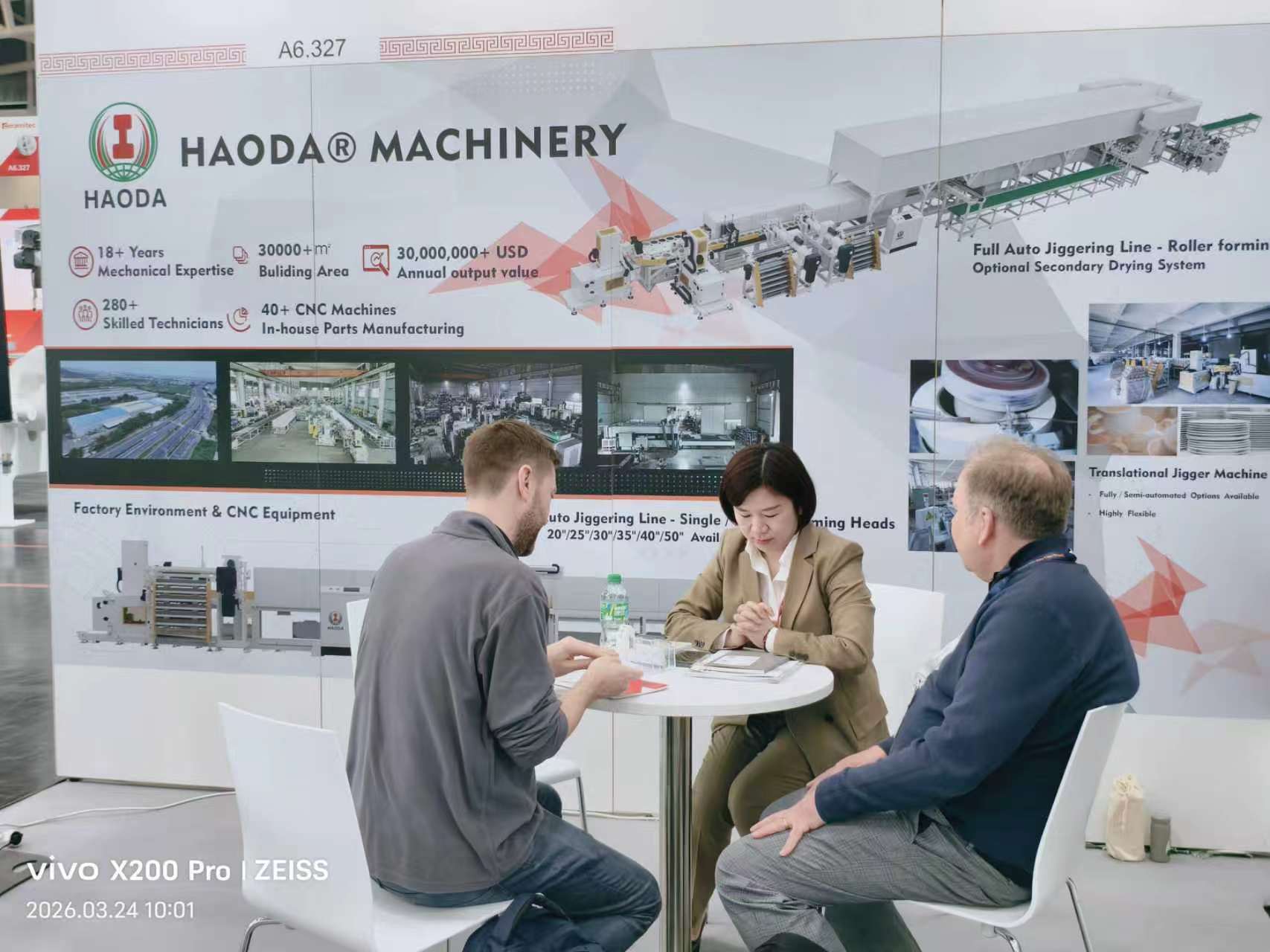
At Ceramitec 2026, Haoda Machine brought these real production challenges into practical discussions. Rather than focusing on isolated equipment, the conversations at our booth centered on how factories can move toward automated, stable, and scalable production systems.
📅 March 24–26, 2026
📍 Messe München Exhibition Center, Munich, Germany
🏛 Hall A6 | Booth 327
We sincerely thank all customers, partners, and industry professionals who visited us and shared their insights on current production conditions.
What We Observed from Global Ceramic Manufacturers at the Exhibition
Throughout the exhibition, one pattern became clear. Whether from Europe, Southeast Asia, or the Middle East, manufacturers are facing similar operational pressures.
Typical concerns discussed at our booth included:
- Difficulty maintaining consistent product quality across shifts
- Increasing dependency on experienced workers for key processes
- Bottlenecks in manual operations such as forming, printing, and glazing
- Lack of integration between different production stages
These challenges align with industry perspectives shared by International Ceramic Federation, where automation and process control are becoming central to modern ceramic manufacturing strategies.
From Equipment to System Thinking: Automation Solutions Presented by Haoda
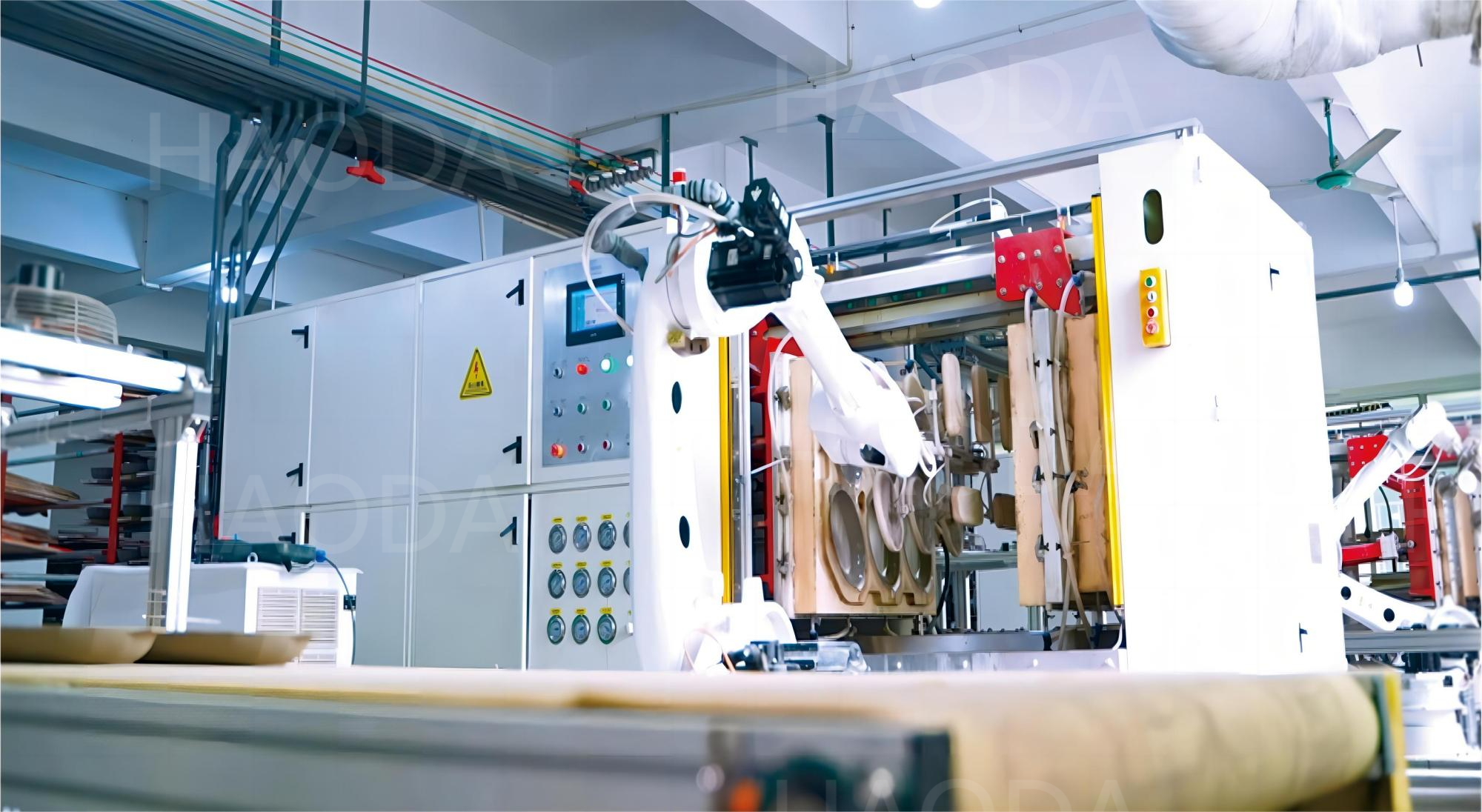
Instead of presenting standalone machines, Haoda Machine focused on demonstrating how different technologies can be integrated into a complete production system.
At the exhibition, we introduced several key solutions:
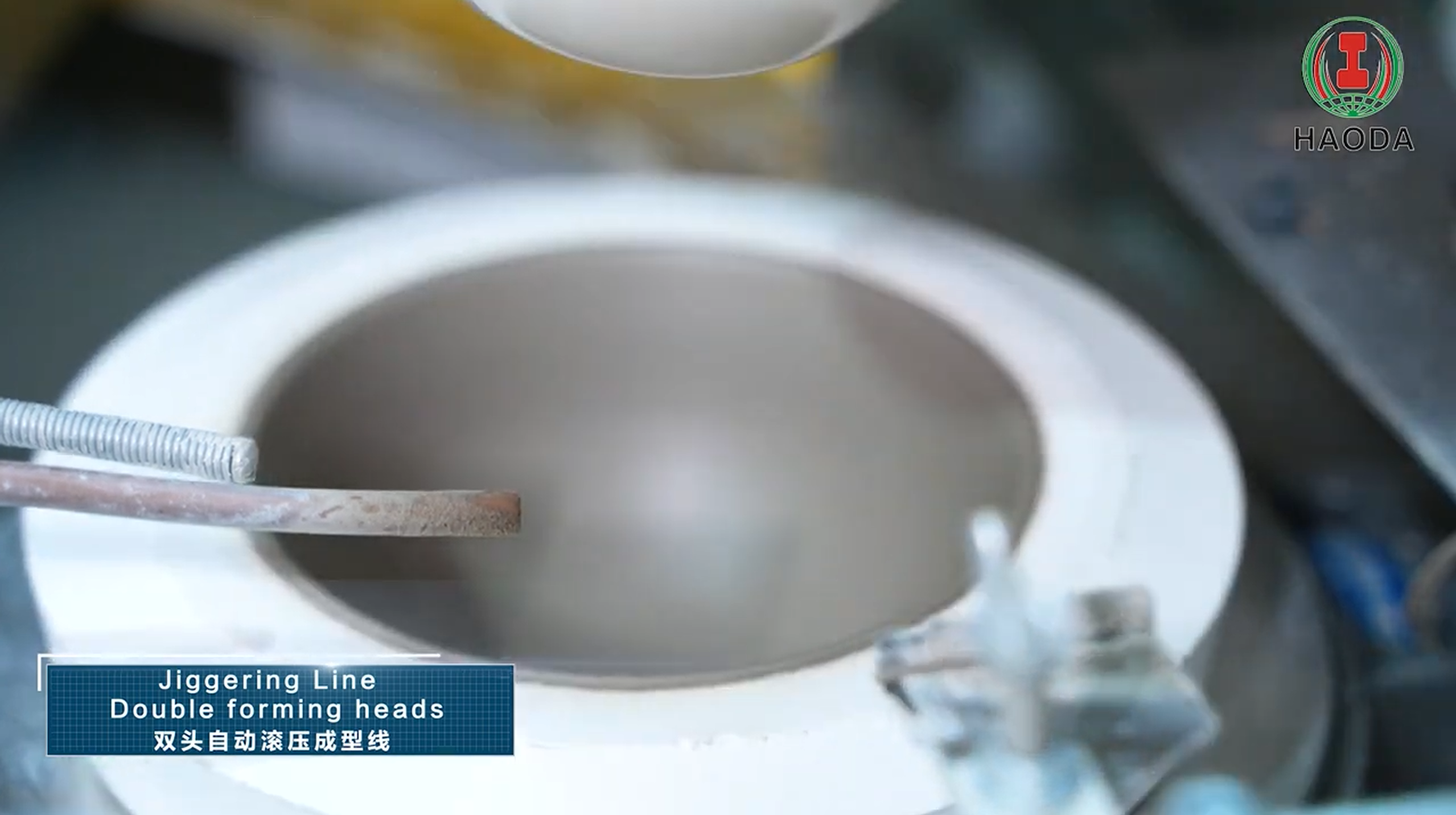
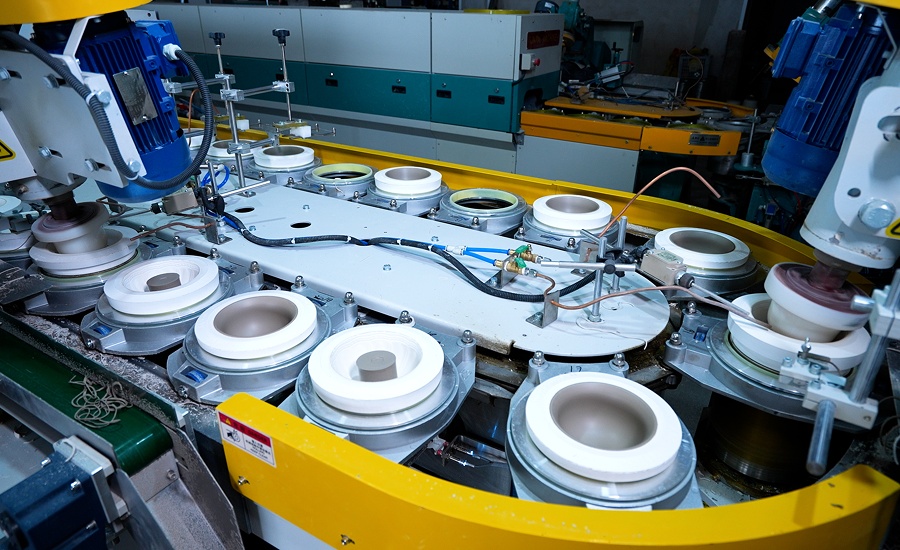
1. Automated Roll Forming Production Lines
Designed for high-volume tableware production, enabling stable forming cycles and reduced manual handling.
2. Fully Automated Pad Printing Machines
Replacing manual printing with controlled, repeatable processes to ensure consistent pattern quality.
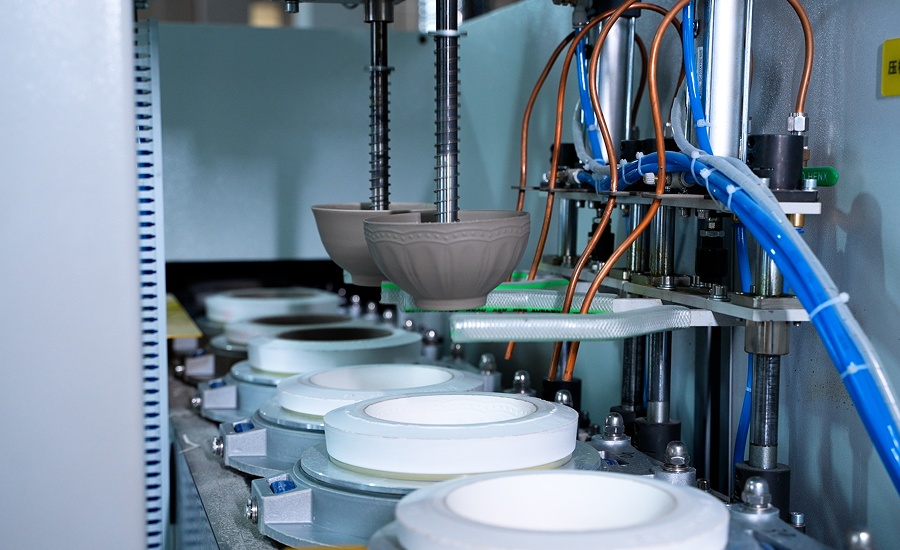
3. High-Pressure Casting Systems
Improving forming speed and product density while enabling integration with automated handling.
4. Automated Glazing Solutions (Spray / Dip Glazing)
Ensuring uniform coating thickness and reducing material waste.
5. Unmanned / Low-Manpower Smart Factory Concepts
Connecting forming, printing, conveying, and drying into a synchronized production flow.
These solutions are not isolated—they are designed to work together, allowing factories to gradually transition from manual operations to fully integrated automation systems.
What Manufacturers Really Care About: Practical Benefits Over Concepts
At the exhibition, one thing became very clear: manufacturers are no longer interested in abstract discussions about “automation trends” or “smart factory concepts.” What they really care about are practical, measurable improvements that can be implemented in real production environments.
In almost every conversation, the same questions came up:
- How many workers can actually be reduced after automation?
- Will production output become more stable across different shifts?
- Can the system maintain consistent quality over long production cycles?
- How long does it take to see a return on investment?
These are not theoretical concerns—they are directly tied to daily factory operations.
Efficiency Is Not Just About Speed, But About Continuity
Many manufacturers initially assume that automation simply means “faster machines.” In reality, the biggest improvement comes from eliminating interruptions between processes.
In manual production:
- Products often wait between stages
- Operators pause to adjust positioning or timing
- Small delays accumulate into significant inefficiencies
With an automated system:
- Each process is synchronized
- Products move continuously without waiting
- Cycle time becomes predictable and repeatable
For example, even a 1–2 second reduction per cycle can translate into thousands of additional units per day in high-volume production.
Consistency Means Reducing Variation, Not Just Improving Quality
Quality issues in ceramic tableware production are rarely caused by equipment limitations—they are usually caused by inconsistent human operation.
Typical manual issues include:
- Slight misalignment during printing or handling
- Variations in pressure during forming or transfer
- Differences in timing between operators
Automation addresses this by standardizing every parameter:
- Fixed pressure curves
- Controlled timing sequences
- Repeatable positioning accuracy
As a result, manufacturers see not only improved quality, but also reduced variability between batches, which is critical for export-oriented production.
Labor Reduction Is About Stability, Not Just Cost Saving
Reducing labor is often seen as a cost-saving measure, but in reality, it is also about operational stability.
Factories relying heavily on skilled workers face challenges such as:
- Worker turnover
- Skill inconsistency
- Training time for new employees
By introducing automation:
- Core processes no longer depend on individual skill levels
- Production becomes less sensitive to workforce changes
- Only a small number of operators are required for supervision and final handling
In many real cases, factories reduce labor by 50%–70%, while simultaneously improving production reliability.
Process Stability Is the Foundation of Scalable Production
One of the most overlooked benefits of automation is process stability over time.
In manual production, performance can vary:
- Between different shifts
- Across different days
- Under different workload conditions
Automation systems, however, operate based on fixed logic:
- The same parameters are applied in every cycle
- Environmental influence is minimized through control systems
- Equipment performance remains consistent during long operating hours
This stability allows manufacturers to move from reactive management to planned and predictable production scheduling.
ROI Is Driven by Multiple Factors, Not Just One Metric
When discussing investment decisions, manufacturers rarely look at a single factor. Instead, ROI is influenced by a combination of improvements:
- Increased production capacity
- Reduced defect rates
- Lower labor costs
- Improved delivery reliability
For example, a factory may not only benefit from labor reduction, but also from:
- Fewer rejected products
- Less rework
- More consistent delivery timelines
These combined effects often result in a faster payback period than initially expected.
From Concept to Implementation: What Matters Most
Ultimately, manufacturers are not evaluating automation as an idea—they are evaluating whether it can work reliably in their specific factory environment.
This is why practical implementation becomes the key focus:
- Can the system integrate with existing production lines?
- Is the process adaptable to different product types?
- Will the equipment perform consistently under long production cycles?
At Ceramitec 2026, these were the conversations that mattered most. The shift is clear:
👉 from “What is automation?” to “How can automation actually improve my factory today?”
This practical mindset is driving the next stage of transformation in ceramic manufacturing.
Proven Global Experience in Real Production Environments
One of the most frequent questions we received was not about specifications—but about reliability in real factory conditions.
Haoda Machine’s equipment has been deployed globally, with tens of thousands of machines operating in ceramic production environments. These installations cover a wide range of applications, including:
- Ceramic tableware manufacturing
- Decorative product lines
- OEM production for international brands
This extensive application experience allows us to provide not only equipment, but also practical production solutions based on real data and feedback.
Supporting Customers Beyond Equipment Delivery
Automation projects do not end with machine installation. Many challenges arise during actual production, especially when transitioning from manual processes.
To ensure stable implementation, Haoda Machine provides full technical support:
- Production planning and process consultation
- Online and on-site operator training
- Silicone pad (pad printing head) development guidance
- Material and process recommendations
- Continuous after-sales technical support
This comprehensive approach ensures that customers can achieve expected results in real production, not just in theory.
Real Conversations That Reflect Industry Direction
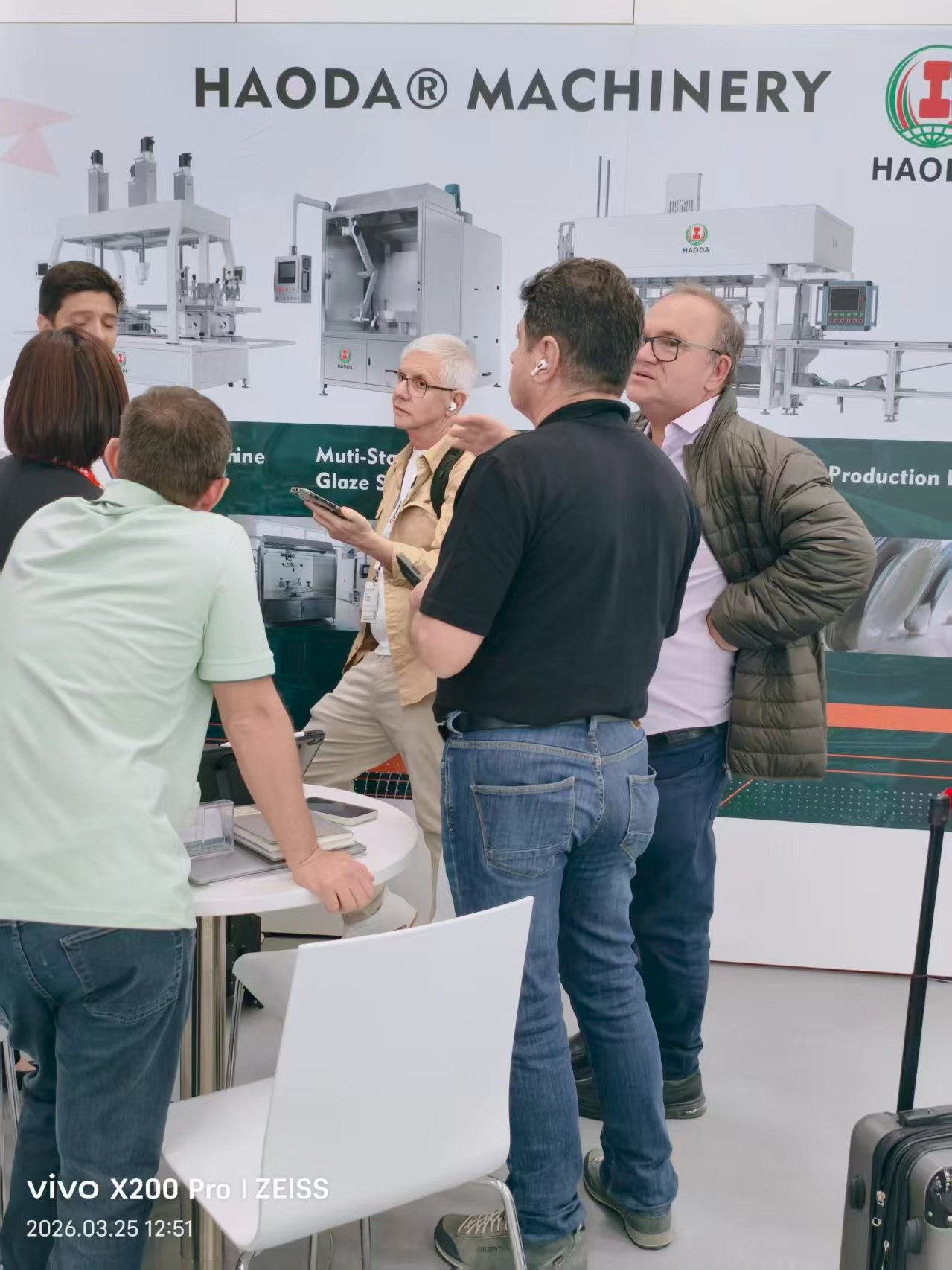
One of the most valuable aspects of Ceramitec 2026 was the opportunity to engage in direct conversations with manufacturers.
Many discussions moved beyond equipment specifications and focused on:
- How to plan long-term factory upgrades
- Whether to automate step by step or implement full-line solutions
- How to balance investment cost with production efficiency gains
These conversations reflect a broader shift in the industry—from equipment purchasing to production system optimization.
Let’s Continue the Conversation Beyond the Exhibition
We truly appreciate every meaningful discussion at Ceramitec 2026. The exchange of ideas, challenges, and solutions made the event valuable not just for us, but for the entire ceramic manufacturing community.
About Haoda Machine & Our Automation Approach
Haoda Machine is committed to helping ceramic tableware factories transition from traditional production methods to automated and stable manufacturing systems. By integrating forming, printing, glazing, and conveying processes, we provide solutions that reduce labor dependency while improving efficiency and product consistency.
To learn more about our equipment and production solutions, visit:
https://www.haoda-machine.com/products
Supporting Your Next Step in Ceramic Production Upgrade
Whether you are planning to upgrade an existing production line or build a new automated system, our team can provide tailored solutions based on your specific requirements. Our focus is to help you achieve unmanned or low-manpower production, stable output, and long-term operational efficiency.
If you would like to continue the conversation or discuss your project, feel free to contact us:
https://www.haoda-machine.com/contact-us