
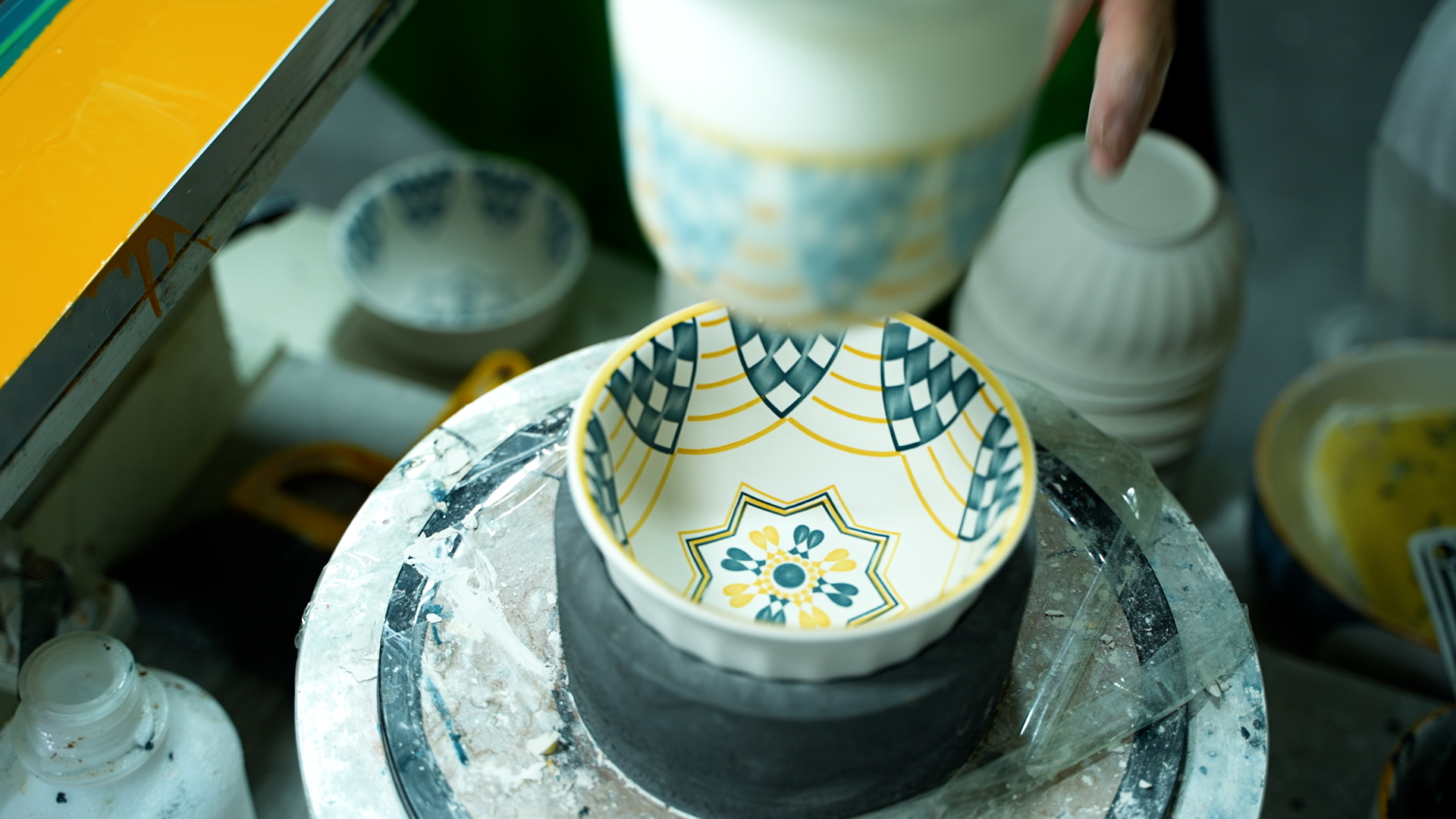
Why Pad Printing Still Slows Down Ceramic Production Lines
In many ceramic tableware factories, even when forming and drying have been partially automated, pad printing remains a manual or semi-manual operation. This mismatch creates a real bottleneck on the production line. Operators need to manually align each product, control printing pressure, adjust ink levels, and handle transfer timing.
In reality, this leads to several persistent issues:
- Print position deviation due to manual placement
- Uneven ink transfer caused by inconsistent pressure
- Variations in color density across batches
- Increased rejection rates during high-volume production
Haoda Machine addresses these problems by introducing a fully automated pad printing solution, where positioning, printing, and transfer are all controlled by system parameters rather than human judgment. This ensures that every print cycle follows the same logic, regardless of production speed.
Industry observations from Society of Dyers and Colourists highlight that consistent ink transfer conditions—especially pressure and contact time—are critical for print uniformity, reinforcing the importance of automation in industrial printing processes.
What Actually Determines Print Quality in Ceramic Pad Printing
Before upgrading equipment, many factories underestimate how sensitive pad printing is to small process variations. In practice, print quality is determined by a combination of mechanical, material, and environmental factors.
Key technical variables include:
- Silicone pad hardness (Shore A 10–30 range typically used)
- Ink viscosity control (measured in seconds using viscosity cups)
- Etched plate depth (commonly 20–35 microns depending on design)
- Contact pressure and dwell time (milliseconds-level control)
For example, if the silicone pad is too soft, it may deform excessively and distort the pattern. If it is too hard, it may not fully conform to curved ceramic surfaces. Similarly, slight changes in ink viscosity—often caused by temperature fluctuations—can directly impact transfer clarity.
A fully automated system stabilizes these variables by:
- Maintaining consistent pressure curves
- Synchronizing timing between pad pickup and transfer
- Controlling environmental parameters where needed
This transforms pad printing from a skill-dependent process into a parameter-controlled production step.
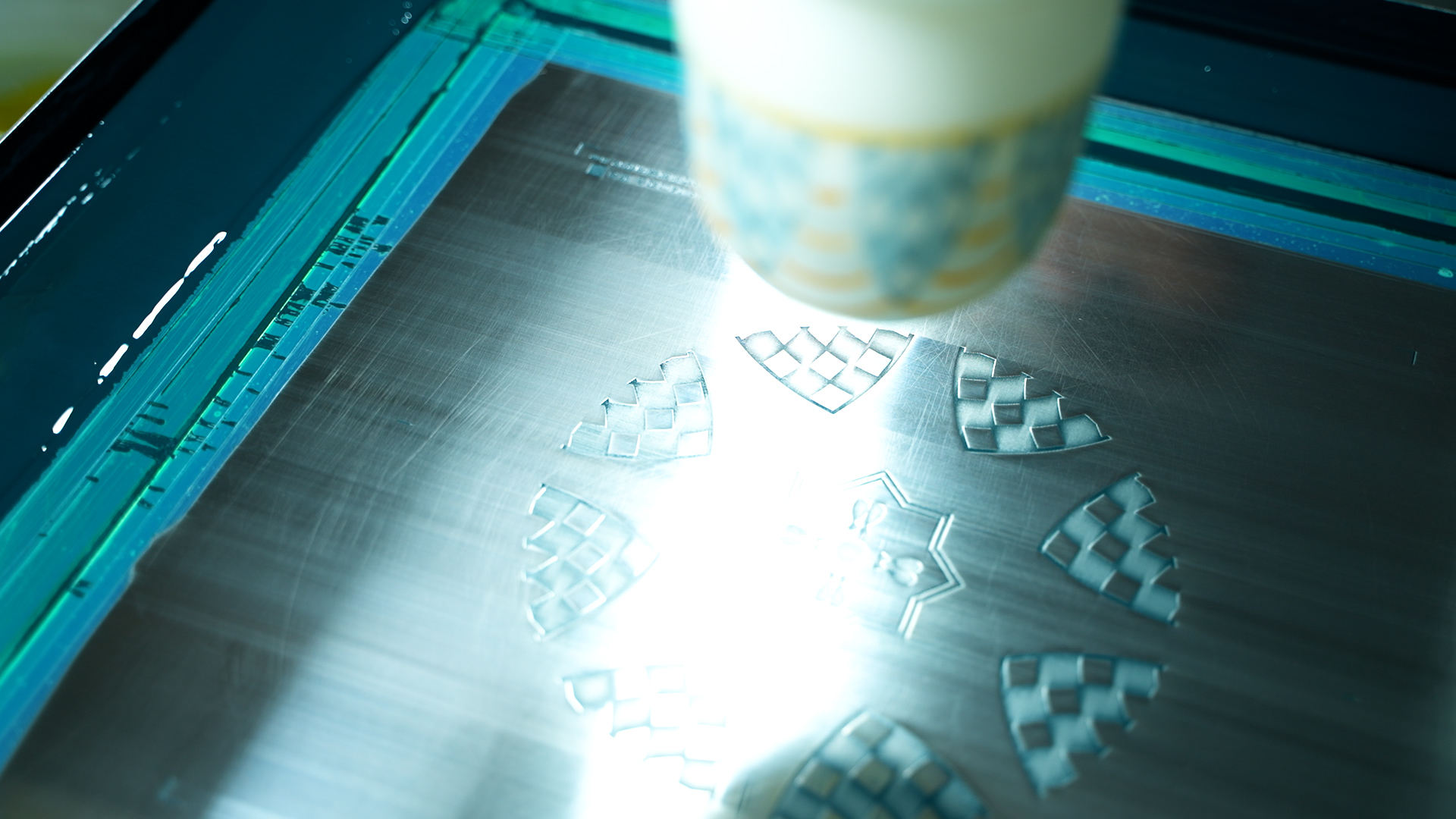
Why Manufacturers Choose Haoda Machine for Pad Printing Automation
When factories evaluate pad printing upgrades, the challenge is not just replacing labor—it is ensuring that automation works reliably under real production conditions.
Haoda Machine focuses on delivering process-based solutions, not just equipment:
- Equipment design aligned with ceramic product geometry
- Integration with upstream forming and downstream handling
- Support for pad design, ink selection, and process optimization
In many cases, factories fail to achieve expected results because they treat pad printing as an isolated step. Haoda Machine approaches it as part of a complete production system, ensuring that printing performance matches the pace and requirements of the entire line.
Eliminating Interruptions: From Manual Handling to Continuous Printing Flow
One of the most overlooked inefficiencies in manual pad printing is the interruption between steps. Products are picked up, positioned, printed, and moved manually, creating small delays that accumulate over time.
Automation removes these interruptions by creating a continuous flow:
- Automatic feeding systems ensure stable input rhythm
- Precision positioning systems align each product accurately
- Multi-station printing units operate in synchronized cycles
- Output conveyors maintain production continuity
This continuous workflow significantly improves line efficiency, especially in high-volume production environments where even minor delays can reduce overall output.
The approach aligns with process control principles emphasized by International Organization for Standardization, where reducing variability is key to maintaining consistent industrial performance.
Real Performance Gains Observed in Automated Printing Lines
Automation benefits are not theoretical—they are measurable in daily production.
| Key Metric | Manual Printing | Automated Printing |
|---|---|---|
| Labor Requirement | Skilled operators required | Reduced by 50%–70% |
| Cycle Time | 4–6 seconds per piece | 2–3 seconds per piece |
| Print Accuracy | ±0.5–1.0 mm deviation | ±0.1–0.2 mm deviation |
| Defect Rate | 6%–12% | 2%–4% |
| Output Stability | Shift-dependent | Consistent |
For factories producing tens of thousands of pieces per day, these improvements translate directly into higher throughput and lower operational costs.
A Detailed Look at the Automated Pad Printing Workflow
Understanding the workflow helps clarify how automation improves both efficiency and quality.
The process typically includes:
- Automatic product feeding
Products are delivered to the printing station through conveyors or robotic systems. - Precision positioning
Fixtures or vision systems ensure accurate alignment before printing. - Ink pickup from etched plate
The silicone pad collects ink from the etched plate under controlled conditions. - Ink transfer to product surface
The pad presses onto the ceramic surface with controlled pressure and timing. - Drying or curing stage (if required)
Depending on ink type, products may pass through drying units. - Output conveying
Finished products move to the next stage without manual handling.
Each step is synchronized to maintain a consistent production rhythm.
Global Application Experience in Ceramic Tableware Printing
Haoda Machine’s pad printing systems have been deployed in tens of thousands of units globally, particularly in ceramic tableware production environments.
These installations cover:
- High-volume export factories
- OEM production lines for branded tableware
- Multi-pattern decorative product lines
This extensive deployment provides valuable feedback for continuous improvement, ensuring that systems are adaptable to different product shapes, printing requirements, and production scales.
Supporting the Full Printing Ecosystem for Better Results
In practice, equipment alone does not guarantee success. Pad printing performance depends on the entire process ecosystem.
Haoda Machine provides:
- Operator training programs to ensure correct system usage
- Silicone pad design guidance, including shape and hardness selection
- Ink and material compatibility support based on product requirements
- Process optimization consulting for different product geometries
This comprehensive support ensures that customers can achieve stable and repeatable results after installation.
Real Factory Case: From Skilled Labor Dependency to Process Control
A ceramic tableware manufacturer producing decorative plates previously relied on a team of experienced operators. During peak seasons, maintaining consistent quality became difficult due to operator fatigue and variation in skill levels.
After transitioning to an automated pad printing system:
- Operator count reduced from 10 to 4 per shift
- Daily output increased by approximately 35%
- Print defect rate dropped below 3%
- Customer complaints related to print inconsistency decreased significantly
The key change was not just automation—but the shift from operator-based control to system-based control.
Where Automated Pad Printing Creates the Most Impact
Automation delivers the greatest value in production environments where:
- Output volumes are high
- Product designs require consistent visual quality
- Production schedules demand reliability
Typical applications include:
- Printed ceramic plates
- Decorative bowls
- Brand logo printing on tableware
In these scenarios, consistency is critical, and automation ensures uniform results across large batches.
Toward Unmanned and Stable Printing Production
As labor costs continue to rise and skilled workers become harder to retain, manual pad printing becomes increasingly unsus
A fully automated pad printing machine enables:
- Continuous production without interruption
- High repeatability across all cycles
- Reduced reliance on human expertise
At Haoda Machine, the focus is on helping factories transition toward unmanned or low-labor production environments, where efficiency and quality are controlled by engineered systems.
Moving Toward Automated and Consistent Production
If your current pad printing process still depends heavily on manual operation, the risks—quality variation, inefficiency, and labor instability—will continue to impact your production performance.
About Haoda Machine & Our Automation Direction
Haoda Machine specializes in providing ceramic tableware factories with fully automated pad printing solutions that support production upgrades and automation transformation. By combining printing technology with system integration capabilities, we help factories reduce labor dependency while achieving stable, high-efficiency output.
To explore our automated pad printing machines and related production solutions, visit:
https://www.haoda-machine.com/products
How This Solution Supports Your Factory Upgrade
The automated pad printing system is designed to directly solve key production challenges—high labor dependency, unstable efficiency, and inconsistent print quality. Through continuous operation and standardized parameter control, it enables factories to achieve unmanned or low-labor production, high consistency, and long-term operational stability.
If you are planning an upgrade or need a customized solution for your production line, contact our team for technical consultation and project evaluation:
https://www.haoda-machine.com/contact-us