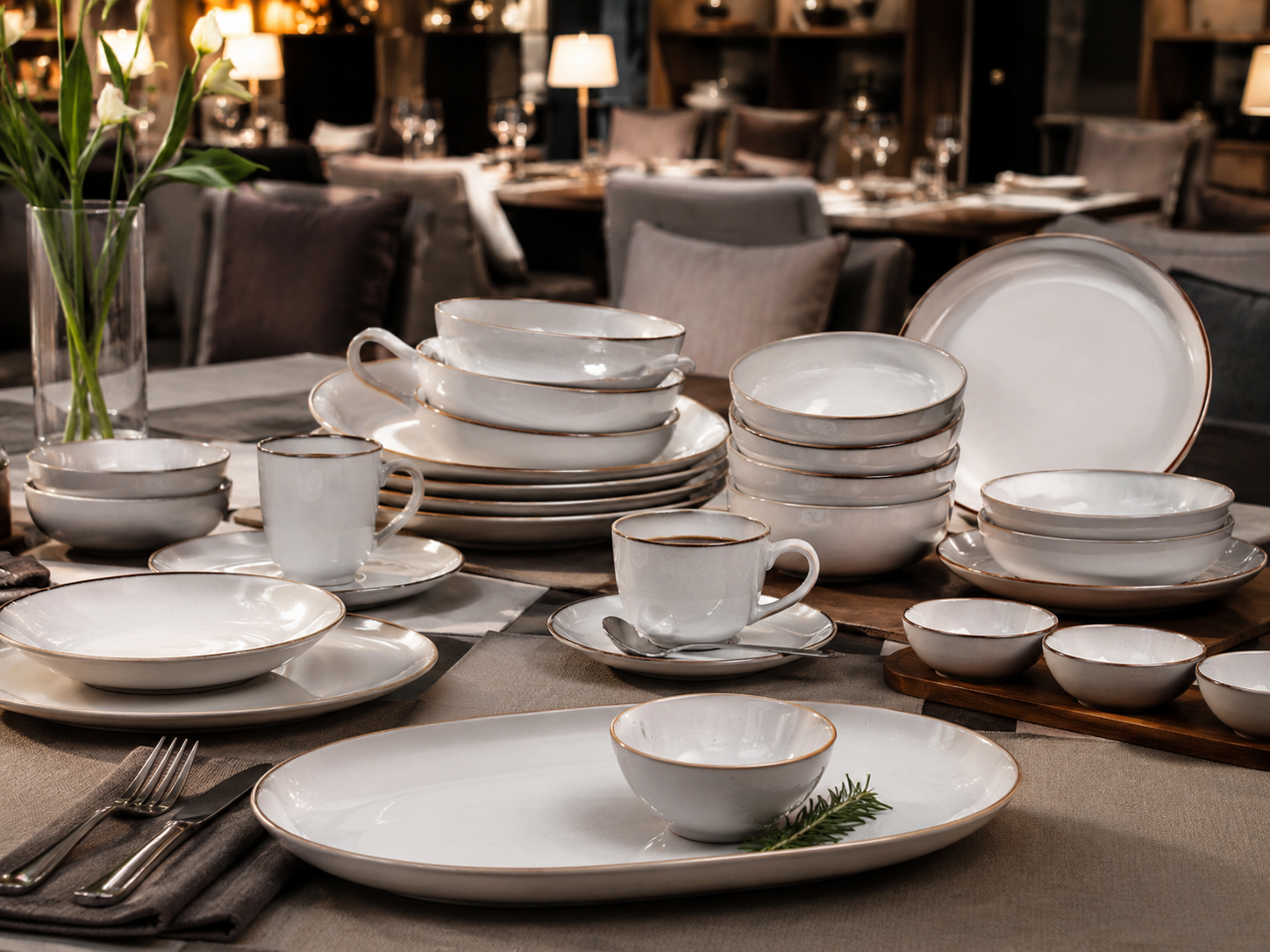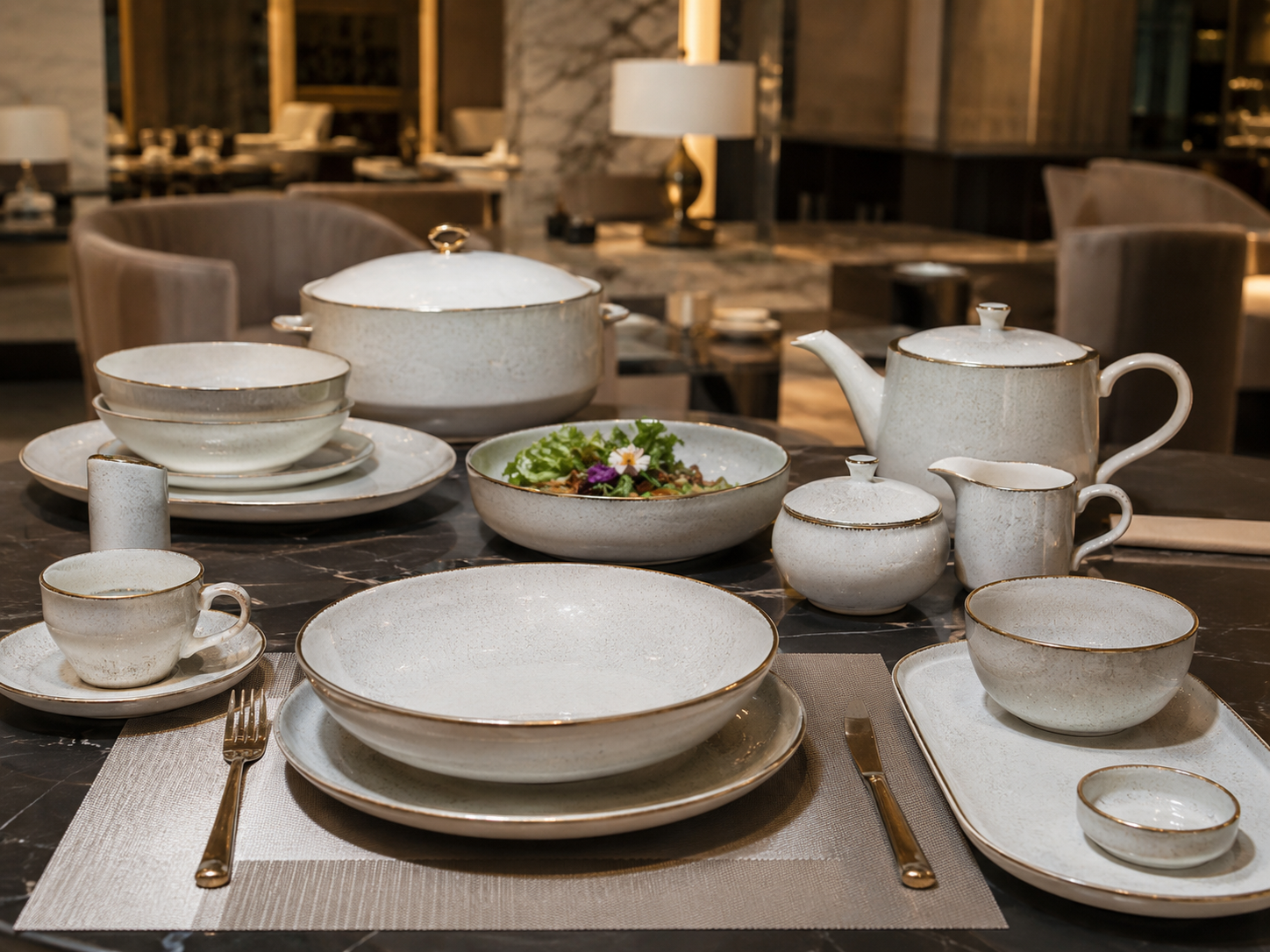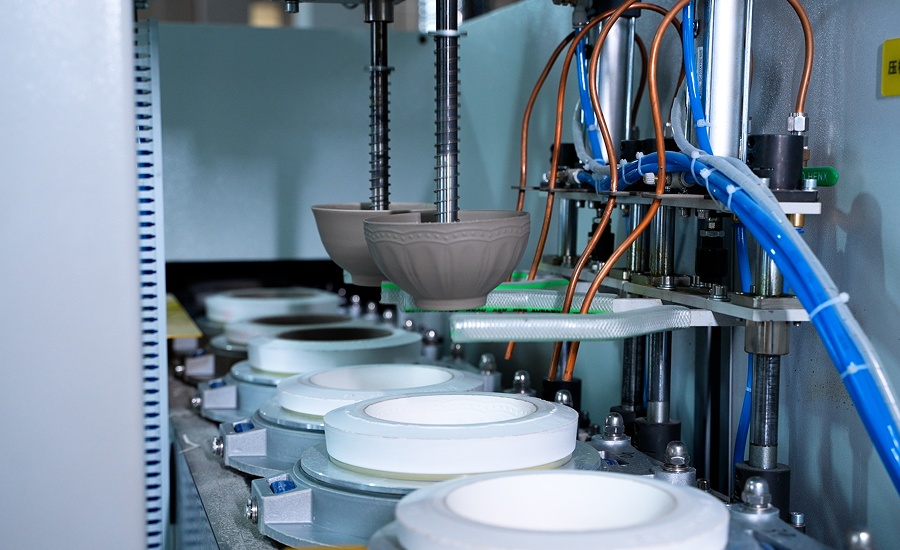

For ceramic tableware factories, forming quality decides much more than the first shape of the product. If plates are slightly warped, bowls have uneven walls, or cups are not formed with stable dimensions, the problem will continue into drying, glazing, firing, sorting, and final packaging.
That is why reducing defects in ceramic forming is one of the most practical ways to improve production stability. Many factories focus on kiln temperature or glaze finish when defects appear, but the real issue may already exist at the forming stage.
Manual or semi-automatic forming often depends on operator experience. Clay weight, mold condition, forming pressure, tool movement, and drying rhythm can all create variation. When production volume increases, small differences become visible batch problems.
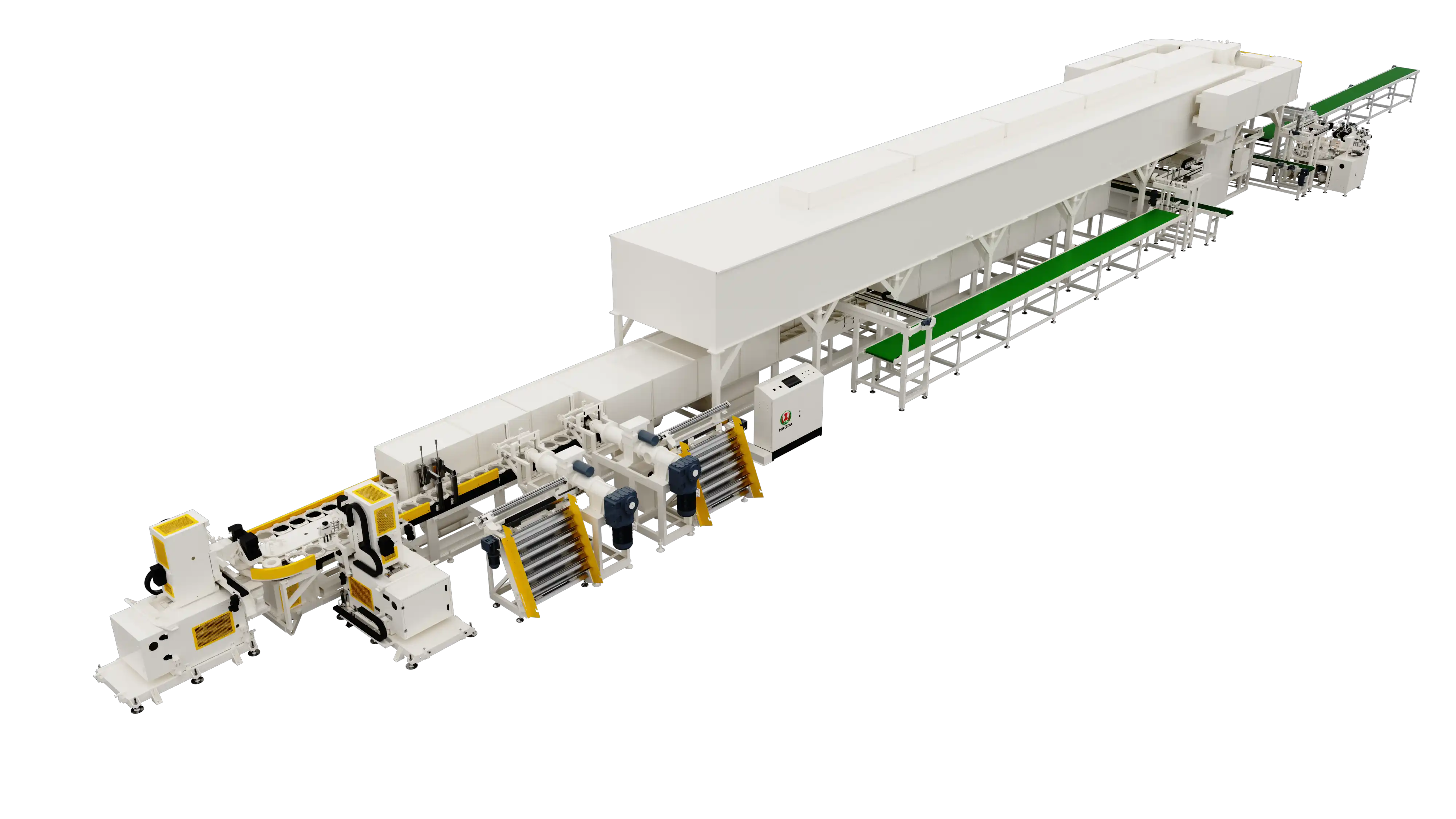
At HAODA Machinery, ceramic forming solutions are designed for stable shaping, repeatable production, and better product matching. For factories planning a complete upgrade, HAODA’s complete ceramic tableware production system shows how forming, drying, glazing, decoration, and conveying can work together in one production flow.
Why Forming Defects Happen in Ceramic Tableware Production
Forming defects usually do not come from one single cause. They often happen when product shape, clay condition, mold quality, machine control, and handling are not matched correctly.
For plates, common problems include warping, uneven rims, unstable thickness, and deformation during drying. For bowls, factories may see wall thickness differences, poor symmetry, or rim distortion. For cups and mugs, defects may appear around the body curve, base, or handle connection area.
A factory may also face defects when using the wrong forming method for the product. Standard plates and shallow bowls are usually suitable for jiggering lines, while deeper bowls, irregular shapes, thin-wall items, or premium tableware may need high-pressure casting.
This is why reducing defects in ceramic forming should begin with one question:
Is the current forming method suitable for the product being produced?
Choosing the Right Forming Method Reduces Many Defects
Different ceramic products need different forming solutions. A factory producing dinner plates should not use the same thinking as a factory producing deep rice bowls or irregular hotelware.
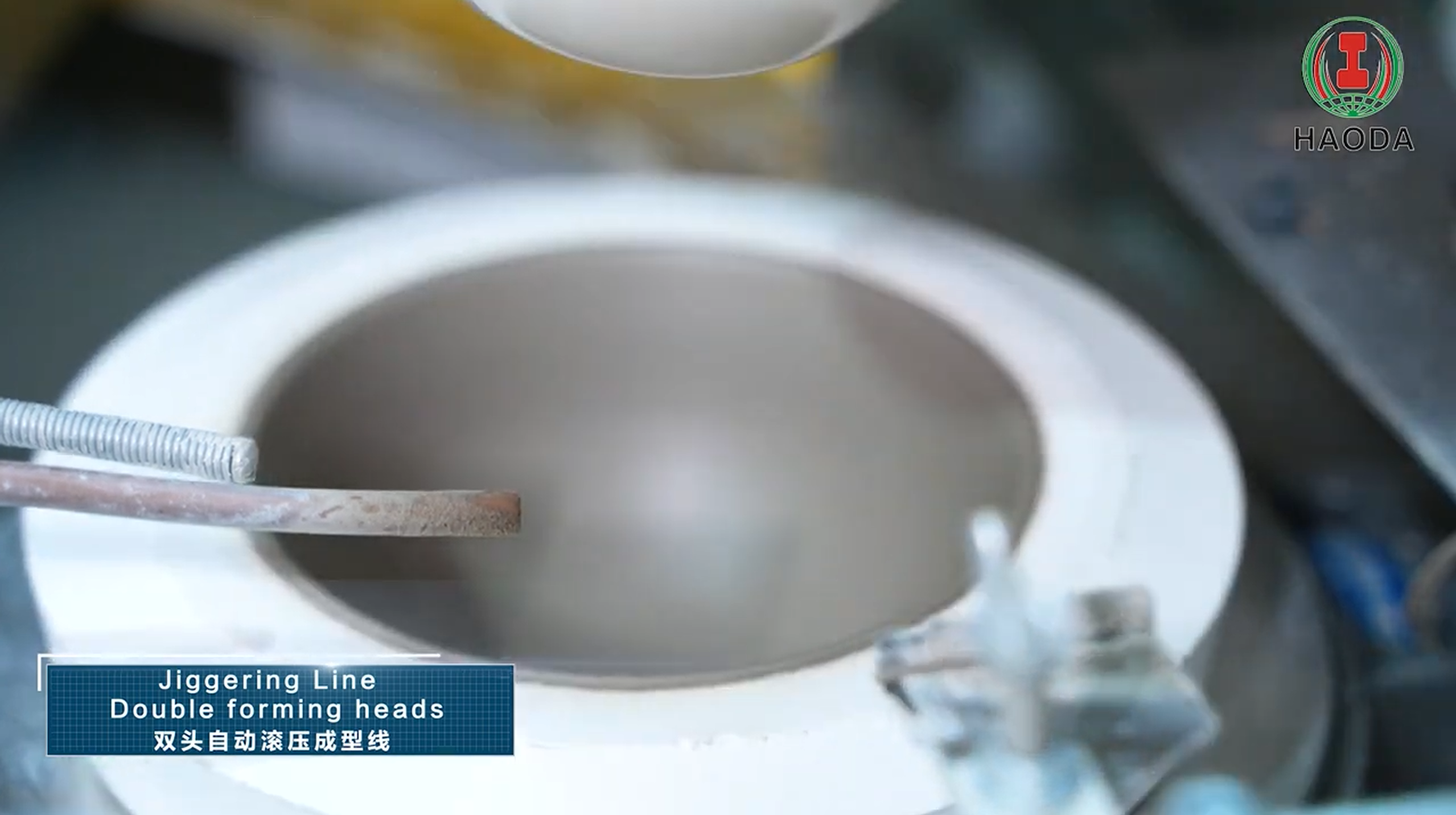
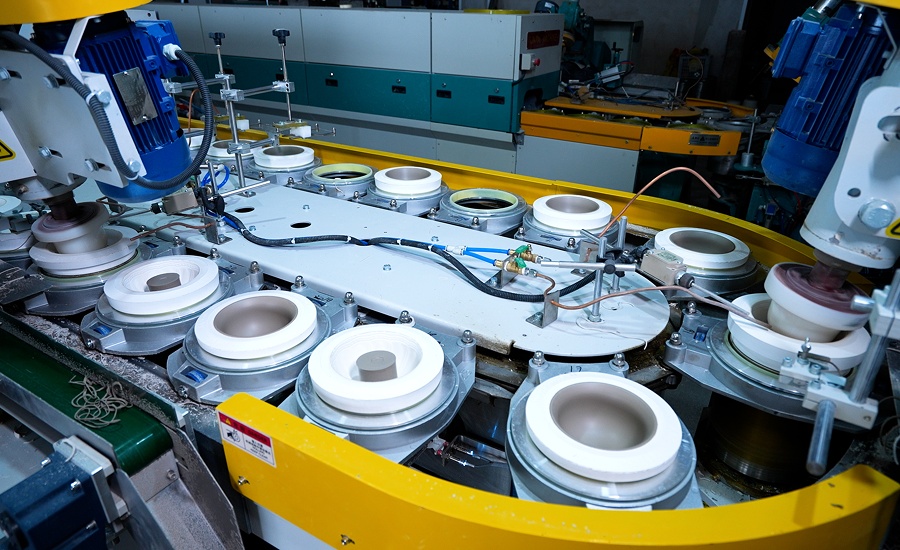
Jiggering Line for Plates, Shallow Bowls, and Standard Products
A ceramic jiggering line is suitable for standardized tableware such as:
- Dinner plates
- Salad plates
- Soup plates
- Shallow bowls
- Saucers
- Flat dishes
- Some mug bodies
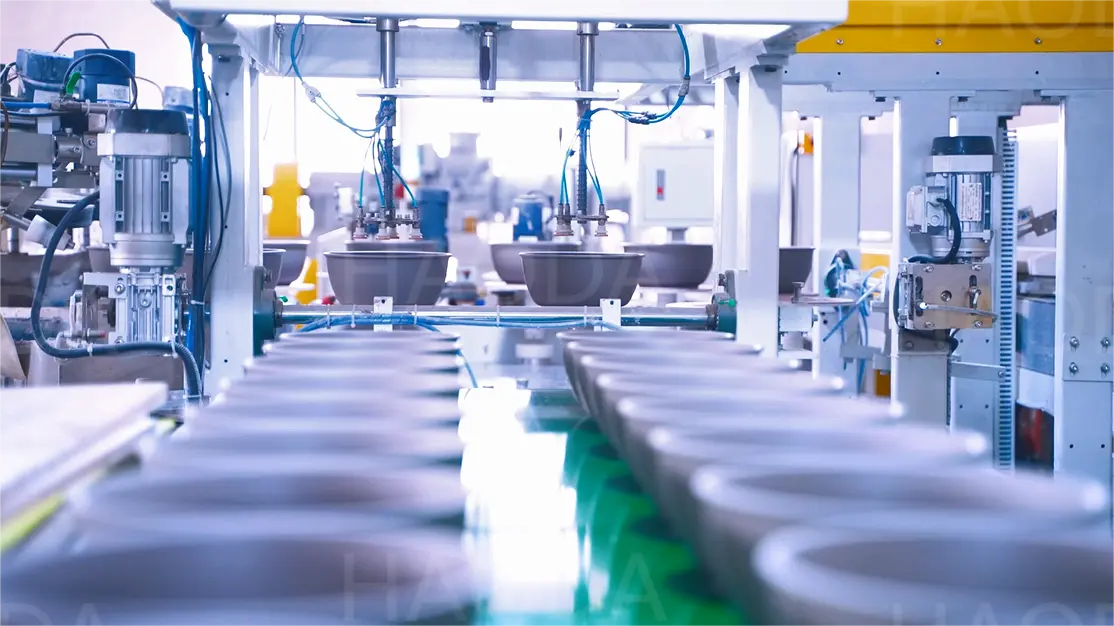
The main advantage of a jiggering line is repeatability. The machine can control forming rhythm, pressure, mold movement, and product transfer more consistently than manual forming. This helps factories improve shape standardization and reduce dependence on skilled operators.
For daily tableware factories, export ceramic manufacturers, hotel tableware producers, and large-scale ceramic factories, a jiggering line is often the first choice when the goal is stable batch production.
CNC Ceramic Forming for Flexible Product Runs
For factories producing multiple product sizes or changing designs more frequently, CNC ceramic forming equipment can provide more flexible control. It is suitable for factories that need stable forming but do not always run the same product every day.
This type of equipment is useful for medium-volume factories, OEM tableware producers, and workshops upgrading from manual forming.
High-Pressure Casting for Deep Bowls and Complex Shapes
Some products are difficult to form consistently with standard rolling or jiggering methods. Deep bowls, rice bowls, soup bowls, irregular tableware, thin-wall ceramic products, and premium porcelain items often require better density and more controlled shaping.
For these applications, high-pressure casting machines can be a better solution. They are especially suitable for high-end tableware manufacturers, export ceramic factories, and manufacturers producing complex-shape products.
How Better Machine Control Improves Forming Consistency
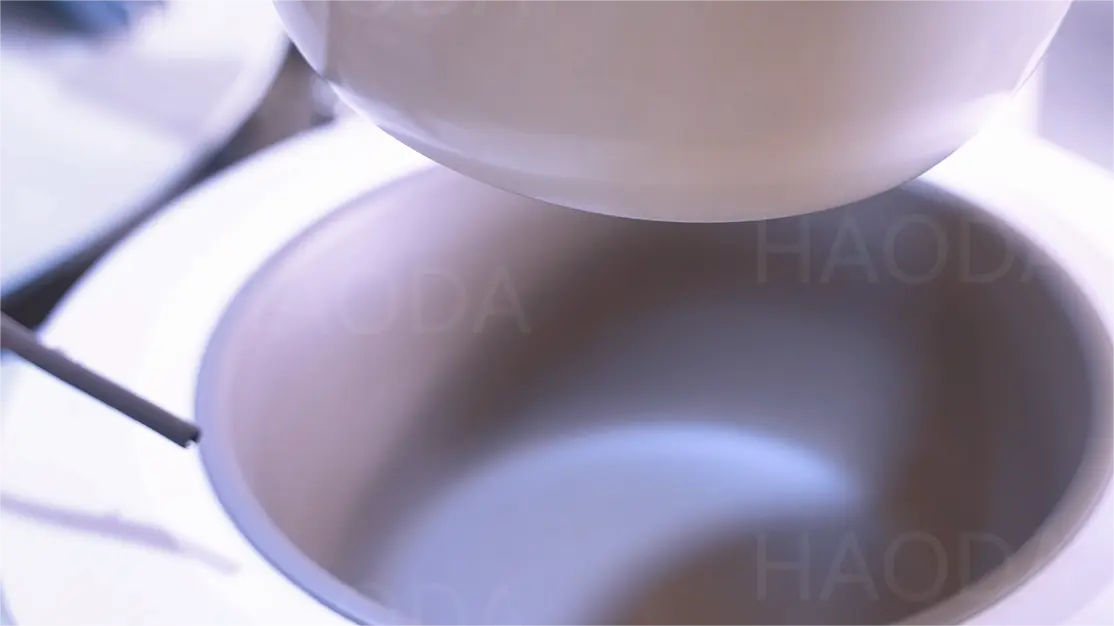
Reducing defects in ceramic forming is not only about replacing workers with machines. The real value of automation is controlled repeatability.
A stable forming machine helps control:
- Clay feeding amount
- Forming pressure
- Mold rotation
- Tool movement
- Product position
- Forming time
- Transfer rhythm
When these factors remain stable, the product shape becomes more predictable. This helps reduce uneven thickness, rim deformation, poor symmetry, and surface irregularity.
Automatic handling also matters. If green bodies are moved manually too often, defects can happen before the product even reaches drying. A smoother transfer system reduces unnecessary touching, bending, and impact.
For factories that want to evaluate machine selection together with layout and process flow, HAODA’s guide to smart ceramic production planning explains how different production stages can be planned together instead of being treated as separate machines.
Which Factories Need to Focus on Forming Defect Reduction?
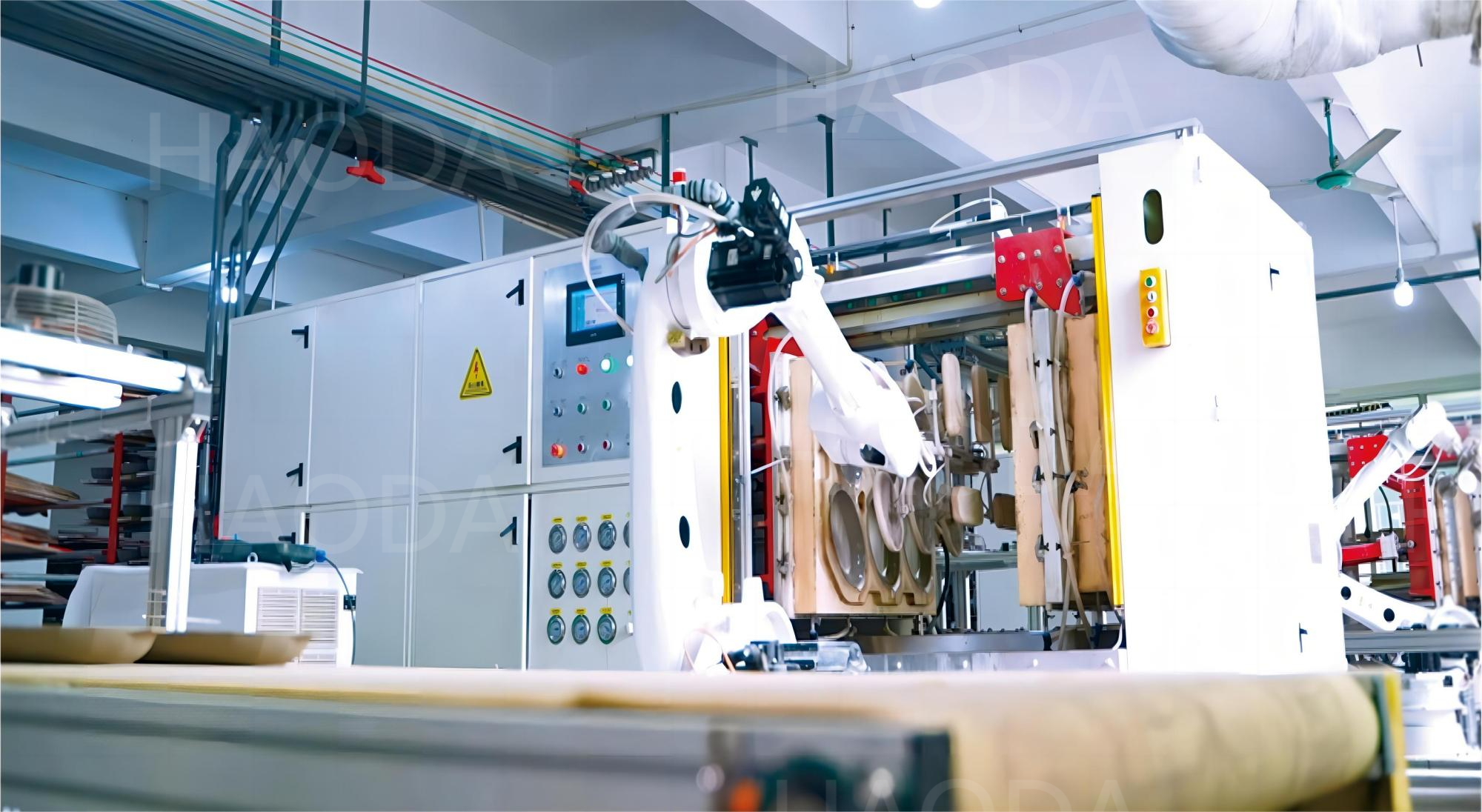
Daily tableware factories need stable forming because plates, bowls, cups, and dinnerware sets are produced in large quantities. Even a small forming issue can create a large number of rejected pieces.
Export ceramic manufacturers need better consistency because overseas buyers often compare bulk products with approved samples. If size, shape, or rim quality varies too much, the factory may face complaints or shipment risk.
Hotel and restaurant tableware producers need uniform appearance across large sets. A hotel order may include hundreds or thousands of plates and bowls. If forming is unstable, the whole set may look inconsistent.
OEM ceramic factories need repeatable results for customized orders. When customers reorder the same product, the factory must reproduce the same shape and quality, not just something similar.
Premium tableware brands need better control because thin-wall porcelain, stoneware tableware, and special shapes are more sensitive to forming variation.
Practical Steps for Reducing Defects in Ceramic Forming
A factory does not need to solve every problem at once. The better approach is to check the forming process step by step.
First, confirm whether the product shape matches the forming method. Plates and shallow bowls may be suitable for jiggering, while deep bowls or irregular products may need pressure casting.
Second, review whether the clay body and mold condition are stable. If clay moisture or mold wear changes too much, the machine cannot produce consistent results.
Third, reduce manual handling between forming and drying. Green bodies are still fragile at this stage, so unnecessary transfer can increase deformation and breakage.
Fourth, connect forming with drying, glazing, and conveying. A good forming result can still be damaged if the next process is poorly arranged.
For factories planning a new workshop or larger upgrade, HAODA’s turnkey ceramic production project can help organize equipment selection, layout design, installation, and technical support as one complete project.
Frequently Asked Questions
What is the most common cause of ceramic forming defects?
The most common causes include unstable clay condition, unsuitable forming method, worn molds, inconsistent machine settings, and too much manual handling before drying.
Is a jiggering line suitable for all ceramic products?
No. A jiggering line is suitable for plates, shallow bowls, saucers, and many standard tableware products. Deep bowls, irregular shapes, or thin-wall premium products may need high-pressure casting or another forming solution.
Can automation completely remove forming defects?
Automation can greatly reduce variation, but stable clay preparation, mold management, drying control, and operator training are still important. The best result comes from combining good equipment with good process management.
Improve Forming Quality with the Right HAODA Solution
Reducing defects in ceramic forming is not only about improving one machine. It is about matching the product with the right forming method, controlling each production movement, and reducing unnecessary variation before drying and glazing.
For standard plates, shallow bowls, and high-volume daily tableware, an automatic jiggering line can improve consistency and reduce labor dependency. For deep bowls, irregular shapes, and premium ceramic products, high-pressure casting may be more suitable. For factories with changing product ranges, CNC ceramic forming equipment can provide a more flexible upgrade path.
HAODA Machinery provides ceramic forming equipment and production-line solutions for factories that need better shape consistency, lower rework, and more stable batch production. Explore HAODA’s ceramic production equipment, or contact HAODA to send your product size, shape, capacity target, and factory layout for a suitable forming solution recommendation.