
Why the Middle East Market Requires Specialized Ceramic Line Solutions
The Middle East ceramic market is driven by:
- Rapid hospitality expansion
- Large-scale infrastructure development
- Growing tourism sector
- Increasing domestic manufacturing investment
Unlike temperate climates, factories in the Gulf region operate under high ambient temperatures, dust exposure, and energy structure variations.
A reliable Middle East ceramic line supplier must therefore design systems capable of:
- Stable kiln temperature control despite high external heat
- Controlled drying under low humidity conditions
- Dust-resistant automation cabinets
- Efficient energy use in gas-dominant markets
Generic production lines often fail to address these environmental variables.
Production Capacity Expectations in the Region
Large hospitality and catering projects demand high daily output.
| Production Category | Typical Daily Output Requirement |
|---|---|
| Hotel Tableware | 80,000–120,000 pcs |
| Restaurant Chain Supply | 100,000+ pcs |
| Government Catering Projects | High-volume batch production |
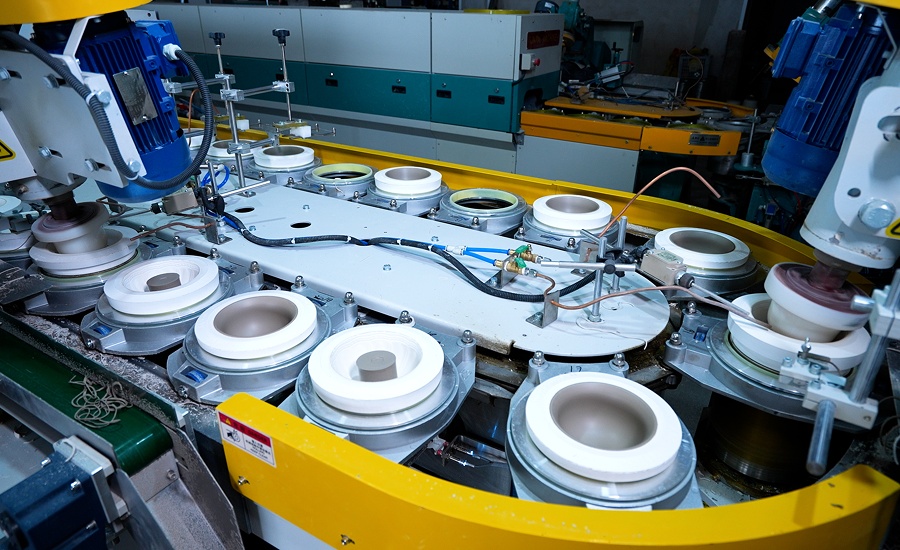
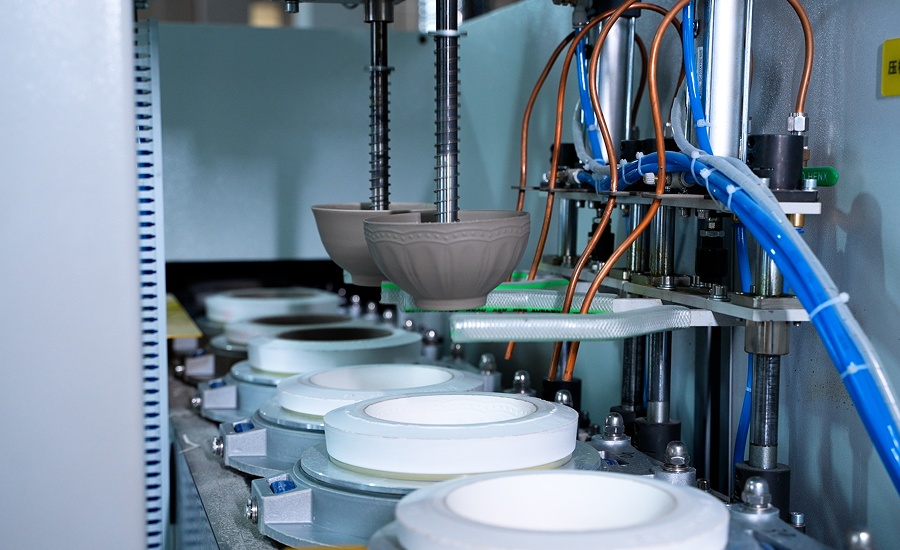
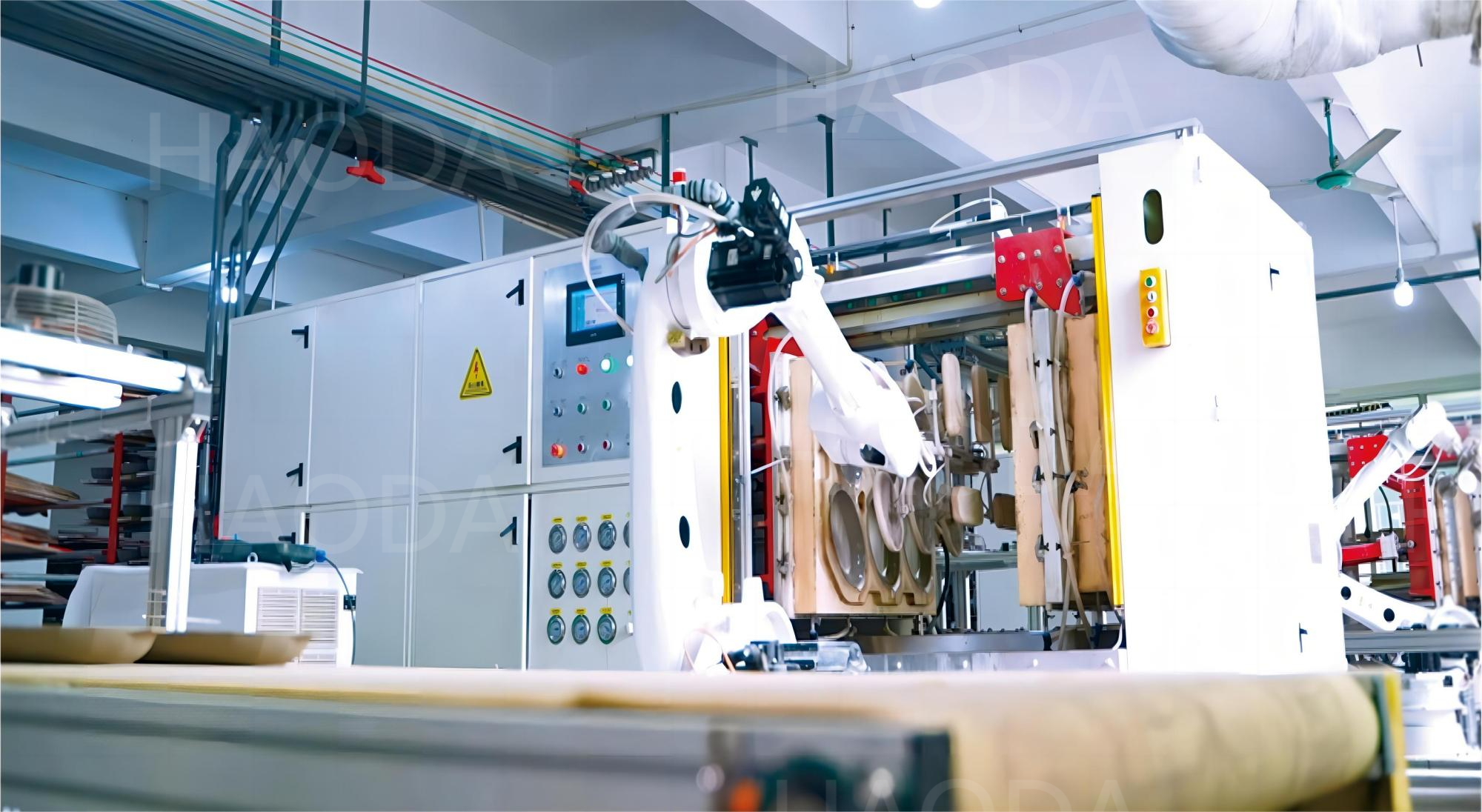
A competitive Middle East ceramic line supplier must deliver integrated forming, glazing, drying, and firing systems capable of maintaining consistent quality at these scales.
Climate-Adapted Engineering Design
Drying System Optimization
In hot, dry environments, moisture evaporation can occur too rapidly, causing cracking or internal stress.
Advanced systems apply:
- Zoned airflow control
- Humidity feedback regulation
- Gradual moisture reduction curves
Kiln Stability
| Parameter | Conventional Line | Climate-Adapted Line |
|---|---|---|
| External Temp Influence | High | Controlled |
| Temperature Fluctuation | ±8–10°C | ±3°C |
| Defect Rate | 6% | 2–3% |
A professional Middle East ceramic line supplier incorporates thermal insulation reinforcement and adaptive PID control to maintain firing stability.
According to the International Energy Agency (https://www.iea.org), industrial thermal efficiency improvements can reduce energy consumption by 15–25% in high-temperature manufacturing sectors.
Energy Structure and Cost Efficiency
Natural gas is widely available across the Gulf region, making kiln efficiency a central cost factor.
| Energy Indicator | Standard System | Optimized System |
|---|---|---|
| Fuel Consumption | Baseline 100% | -20–25% |
| Heat Recovery | None | Integrated |
| Energy Monitoring | Manual | Digital tracking |
An experienced Middle East ceramic line supplier must design kilns aligned with local fuel types and cost structures to ensure long-term operational efficiency.
Automation for High-Volume Hospitality Markets
Regional hospitality projects require identical design batches over extended periods.
Integrated automation supports:
- Digital glaze recipe storage
- Mold switching flexibility
- MES-based traceability
- Automated defect inspection
| KPI | Semi-Automatic Line | Automated Integrated Line |
|---|---|---|
| Scrap Rate | 6% | 2% |
| Labor Requirement | 60 operators | 30–35 operators |
| Output Stability | Variable | Highly consistent |
| ROI Cycle | 30–36 months | 18–22 months |
A reliable Middle East ceramic line supplier ensures production consistency across large export contracts and domestic supply chains.
Regional Project Execution Capability
Many buyers prioritize suppliers who can provide:
- Plant layout planning
- On-site installation teams
- Operator training
- Spare parts logistics
- Long-term technical support
Haoda Machine has executed projects serving Middle East hospitality and infrastructure sectors with climate-adapted production solutions.
As a specialized Middle East ceramic line supplier, Haoda Machine integrates forming systems, glaze automation, kiln engineering, and digital control to support high-output and stable manufacturing under regional conditions.
Haoda Machine: Engineering for Middle East Growth
Haoda Machine designs complete ceramic production systems tailored for Middle East market expansion.
Core strengths include:
- High-precision forming systems
- Climate-adapted drying and firing control
- Energy-efficient kiln design
- Digital production monitoring
- Global installation and commissioning support
Through advanced engineering and integrated automation, Haoda Machine delivers scalable solutions that meet the structural and environmental requirements of the Middle East ceramic industry.
To explore complete system configurations, visit
https://www.haoda-machine.com/
For customized project consultation and regional capacity planning, contact
https://www.haoda-machine.com/contact-us