
Why Many Tableware Production Lines Struggle to Meet European Standards
If you’ve ever tried exporting ceramic tableware to European markets, you’ve probably experienced this:
The design is right. The glaze looks good. Samples pass inspection.
But once production scales, problems begin to appear.
-
Thickness variation between batches
-
Deformation after firing
-
Inconsistent glaze finish
-
Output instability during continuous production
These issues are frustrating—not because they’re obvious, but because they show up after investment has already been made.
In many cases, the root cause is not raw material quality, but the equipment system itself. Traditional production lines often lack the precision and stability required to meet European tableware standards.
At Shumyi, we approach this differently. By optimizing forming pressure control, mold consistency, and automated production flow, we align equipment performance with the actual requirements of European-grade tableware manufacturing.
Key Technical Factors Behind European Tableware Equipment Performance
When evaluating European tableware equipment, the difference is not just in automation level—it lies in how precisely each stage of production is controlled.
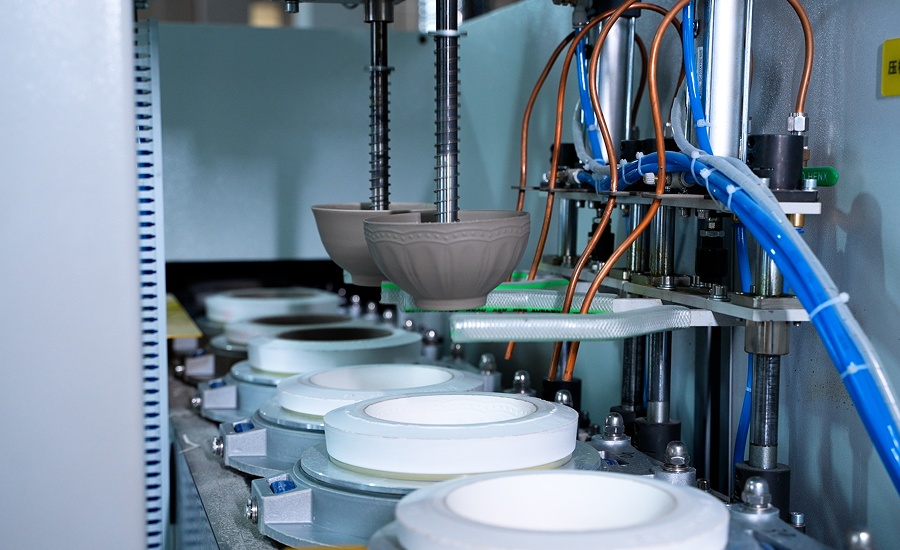
Forming Precision and Pressure Control
Tableware consistency starts at the forming stage.
Typical parameters:
-
Forming pressure tolerance: ±1–2%
-
Thickness deviation: ≤0.3 mm
-
Mold repeatability: ≥98% consistency
Stable pressure control ensures uniform density, which directly affects firing results.
Mold Accuracy and Lifespan
Mold precision determines shape consistency.
Typical performance benchmarks:
-
Dimensional tolerance: ±0.2 mm
-
Mold lifespan: 50,000–100,000 cycles
-
Surface finish stability over repeated use
Poor mold control often leads to deformation and high rejection rates.
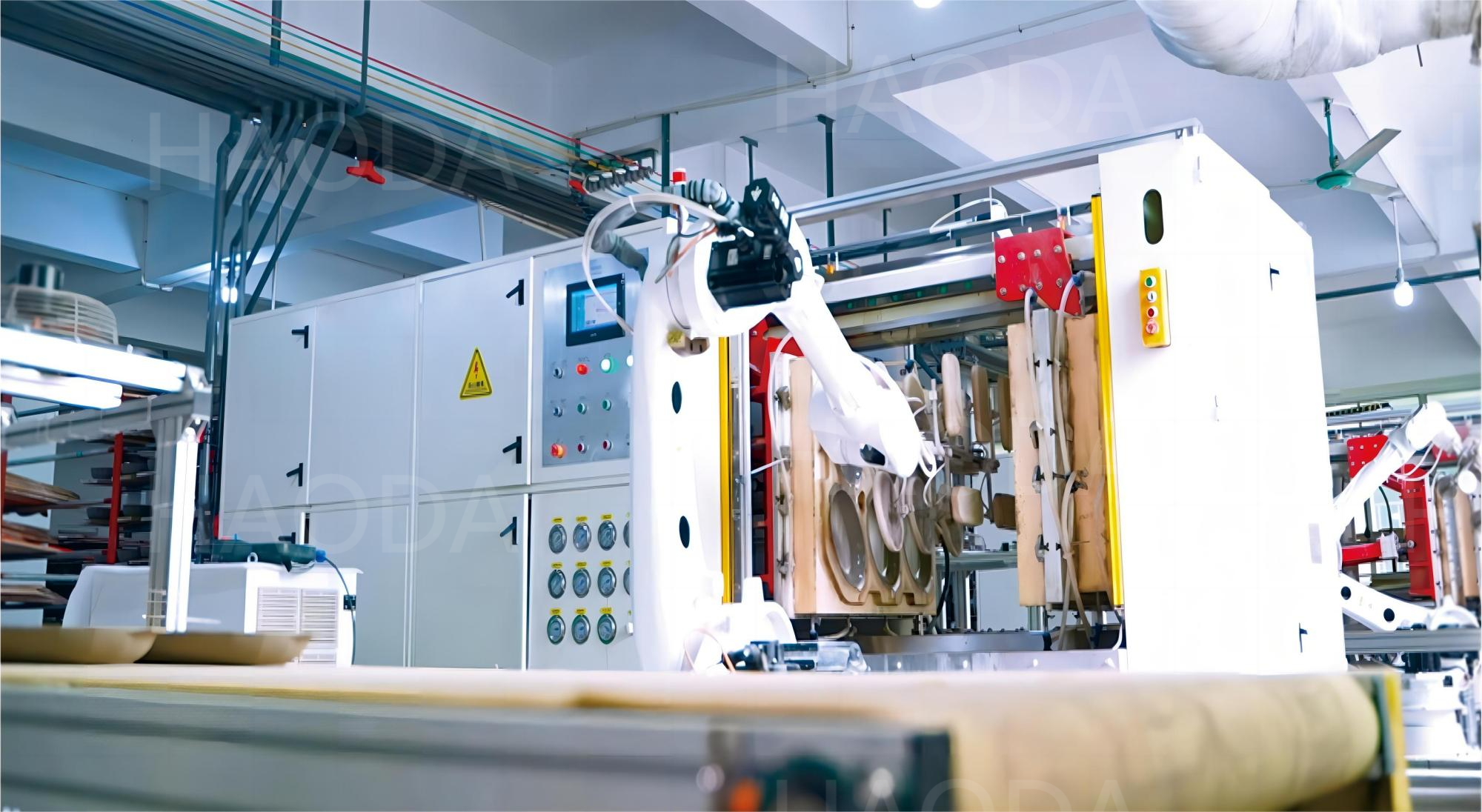
Automation and Production Flow
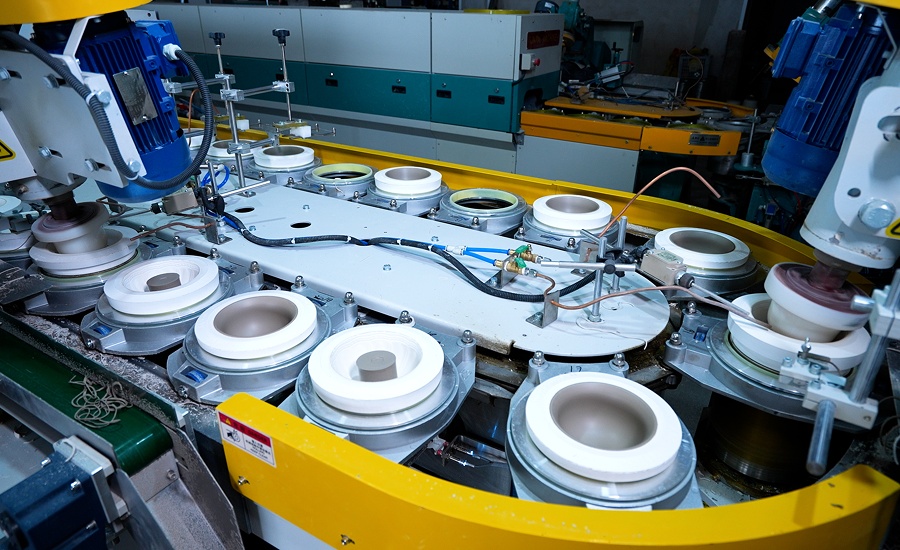
Modern European-standard systems focus on continuous and stable production.
Key features include:
-
Automated forming and transfer systems
-
Controlled drying and firing cycles
-
Integrated production line synchronization
These reduce human error and improve batch consistency.
Firing Stability and Temperature Control
Kiln performance is critical for final product quality.
Typical control ranges:
-
Temperature fluctuation: ±3–5°C
-
Firing cycle stability: consistent across batches
Stable firing ensures:
-
uniform glaze finish
-
reduced deformation
-
consistent strength
Performance Comparison: Conventional Equipment vs European Tableware Equipment
| Parameter | Conventional Equipment | European Tableware Equipment |
|---|---|---|
| Thickness Consistency | ±0.5–0.8 mm | ≤0.3 mm |
| Product Defect Rate | 8–12% | 3–5% |
| Production Stability | Variable | Stable continuous output |
| Automation Level | Partial | Fully integrated |
| Output Efficiency | Baseline | +20–30% |
| Labor Dependency | High | Reduced |
For manufacturers exporting to Europe, these differences directly impact rejection rates and customer satisfaction.
How Equipment Design Adapts to Different Production Scenarios
Not all tableware factories operate under the same conditions. A capable equipment supplier must adjust system design based on production goals and product types.
High-Volume Industrial Production
Typical scenario: OEM factories supplying large retail chains
Challenges:
-
continuous production demand
-
strict delivery schedules
-
consistent quality across large batches
Engineering adjustments:
-
high-speed forming systems
-
automated material handling
-
stable cycle timing
Result:
-
output increase of 20–30%
-
reduced downtime
-
consistent batch quality
Premium Tableware Manufacturing
Typical scenario: hotel and high-end brand suppliers
Challenges:
-
high surface quality requirements
-
strict dimensional consistency
-
low defect tolerance
Engineering adjustments:
-
high-precision molds
-
controlled forming pressure
-
optimized firing curves
Result:
-
defect rate reduced to <5%
-
improved product appearance consistency
Flexible Production for Multiple Product Lines
Typical scenario: factories producing varied tableware designs
Challenges:
-
frequent mold changes
-
different product specifications
-
production flexibility
Engineering adjustments:
-
modular equipment design
-
fast mold switching systems
-
adaptive production settings
Result:
-
reduced setup time
-
improved production flexibility
Safety, Compliance, and Production Reliability
European markets require strict compliance in both product and production processes.
Quality Control
Typical process includes:
-
raw material inspection
-
forming consistency checks
-
firing quality verification
Safety Considerations
Reliable equipment must ensure:
-
stable operation under high temperature
-
safe automation processes
-
consistent mechanical performance
Certifications
European-compliant equipment often follows:
-
ISO 9001 – quality management
-
CE certification – machinery safety compliance
-
environmental standards for production systems
These ensure compatibility with European industrial requirements.
Why Equipment Stability Matters More Than Initial Investment
Many buyers focus on equipment price during procurement. However, the real cost of tableware production is determined over time.
A stable European tableware equipment system can:
-
reduce defect rates by 5–8%
-
improve output efficiency by 20%+
-
lower labor costs through automation
-
ensure consistent export-quality production
In contrast, unstable systems often lead to hidden costs—rework, downtime, and lost orders.
Choosing the Right European Tableware Equipment Partner
Selecting the right equipment supplier is not just about purchasing machinery—it’s about ensuring long-term production stability and product quality.
At Shumyi, we provide tableware production solutions designed around real factory conditions. Our systems focus on forming precision, process stability, and scalable output, helping manufacturers meet European market standards with consistent quality.
If you want to explore available equipment configurations and production solutions, you can review our product range here:
👉 https://www.shumyipx.com/products
For project discussions, customization requirements, or production planning support, you can contact our team directly:
👉 https://www.shumyipx.com/contact-us
Working with a supplier that understands both production processes and market requirements helps ensure stable output, consistent quality, and long-term competitiveness.